
Front steps. A back porch.
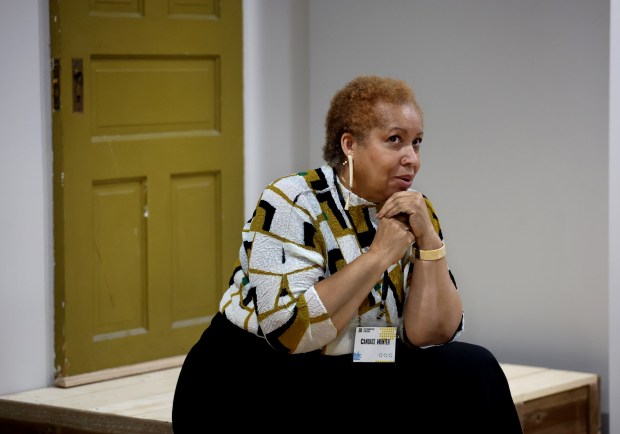
The objects are utilitarian until Chicago-based multidisciplinary artist Candace Hunter points her lens toward them. The front stoop and back porch are places where community comes together and where her ongoing series, “50,831+/- Dreams,” a work that looks at the displacement of Black Chicagoans during the 1958-1964 construction of the Dan Ryan Expressway, lives.

“There were 90,000 families and businesses that were stolen by eminent domain; of that 90,000, 60% were African American, that leaves us with 50,800-plus,” Hunter said, explaining the title. “Those people who were displaced were one degree away from being sharecroppers, two degrees away from being enslaved peoples, and yet these people owned property against all odds.”
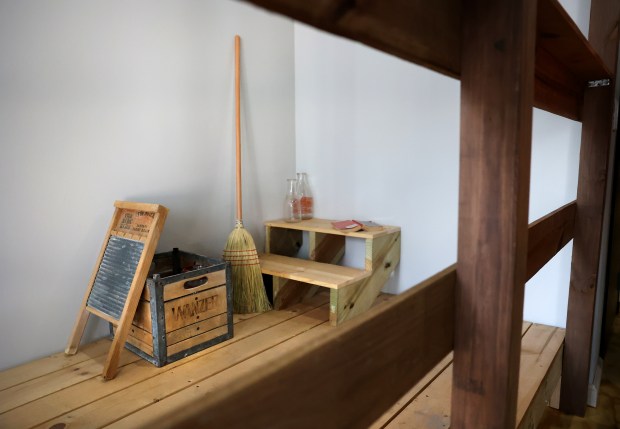
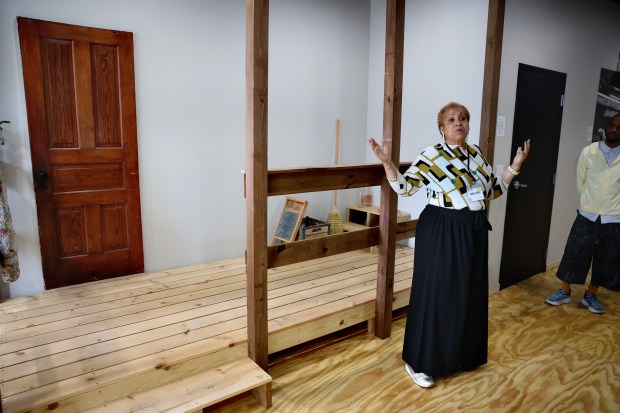
Hunter constructed a wooden back porch (with soundscape, empty milk bottles, washboard and broom) and a moveable front stoop in the BMRC Gallery — integral places in Chicago and the South Side where the Black community convenes. As a youth growing up in Chicago, she recalls seeing a wall of doors that hid the remnants of the destroyed homes. She said the image of those doors stayed with her all her life.
“It wasn’t until five years ago that I was telling my ‘door story’ to someone, and they said, ‘You know what those doors hid? The detritus of all the housing that was stolen.'” Hunter said. “Two blocks of doors hid stolen truths.”
It’s those truths that Hunter wants to find and gather in her project, part of “The Ways We Remember: Celebrating 20 Years of the Black Metropolis Research Consortium” and featured in the BMRC Gallery. (Founded as a collective, the Black Metropolis Research Consortium is an archive of Black Chicago life.) Hunter is seeking to talk with people, their relatives, and neighbors who remember the Dan Ryan displacement. To aid in this, Hunter has been holding “memory tea” sessions for the past two years with Chicagoans in their late 70s and early 80s who remember the Dan Ryan being built, to hear and share their stories.
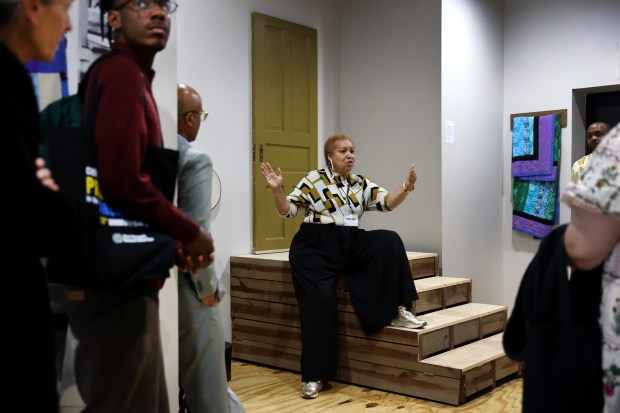
“I’m not a hands-off artist,” Hunter said. “This is my heart, deliberation, and my study. I don’t want you to come in and walk away. These pieces were integral to the South Side of Chicago, other sides of Chicago too. … Visitors can sit on the porch or the stoop to have conversations across the way from the stoop to the porch, back and forth in the gallery. It is important to me to gather whatever first person accounts that I can before there are no more.”
This summer, Hunter has had projects in a number of Chicago galleries, including “Dreams of Dystopia,” a solo Forshey Gallery exhibition that focused on themes of displacement, migration, and dreams; and “From Memory to Movement: Emmett at 85,” a Blanc Gallery group exhibition that looks at Emmett Till’s legacy.
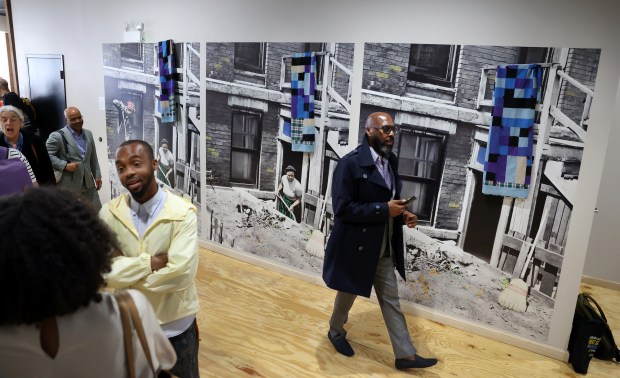
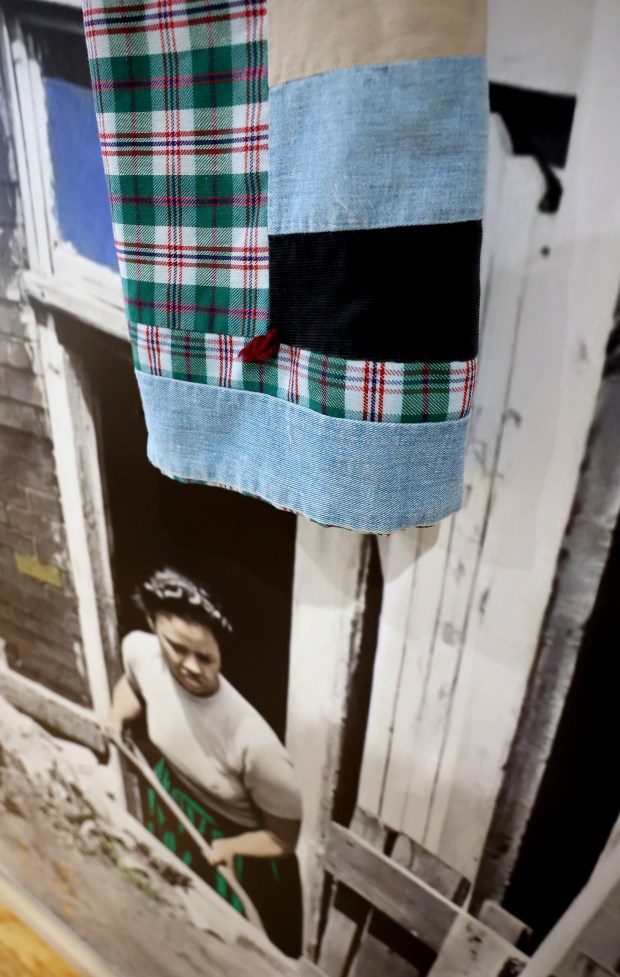
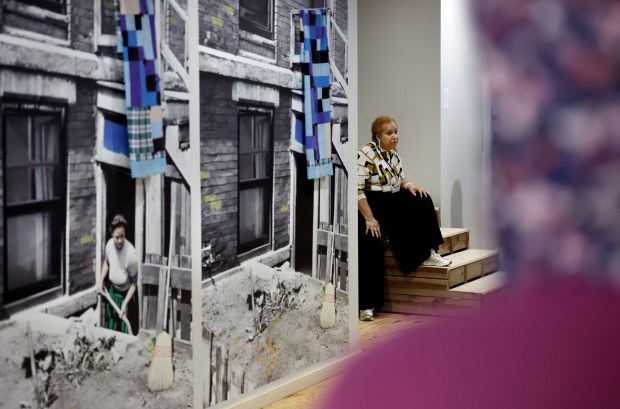
The BMRC Gallery exhibition also includes a triptych titled “Denise and the Missing People” — large scale digitized wall photos of two women working done in vinyl, that Hunter hand-colored in parts. The work rests between the porch and the stoop and shows two women tending to their residence. As the panels move to the right, we lose the women in favor of gold leaf because outside entities saw the wealth of the land more than Black folks were able to hold on to.
Quilts in the gallery space tell stories. Hat boxes from dress shops in Chicago are included because, according to Hunter, “Black people here yesterday and today have always been aspirational, reaching for something else, something more.”
Sumayya Ahmed, BMRC’s executive director, said the gallery is a community space.
“This is why we’re here in this space, artists reviving, celebrating 20 years of BMRC in this space. … One guy came in and said, ‘I can feel history in this room,'” Ahmed said. “There’s experiences that people are having, and they know nothing about the BMRC or our archives, but they know the history of their families, and they see something about that in this space.”
If you go
“The Ways We Remember” runs through Aug. 15 at BMRC Gallery, 320 E. 43rd St.; free, more at bmrc.lib.uchicago.edu. Memory Tea sessions will be 2-4 p.m. July 11 and 18; free registration.