

July may be National Hot Dog Month, but in Chicago, hot dogs are a staple year-round.
While Chicagoans may argue over the Cubs and the White Sox, debate deep-dish versus tavern-style pizza and defend their favorite neighborhood hole-in-the-wall as the city’s best, one thing unites them all: They never put ketchup on a Chicago dog.
Piled high with its signature seven toppings, the Chicago dog is a rite of passage for tourists and a source of hometown pride for locals.
But long before it became the city’s signature meal, it was shaped by the people, neighborhoods and traditions that built Chicago.
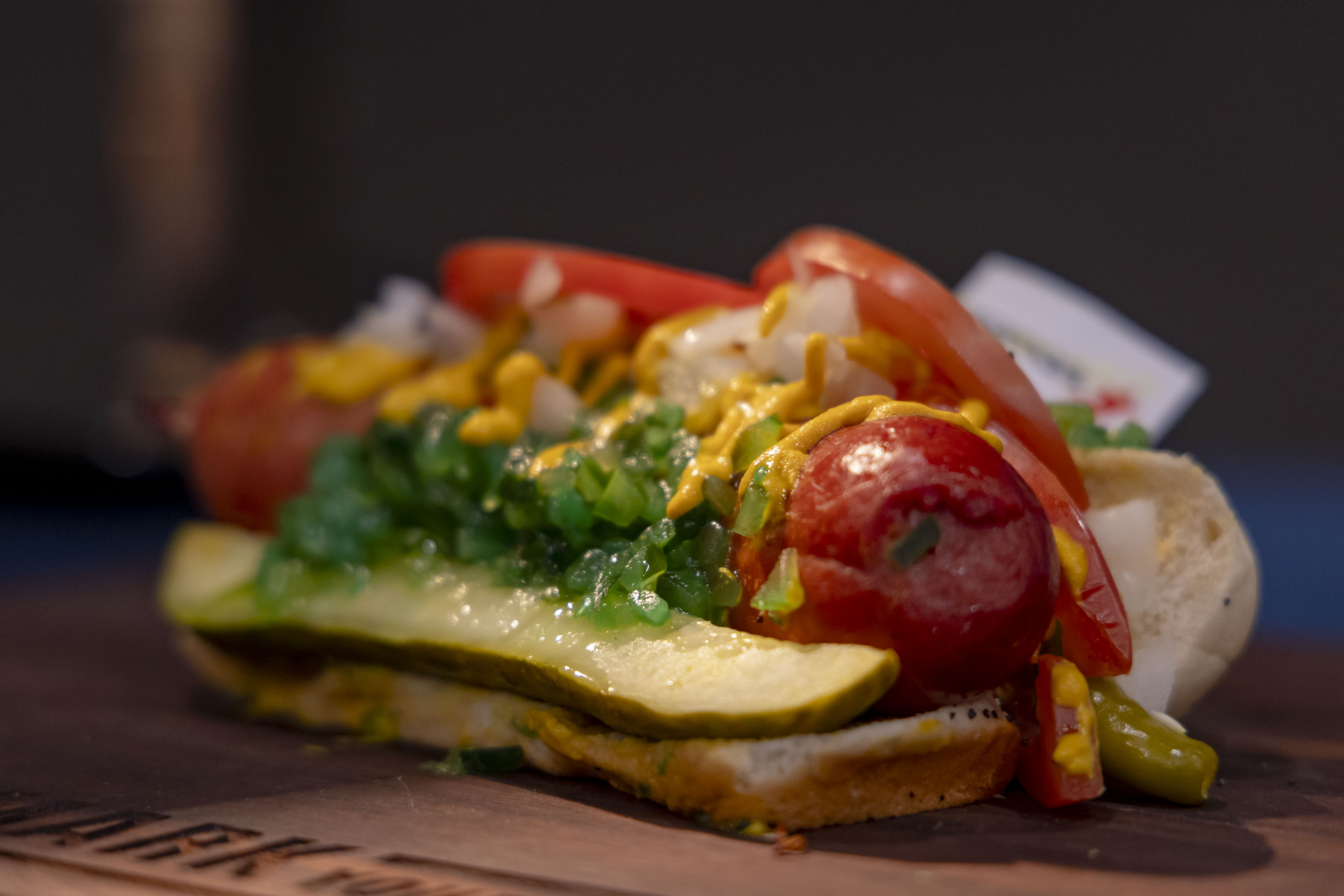
The standard Chicago dog starts with an all-beef frank nestled inside a poppy seed bun. It’s topped with yellow mustard, chopped white onions, neon green relish, tomato wedges, a dill pickle spear, pickled sport peppers and a dash of celery salt.
“It’s a marriage on a bun,” said Tom McGlade, Vienna Beef’s senior vice president of marketing. “The ingredients work in harmony.”
Though the marriage comes with a strict prenuptial agreement: No ketchup. For many vendors, ketchup’s sweetness masks the balance that makes the Chicago dog unique.

“We do make an effort to say that ketchup does not belong on a Chicago-style hot dog unless you’re still using training wheels,” McGlade said.
Many Chicago stands don’t even stock ketchup. Jimmy’s Red Hots has long embraced the slogan, “No ketchup, never ever.”
At The Wieners Circle, enforcement is more theatrical.
“The children get a pass, and then the rest of them get roasted,” said operations manager Emma Kreis.
Origin of the Chicago Dog
Like Chicago itself, the Chicago dog has no single founder.
Food historian Bruce Kraig, professor emeritus at Roosevelt University, said the city’s iconic hot dog emerged through many years of immigration, entrepreneurship and the blending of culinary traditions.
Its roots trace back to the 1840s, when German immigrants arrived in Chicago and introduced their sausage-making traditions. As Chicago grew into a booming industrial city, vendors began selling sausages on the streets, offering workers an inexpensive meal they could eat on the go.

Those early sausages were made with pork and beef, heavily seasoned and stuffed into natural casings that offer the distinct “snap.” By the 1870s and ‘80s, vendors started serving sausages in a bun for customers to carry through the city’s crowded streets.
A few decades later, another wave of immigrants reshaped the hot dog.
In the late 19th century, thousands of Eastern European Jewish immigrants settled around Maxwell Street on the Near West Side. Many entered the food business because it required relatively little money to get started. Since kosher dietary laws prohibit pork, they began making all-beef franks instead.
At the 1893 World’s Columbian Exposition, Austrian-Hungarian Jewish immigrants Emil Reichel and Samuel Ladany introduced visitors to their all-beef frankfurters. After the fair, they stayed in Chicago and founded what would become Vienna Beef.
“133 years later, here we are, still doing the same thing,” McGlade said. “We’ve honored the original recipe by not changing it at all.”
While Chicago was once home to numerous hot dog companies, including Sinai 48, David Berg and Best’s Kosher, Vienna Beef has endured as the city’s best-known brand. According to McGlade, more Chicagoland hot dog stands serve Vienna Beef than there are Wendy’s, Burger King and McDonald’s locations in the area combined, most of the stands being independently owned.

“It’s a lot of little guys with a lot of little individual entrepreneurial businesses that have leveraged the Vienna name in a way that’s meaningful to the public over generations,” McGlade said. “We have become part of the fabric of Chicago.”
Even Portillo’s, one of Chicago’s most recognizable restaurant chains, has partnered with Vienna Beef since it opened more than 60 years ago.
The Great Depression to the modern dog
When the Great Depression hit in 1929, millions of Americans lost their jobs, and affordable meals became a necessity.
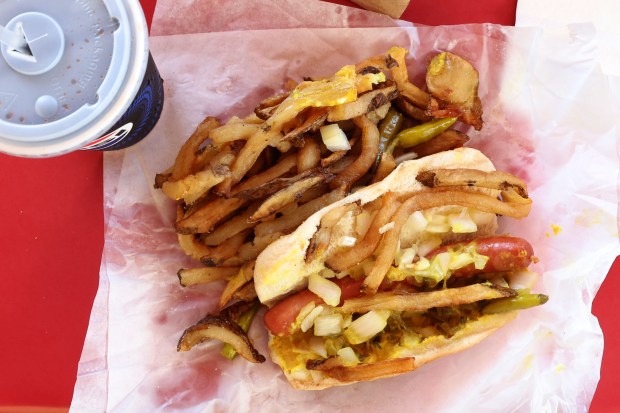
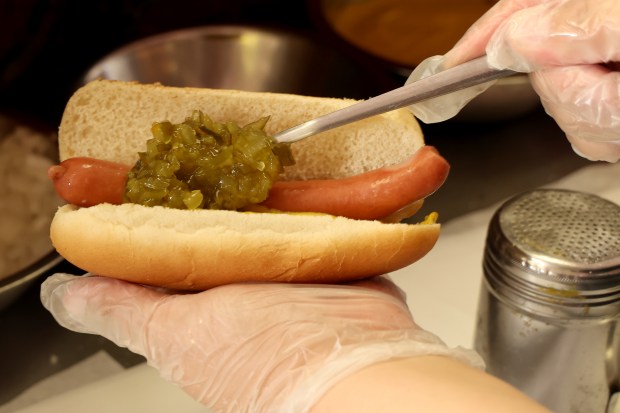
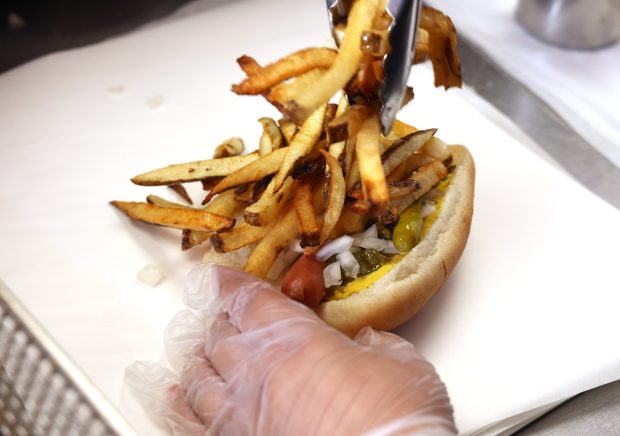
Sold for just a nickel, the Depression Dog became one of Chicago’s cheapest and most filling dishes. Vendors topped it with mustard, onions, relish and sport peppers before wrapping it together with a generous handful of fresh-cut fries.
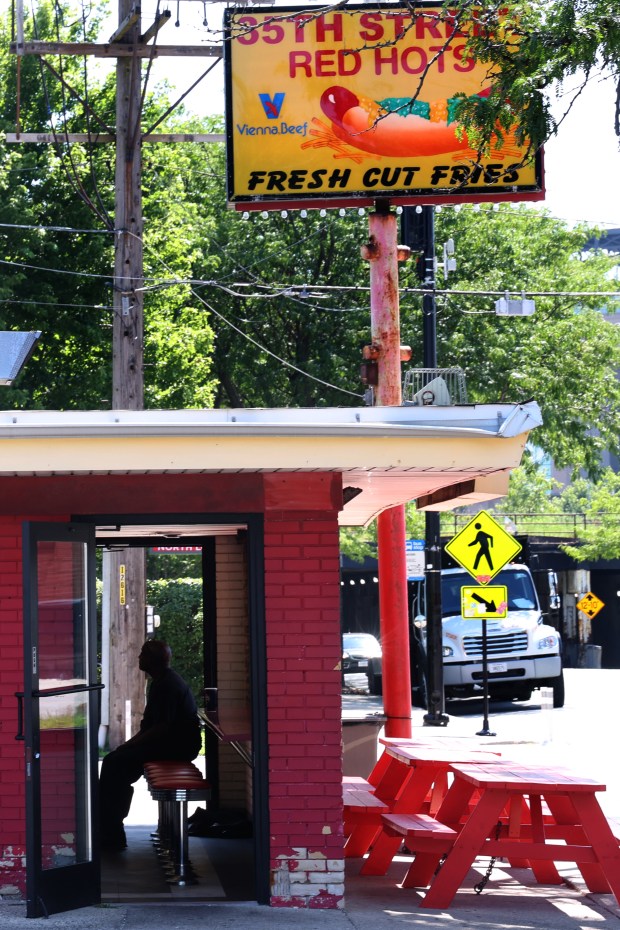
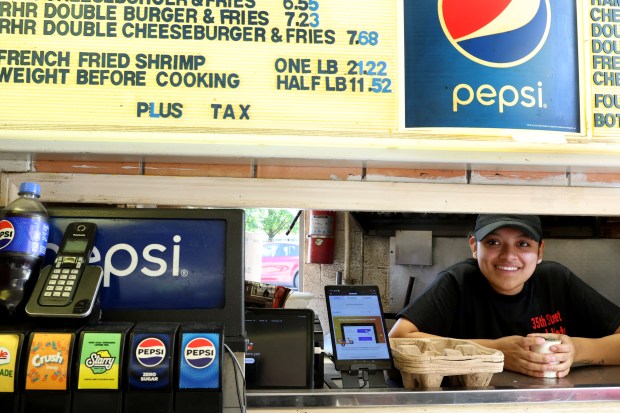
At 35th Street Red Hots and Redhot Ranch locations, owner Jeff Greenfield said the Depression Dog remains the restaurant’s signature order.
“Sure it’s a Depression Dog, but when you eat it, it makes you happy,” Greenfield said.
The mountain of toppings that are on today’s Chicago dog weren’t added until after World War II.
After years of wartime rationing, Americans craved abundance, and Chicago restaurants answered by piling ingredients onto their food. The era gave rise to iconic dishes such as the Italian beef sandwich and deep-dish pizza.
Hot dog vendors followed suit, loading their franks with extra toppings to stand out from the competition.
At Maxwell Street Market, cooks borrowed flavors from one another to create what eventually became the city’s signature “garden on a bun.”
According to Kraig, Chicago’s Jewish community contributed the all-beef frank, dill pickle and poppy seed bun. German immigrants brought their tradition of pairing mustard with sausage, while Jewish, Greek and Italian produce merchants likely inspired the addition of fresh tomato wedges. Chopped onions, a staple across countless cuisines, added crunch. Sport peppers came north from the American South, and Kraig said neon green relish likely evolved from English piccalilli. The finishing touch, celery salt, originated in Cincinnati in the 1870s when celery was popular around the country.
“Hot dogs are platforms for culture,” Kraig said. “Here in Chicago it’s this mixture of ethnicities.”

Today, taco stands and food trucks have increasingly replaced hot dog vendors, as Mexican immigration has increased and American tastes have evolved.
Nonetheless, Chicago hot dog culture is sustained by a network of iconic stands, each with its own distinct personality and fiercely loyal following.
While most Chicago stands steam their hot dogs, The Wieners Circle specializes in char-grilled franks, blistered over an open flame.
“We have our charred dogs down to a science,” Kreis said. “It’s what sets us apart.”
The food may draw customers in, but the experience keeps them coming back. The restaurant’s famous late-night insults have become as much a part of Chicago as the hot dog itself.
“It’s kind of like ‘Cheers’ where everyone knows your name,” Kreis said. “You get people from all walks of life coming into The Wieners Circle and we serve them the same food every day.”

For many visitors, however, their first Chicago dog comes from Portillo’s.
What began as Dick Portillo’s 1963 hot dog trailer has grown into one of the city’s best-known restaurant brands, with locations across 11 states.
“Hot dogs are at the heart of Portillo’s story,” Lauer said.
The company has introduced variations over the years, including a recently introduced giardiniera and provolone cheese dog in collaboration with Vienna Beef, but the classic remains its signature.
“There’s nothing like a great Chicago-style dog,” Lauer said.
Other stands have put their own spin on the classic. Superdawg swaps fresh tomato wedges for a pickled green tomato. At Byron’s Hot Dogs, ordering your dog with “everything” adds shredded lettuce, sliced cucumbers and green peppers to the traditional seven ingredients. Jeff’s Red Hots tops their Chicago dogs with sauerkraut.

Despite those variations, the Chicago dog’s identity remains unmistakable.
“This is ours, this is the way we do it, and this defines us,” Kraig said. “It’s part of our DNA.”
In honor of National Hot Dog Month, several Chicago favorites are celebrating with special promotions. Throughout July, Vienna Beef is running a giveaway in which customers can scan a QR code at participating hot dog stands for a chance to win Vienna Beef products, including Chicago-style hot dog fixings.
The Wieners Circle is also offering a lineup of promotions. On July 15, the stand will kick off a collaboration with Maple & Ash that will feature caviar, beginning with a sneak preview at The Wieners Circle before the special is featured at the steakhouse through August. On July 18, The Wieners Circle will host a hot dog eating contest with 2 Girls 1 Windy City. Later in July and continuing through August, customers can order the Malört Handshake, a special that includes a mini hot dog alongside a shot of Malört.
Eva Remijan-Toba is a freelance writer.


