
Big live sports events create communal moments, as people all over a city, a country, or even the world, experience the same event at the same instant.
Or do they?
You are watching the World Cup final on Sunday and waiting for a goal when a cheer erupts from the apartment next door. Then your phone pings, and a friend monitoring the game exults. But on your screen, the score remains 0-0.
Seconds later, you see it: A misplay, a neat pass and a goal. But for you, the excitement is lessened. You knew it was coming.
The World Cup is the latest major sporting event to bring into focus our out-of-sync world, where the channel or streaming service you choose could determine whether you see a big sports moment a bit earlier than others, or worse, a bit later.
“For many years, live television meant the signal went almost straight from the camera to viewers,” said Kenny Elcock, a former vice president of technology at the regional sports channel NESN.
“Today, live broadcasts go through a much more complicated process,” he wrote in an email. “Before you see the video, it’s captured, processed, compressed, encrypted, packaged, sent out, stored, decoded, and finally shown on your screen. Each step adds a bit of delay, and together, these delays can add up.”
Over-the-air TV is fastest. Elcock estimates that, typically, you are seeing an event three to eight seconds after it happens.
Cable TV involves extra equipment and steps to send a signal through fiber networks. The delay creeps upward, to five to 12 seconds, he said.
Satellite TV has to travel farther, all the way to space and back. In addition, there is more encoding and processing. Now the delay may reach 15 to 30 seconds.
Streaming is different. “Streaming splits the video into thousands of small files called segments,” Elcock said. That’s more delay and many more steps. Delays can reach 60 seconds or more.
Then there is the buffering performed by your smart TV, phone or computer. A small amount of video is downloaded and held while you watch slightly older video. Without these buffers, a small glitch in internet service could cause a frozen picture.
“If internet speeds briefly decline, the player continues displaying buffered video while additional data arrives,” Elcock said. “The result is a smoother viewing experience, even if it means viewers watch events several seconds later.”
There is wide variation in when fans see the game, even among those using the same service. “One TV might build up a 25-second buffer, while another only keeps eight seconds,” Elcock said. “Both seem to be watching ‘live.’ But neither is actually seeing the exact same moment.”
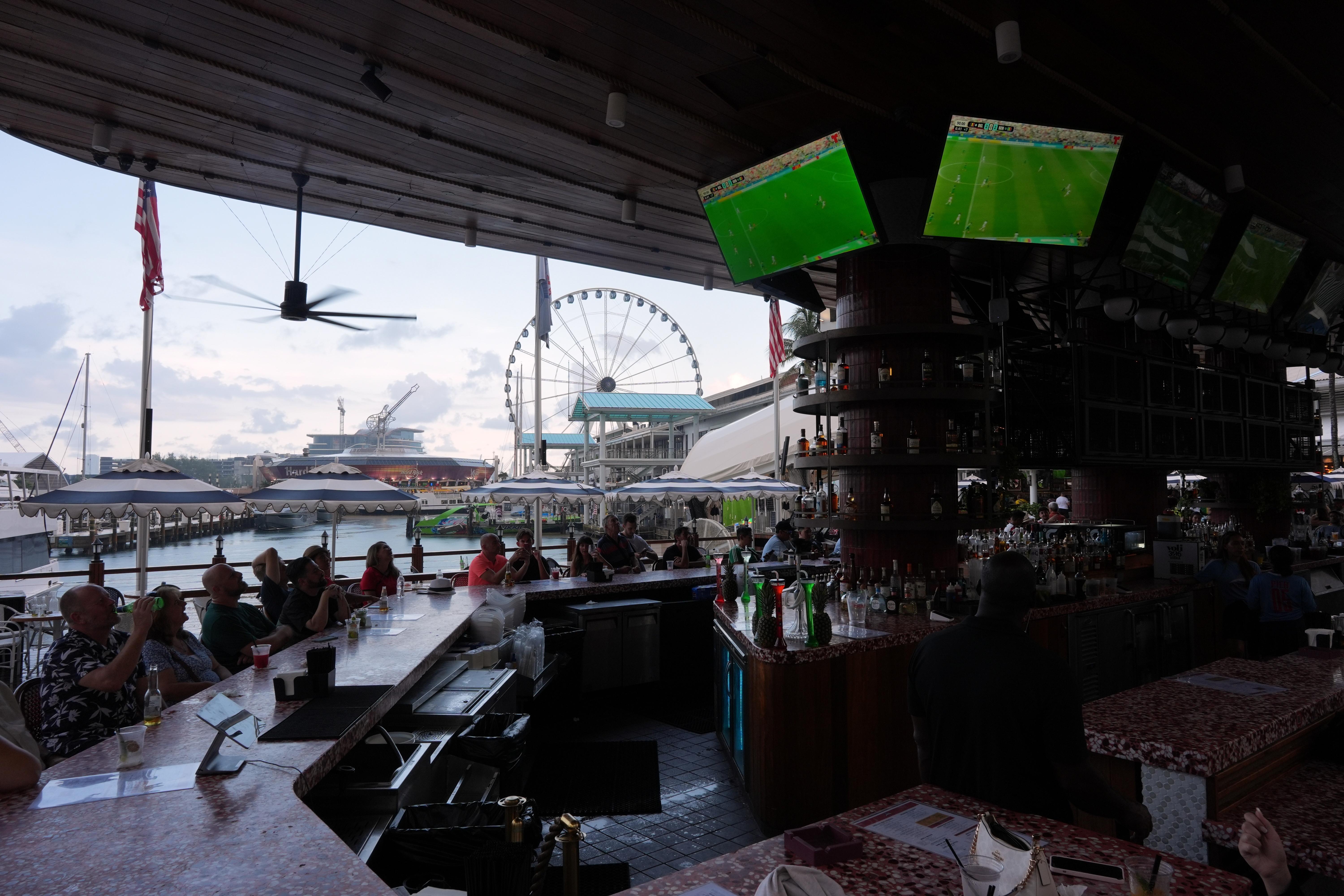
As a result, fans in the same neighborhood, or even in the same office or sports bar, may be seeing goals as much as a minute apart.
The discrepancy between television services, or even between individual televisions, can cause havoc at a place with many of them, like Latitude 39, a restaurant in New York City that has showed matches from the tournament.
“At one side of the bar, people were screaming for a goal, and the other side didn’t have it,” said Nordine Achbani, the owner.
“It took us a while to figure out how to fix it,” he said. A little finagling with switching to a different channel and back seemed to sync things up again.
Being in the stadium remains the only way to truly see an event live.
The next best things are probably services that flash the news of goals onto a phone or other device — no video delay to worry about. In all likelihood, the fan who ignores the TV and just stares at a dedicated app for soccer or gambling is finding out about goals faster than anyone not actually sitting in the stadium.
But that won’t be most of us on Sunday, and that cheer from the bar across the street might spoil a big goal by Lionel Messi or Mikel Oyarzabal that you were under the illusion you were watching “live.”