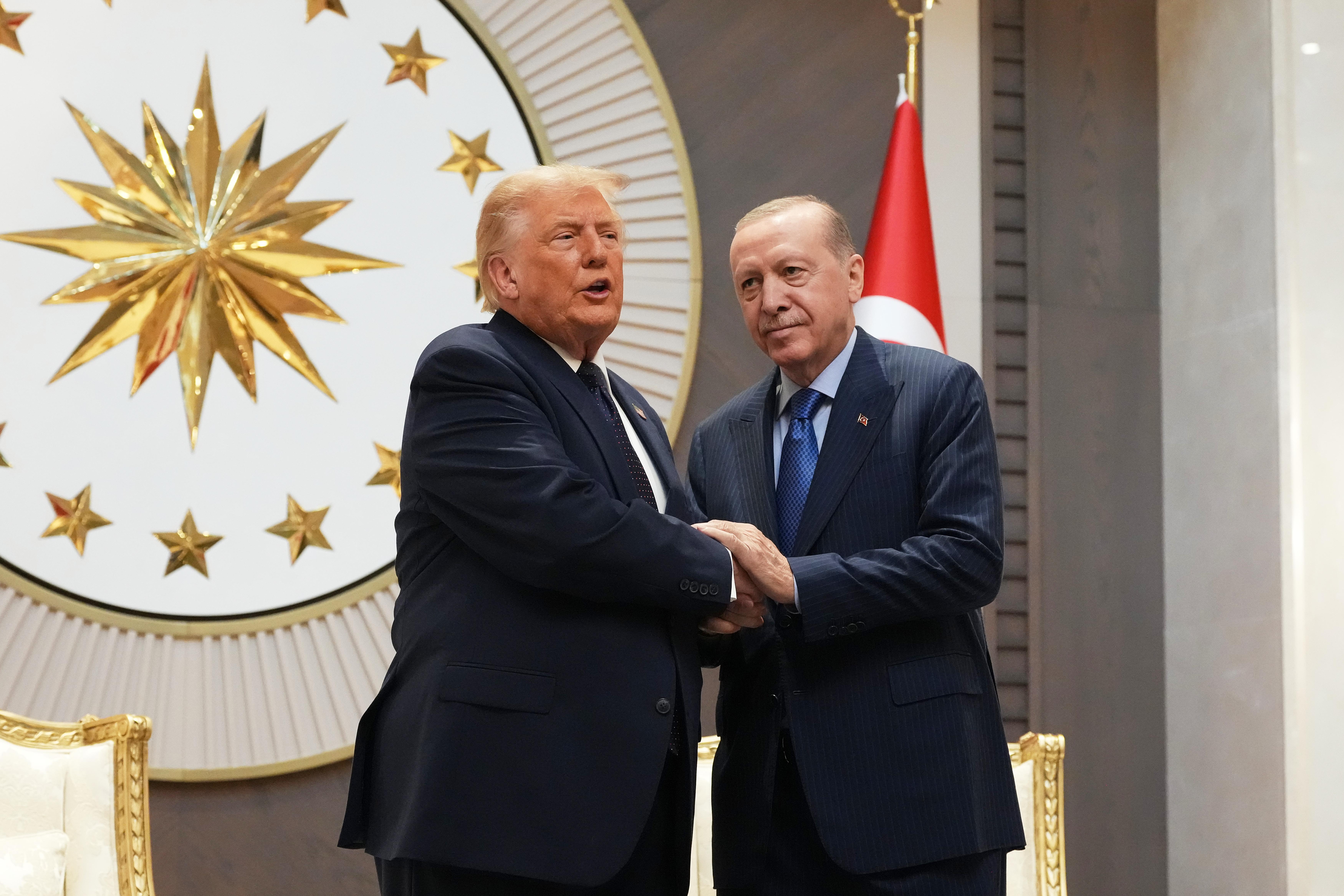

The remarkably successful NATO summit in early July underscores the continuing importance of this alliance.
Russia’s invasion of Ukraine in February 2022 and the ongoing brutal war have reconfirmed and reenergized the transatlantic security pact. Before that dramatic development, critics argued that NATO had become inert, bureaucratic, perhaps irrelevant with the successful conclusion of the Cold War in 1991.
NATO formally began in April 1949 with 12 members and has expanded long-term to 32. Membership today spans eastern as well as western Europe, with Finland and Sweden the most recent to join, respectively in 2022 and 2024.
How useful is this European experience in evaluating Asia? China represents a powerful challenge and widely perceived threat.
The Korean War of 1950-53 transformed the Cold War from European to global conflict, and forged a powerful alliance. South Korea’s evolution afterwards to political democracy and economic powerhouse is extraordinary.
Asia Pacific Economic Cooperation (APEC), with 21 member nations, provides policy coordination spanning the vast Pacific region. From July 16 to 29, APEC is holding ministerial talks, workshops and other events regarding Artificial Intelligence and related technology.
APEC was conceived by Australia’s Prime Minister Bob Hawke and embraced enthusiastically by President George H.W. Bush and Secretary of State James Baker.
Australia over the past several decades has moved in the direction of free markets, and a much more explicit national commitment to tolerance, directly reflected in official policy toward indigenous populations. Australia-U.S. cooperation is expanding, especially regarding defense.
The 2006 APEC summit was held in Vietnam. The gathering highlighted that nation’s economic growth and commitment to multilateralism. As with China, economic realities forced ideological change. China is also an APEC member.
Hanoi honored U.S. Defense Secretary Donald Rumsfeld and our government with a parade, complete with American flags – an ironic as well as poignant gesture.
There are military security aspects to APEC summits. In the 2008 meeting held in Peru, Americans and Russians discussed differences over Moscow’s invasion of Georgia, important background given later invasion of Ukraine.
The Quadrilateral Security Dialogue (the Quad) was revived in 2017 following an unsuccessful earlier effort. Member nations are Australia, India, Japan and the U.S. Maritime security is a priority, along with more general economic and public health concerns.
China accuses Quad nations of trying to replicate NATO. That false analogy reflects the security anxieties of a surviving communist power rather than reality. Along with stark contrasts in geography, important differences in history and structure characterize the Quad initiative.
The Obama administration declared Asia a priority concern for defense policy. This reflects the rise of China, and more generally the expanding strategic importance of Asia.
Since the mid-1980s, the total volume of U.S. trade with Asia has been larger than with Europe. In the wake of the collapse of the Soviet Union and the end of the Cold War, international relations have become more flexible – and unpredictable.
There is nothing new about economic dimensions of war as well as diplomacy. During the Cold War, European economic integration was institutionally separate, in the European Union and predecessor organizations, most notably the European Economic Cooperation (EEC) organization formed in 1957.
The Pacific region historically lacks the comprehensive established network of economic and military organizations defining Atlantic area relationships. Geographic proximity is also absent. For these reasons especially, APEC and the Quad significantly reflect greater flexibility available today.
For decades, Cold War division defined relationships among nations. Today, that rigidity is gone. Freedom is gaining.
Arthur I. Cyr is the author of “After the Cold War” (Macmillan/Palgrave and NYU Press), and other books. Contact acyr@carthage.edu