

Park Ridge officials gave the initial approval to a new mural program that will allow murals on all public buildings.
The July 20 committee of the whole meeting of the Park Ridge City Council approved the first reading of a new policy that would, for the first time, allow murals on publicly owned buildings. The mural program still needs another vote before it becomes policy.
However, designs as well as artists would still be approved by the city council, even on buildings that aren’t city property, like the library or school buildings. The designs would be intended to celebrate the community.
The idea has been brewing for months and, according to the proposed plan, wouldn’t cost anything or create any new authorities — it merely establishes a framework should an entity wish to pay for a mural on a publicly owned building. The murals would be considered government speech and they would be permanent. The resolution says the works would be “works of art that enhance the character and aesthetics of the community and promote cultural enrichment, storytelling, and placemaking.” The resolution goes on to explain the murals would promote civic identity, history and culture and engage visitors.
The mural program will be wholly controlled by the city and, in all cases, the murals would technically be owned by the city, even if the wall is owned by another public entity. Beyond that, other factors would be agreed to on a case-by-case basis.
Park Ridge City Attorney Adam Simon explained the city would negotiate with the entity proposing the mural on repair and upkeep costs. In theory, if the library wanted to have a mural on the side of its building, it could negotiate with the city on the upkeep costs.
Simon explained that while complicated, this arrangement means the city cannot be accused of censorship because the city is simply choosing how to express itself rather than limiting how other public entities can express themselves.
“The reason it’s designed this way is, … it’s the city deciding how it wants to express itself rather than regulating how someone else wants to express itself.”
Director of Community Preservation and Development Drew Awsumb explained the city council will get final say on all murals, though there is no provision for an additional public hearing. Meaning, if residents or neighbors wish to debate or protest a proposed piece of art, they would need to go to City Hall. The city leaders would still take two votes on the matter, the same as with other matters.
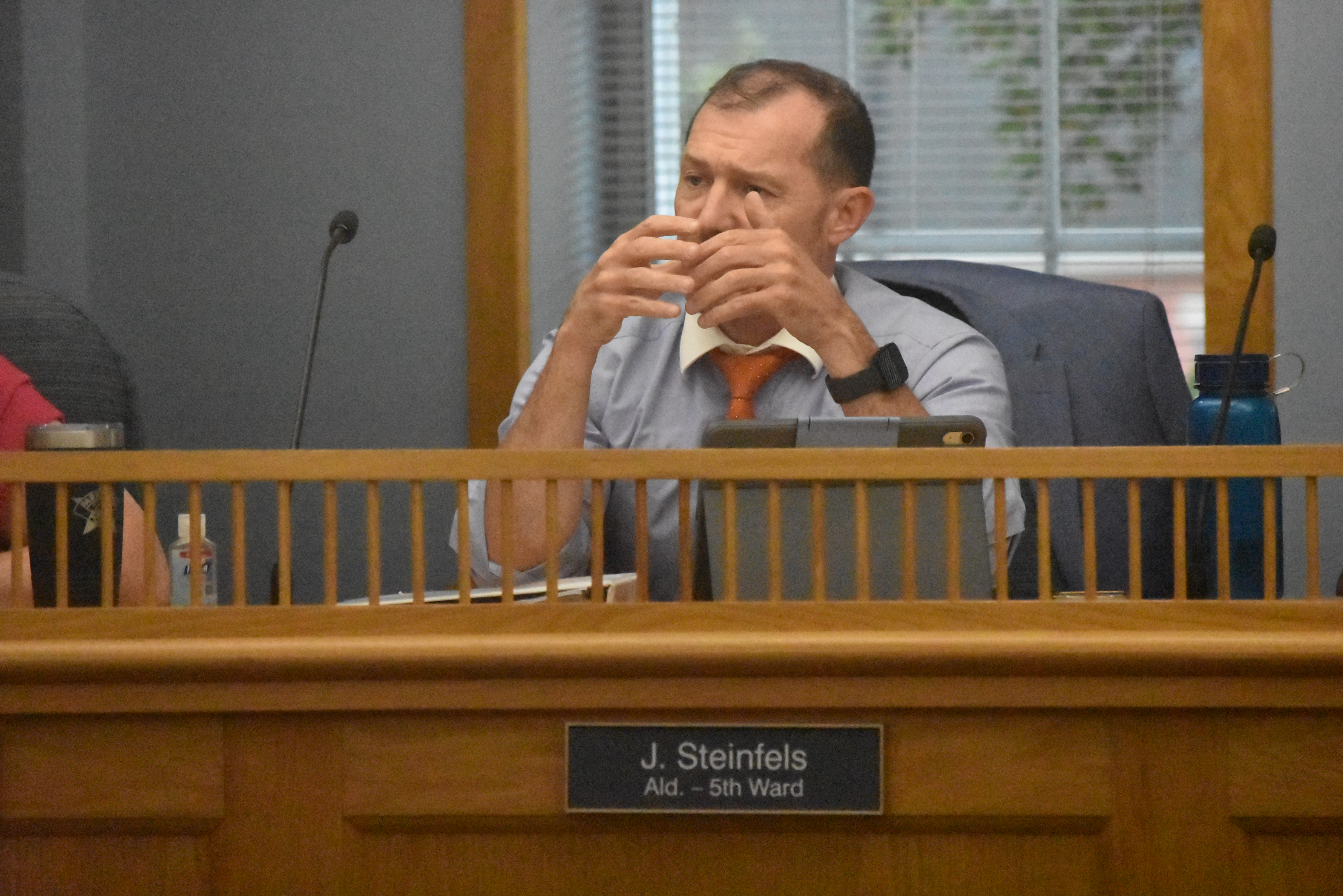
Still, Alderperson Joseph Steinfels said he felt the murals should have separate hearings.
“Why wouldn’t it trigger a hearing?” he asked. “A mural on the side of a building, I would think (neighbors) would have some level of interest in knowing what’s going to be put on a building.”
Awsumb said public hearings are for zoning actions, and murals don’t require zoning approval. However, he noted, city meetings are public meetings with notices.
The measure passed unanimously.
Jesse Wright is a freelance reporter for Pioneer Press.


