
United Steelworkers leaders said Wednesday that BP’s more than four month long lockout at its Whiting refinery reflects broader environmental, social and governance concerns with the company.
USW, the American Federation of Labor and Congress of Industrial Organizations and IndustriALL Global Union all called on investors to talk with BP’s leadership and end the lockout during a Wednesday morning webinar.
“Understand that this is not a strike,” said Carin Zelinko, director of capital strategies for AFL-CIO. “The company chose to lock out experienced refinery workers on March 19, even as global energy markets were experiencing extreme turmoil from a war in Iran that began only three weeks earlier. At that time, national average retail gasoline prices were already soaring.”
The groups also published an online brief detailing their concerns that can be found on the USW’s website.
In its brief, the groups outline their governance and environmental concerns. According to the brief, BP has had three CEOs and three board chairs in the past three years, and it’s faced criticism from major investors and proxy advisors.
It also claims that the company has received criticism for restricting shareholder rights, and the lockout demonstrates “a willingness to to ignore the concerns of employees.”
According to Post-Tribune archives, the union has tried to get BP to adopt the National Oil Bargaining Program that currently covers more than 30,000 USW oil workers at dozens of employers in more than 200 bargaining units.
Michael Smith, chief of USW’s National Oil Bargaining Program, said bargaining in accordance with the program is an advantage for workers and the industry, and it creates an equal playing field.
As for environmental concerns, the brief referenced an April 26 flaring at the refinery, arguing that it’s a “troubling show of corporate responsibility.” According to Post-Tribune archives, community members and locked out workers said they hadn’t been notified, but workers inside the refinery received a shelter-in-place order.
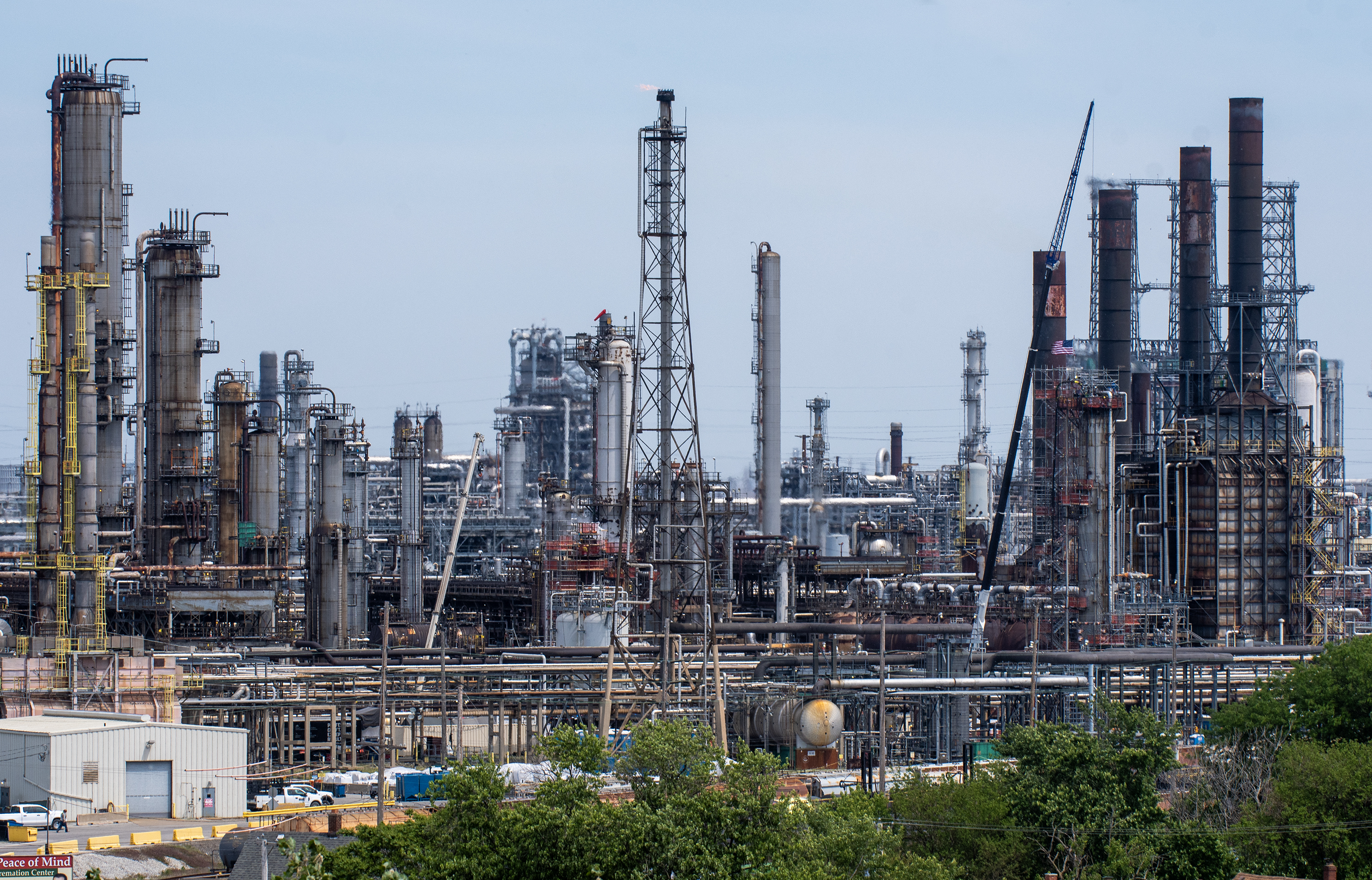
Nicholas Schafer, technician for USW collective bargaining, research, and benefits, said the Whiting refinery is the Midwest’s largest facility and one of the largest producers of gasoline, diesel and jet fuel in the U.S. Any outage at the refinery “can profoundly impact” the refined product market area.
In 2015, Schafer said, an outage at the refinery removed 120,000 to 140,000 barrels of gasoline production per day.
BP responded to their concerns in a Wednesday morning statement.
“We understand the USW 7-1 leadership is reaching out to investors and other stakeholders, but the best place to resolve these issues is at the negotiating table,” BP spokesman Cesar Rodriguez said in an email statement. “BP has bargained in good faith for months and remains focused on reaching an agreement that supports both the needs and priorities of our union employees and the long-term sustainability of the refinery. BP has a current proposal on the table that provides meaningful financial improvements, long-term certainty and opportunities for employees to advance in their careers.”
The local bargaining unit USW 7-1 did not host Wednesday’s meeting, but the national union did. USW 7-1 President Eric Schultz participated in the meeting, saying that the company’s position has been “very unusual.”
Schultz said he feels the company talked as though a work stoppage was inevitable and prepared for a strike sooner than before.
“It was more intense than ever before,” Schultz said. “We had a feeling coming into this that we were going to be in for a fight. … We could tell that it became apparent that they didn’t really want a contract. They didn’t want an agreement, they were trying to push us into a strike.”
Schultz also said the lockout has put a strain on the 800 union members out of work, especially since they don’t know when they’ll return. Members have had to find alternative employment during the lockout.
“Some members are having to (work) two to three jobs to try to make ends meet,” Schultz added. “It’s been very stressful for our members, but not just for our members, it’s also stressful for the salaried individuals inside the fenceline.”
BP said in its statement that safety remains the company’s top priority, and the refinery is operated “by qualified, trained employees in compliance with all regulatory requirements,” and the lockout hasn’t impacted the facility’s production. According to BP’s website, about 450 employees and “specialized contractors” operate the refinery during the lockout.
According to Post-Tribune archives, BP and USW 7-1 last held their 63rd formal bargaining session June 10, which was the first since May 22, according to Post-Tribune archives. Negotiations began Jan. 5, and the previous contract expired Jan. 31.
BP initiated a lockout of more than 800 union employees on March 19. The union and multiple government bodies — including the Lake County Council and Board of Commissioners — have asked BP to end the lockout as negotiations continue.