



Pioneers, an American League MVP and a consistent winner on the mound are among those with ties to Chicago teams on the Golden Days and Early Baseball Era ballots for the Baseball Hall of Fame.
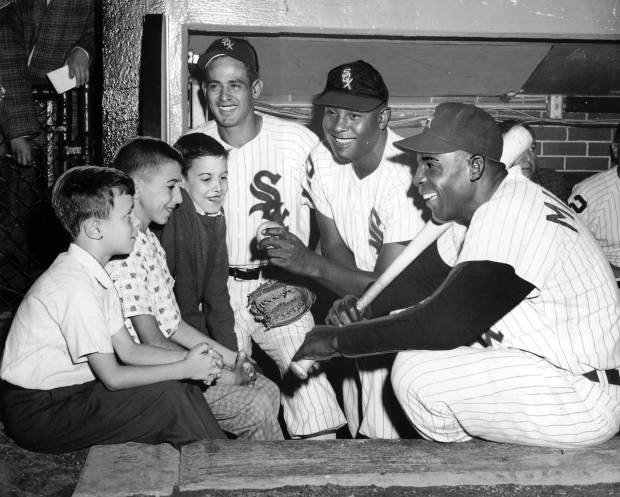
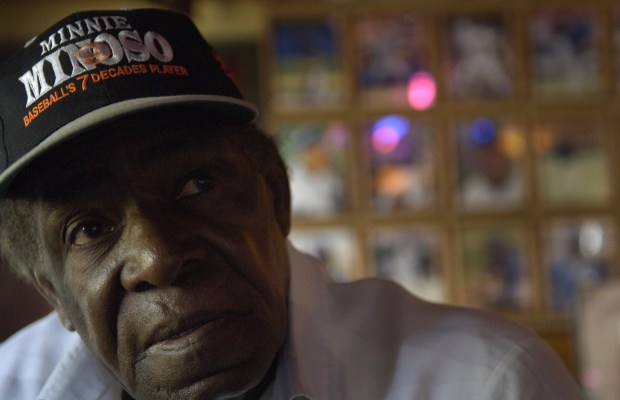
Former White Sox greats Dick Allen, Minnie Miñoso and Billy Pierce are among the 10 on the Golden Days Era ballot. That list also includes Jim Kaat and Ken Boyer, who had stretches with the Sox.
Buck O’Neil, one of the game’s greatest ambassadors and the first Black coach in AL or NL history while with the Cubs, is one of the 10 on the Early Baseball Era ballot.
That group includes John Donaldson, who pitched in the Negro Leagues and pre-Negro Leagues for more than 30 years and later was a White Sox scout from 1949-54, and Dick Redding, who played for the Chicago American Giants, among other teams.
Candidates with 75% of the vote by the 16-member committees receive election. Results will be announced Sunday.
Here are a few dates that highlight some of the contributions Miñoso, Allen, Pierce and O’Neil made to the game, along with how the Tribune marked the occasions.
April 30 and May 1, 1951
Miñoso joined the Sox from Cleveland as part of a three-team trade on April 30. The Sox also landed Paul Lehner from the Philadelphia Athletics as part of the deal.
A story in the May 1 Tribune by Irving Vaughn said of the two acquisitions, “The White Sox will have something new to show this afternoon.” The story noted Miñoso’s speed and said he could “operate in the outfield as well as in the inner defense.”
Miñoso became the franchise’s first Black player on May 1, hitting a home run in his first at-bat with the team.
“The White Sox yesterday presented their new ensemble — the additions being Orestes Miñoso and Paul Lehner — but it wasn’t quite enough to awe the world champion New York Yankees,” Vaughn wrote in the May 2 Tribune.
The Yankees won 8-3 “before 14,776 Comiskey Park patrons, who didn’t think favorably of the final decision, but found consolation in some of the things done by the pair of newcomers,” Vaughn wrote.
Miñoso went on to become one of the top offensive players in the league during an 11-year span from 1951-61 with the Sox and Cleveland. He displayed several of the skills that made him an All-Star in two of his three Negro League seasons with the New York Cubans.
Miñoso, who died in 2015, was a nine-time All-Star and won three Gold Glove Awards as an outfielder during 17 seasons with Cleveland, the White Sox, St. Louis Cardinals and Washington Senators. And “The Cuban Comet” was a trailblazer for generations of ballplayers that followed.
Sept. 25, 1955

Pierce struck out 12 and allowed three hits while going the distance in a 5-0 victory against the Kansas City A’s in the final game of the season.
“A skimpy Comiskey Park crowd watched Billy Pierce pitch his sixth shutout,” wrote Edward Prell in the Sept. 26 Tribune.
Pierce finished 1955 with a 1.97 ERA, the best in the majors.
He had 16 complete games in 1955, finishing tied for third in the American League. He led the league in the category in 1956 (21), ’57 (16) and ’58 (19).
A seven-time All-Star, Pierce went 211-169 with a 3.27 ERA in 18 seasons, 13 with the Sox. He reached double-digits victories in 12 of his 14 seasons as a big-league starter, including leading the AL with 20 wins in 1957. He died in 2015.
May 29, 1962

The Cubs signed O’Neil to the coaching staff, paving the way for him to become the first Black coach in the AL or NL.
“O’Neil formerly played for and managed the Kansas City Monarchs of the Negro American league, and it was under him that both Ernie Banks and George Altman of the Cubs got their start in baseball,” wrote Richard Dozer in the May 30 Tribune.
Dozer also noted that O’Neil was “instrumental” in signing most of the Black players in the Cubs organization. He had been a scout in the Cubs organization since 1956, according to the article.
O’Neil was a three-time All-Star during 10 seasons with the Memphis Red Sox and Monarchs of the Negro American League, according to the most recent information available on baseball-reference.com.
He was also one of the game’s great ambassadors and helped found the Negro Leagues Baseball Museum in Kansas City, Mo.
The National Baseball Hall of Fame’s John Jordan “Buck” O’Neil Lifetime Achievement Award, established in 2007, honors “an individual whose efforts broadened the game’s appeal and whose character, integrity and dignity is comparable” to O’Neil, according to the Hall’s website. It is presented by the Hall’s board of directors “at its discretion, though not more frequently than every three years.”
O’Neil, who died in 2006, was the first recipient in 2008.
Nov. 15, 1972
Allen became the first Sox player since Nellie Fox in 1959 to earn the AL MVP.
“Baseball is more and more an individual game, but I am one of those guys who happen to believe it is still a team sport,” Allen said, according to a Nov. 16 Tribune story about him winning the award. “I’m glad to have been a part of it with the White Sox this year.”
Allen slashed .308/.420/.603 that season, leading the league in on-base percentage and slugging. He also had league highs in home runs (37) and RBIs (113).
“It was as big a thrill for me as it was for Dick,” then-Sox manager Chuck Tanner said in the story.
Allen, who died last December, was a seven-time All-Star. He was named the 1964 NL Rookie of the Year with the Philadelphia Phillies.
Allen played from 1963-77 for five teams and had 351 home runs, 1,119 RBIs and a .292 average. He hit .307 with 85 home runs and 242 RBIs during his three seasons with the Sox, leading the league in homers in 1972 and ’74.