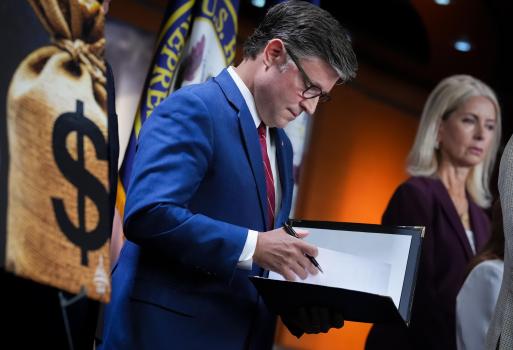
Perhaps the most telling thing about House Speaker Lee Daniels’ school-funding proposal is his claim that, with this plan, “everybody wins, nobody loses.”
That transparent bit of hucksterism is emblematic of the plan itself, which offers a slick solution to a perceived political problem instead of addressing genuine inequities in how the state funds its schools.
The problem, as Daniels (R-Elmhurst) sees it, is that Illinois voters want the state to provide more money for public schools. But that would require a tax hike, which he wants no part of in an election year.
That’s where his plan comes in: It offers “new” money for the schools without costing anybody anything. What could be better?
For Daniels, whose top priority is re-election, nothing. For residents of Illinois–particularly those not living in the wealthier school districts–a whole lot.
His proposal does absolutely nothing to alleviate–in fact, it seems not even to recognize–the most pernicious result of the state’s chronic underfunding of public schools: the gross inequity in the educational opportunities offered to rich and poor students.
Daniels’ plan would hand over $225 to $250 per student in the 1996-97 school year to every district in the state, regardless of wealth.
A suburban district on Chicago’s North Shore that spends almost $14,000 on each of its students would get to spend almost $14,250. And a Downstate district in Clinton County that spends just under $2,500 per student would get to spend just over $2,500. Is that the most effective way to spend $412 million? It depends on whether you’re talking education or politics.
There will always be the rich and the poor and a vast population in between. It’s not the state’s responsibility to equalize them absolutely, but it is the state’s constitutional duty to assure equity by assuring each child an opportunity for an adequate education.
That isn’t happening under the current system, which relies far too heavily on property taxes, which rely on local wealth. And it certainly won’t happen under the Daniels plan, which offers a minor diversion instead of the grand vision that is needed.
But by pairing his one-year plan with a genuine long-term reform proposal that addresses the issue of equity–say the one Gov. Jim Edgar announced last month–Daniels could make political hay while actually furthering the best interests of education.
After all, all Edgar proposed was to put the school-funding issue before those very voters that Daniels seems so concerned about pleasing.