Riot and Remembrance: The Tulsa Race War and Its Legacy
By James S. Hirsch
Houghton Mifflin, 358 pages, $25
The Burning: Massacre, Destruction, and the Tulsa Race Riot of 1921
By Tim Madigan
Thomas Dunne/St. Martin’s, 297 pages, $24.95
Imagine carloads of armed men cruising down a street, firing into the air. Imagine two groups who so fear and mistrust each other that they are ready to kill. Imagine those two groups engaging in urban warfare, igniting houses afire, buzzing by in airplanes, interring their opponents in camps. Imagine reports of trucks packed with bodies and rumors of unmarked mass graves. We would expect this type of violence to erupt in the Balkans, the Middle East, or perhaps Africa. It has also occurred in the U.S.
The Tulsa race riot in 1921 began with the threat of a lynching, included black resistance and ended with white behavior reminiscent of a pogrom or ethnic cleansing. By 1921, white Americans had honed lynching to an art form. The slightest misstep by a black man, particularly when it touched upon any physical contact with a white woman, could lead to an angry crowd taking the law into its own hands. Dick Rowland made just this type of misstep when he accidently bumped into the white woman who operated the elevator in a downtown Tulsa building. He was arrested May 31, and word spread quickly that there was to be a lynching that night.
The people of Greenwood, Tulsa’s dynamic African-American community, knew a lynching was possible. They knew of the massive race rioting on the national scene, including disturbances in East St. Louis in 1917 and Chicago in 1919.
Regardless of the danger, many in Greenwood were determined to protect Rowland. That night, armed blacks repeatedly visited the courthouse where Rowland was held and a huge white crowd had formed. On the third and last of these trips, someone fired a shot. Quickly men on both sides discharged their guns. Outnumbered, the blacks retreated to Greenwood. Those who made it back were joined by others who formed a defensive line along the railroad tracks that separated their community from the rest of the city. In the morning thousands of whites attacked. Outnumbered and outgunned, the blacks were overwhelmed. As many as 300 people may have been killed. Those blacks who could not escape to the countryside and were not murdered were captured and held in detention. Most of the businesses and homes in Greenwood were burned to the ground.
White Tulsans at first blamed the “Negro uprising” on the residents of Greenwood. The blacks were “uppity” and had threatened the white community. Soon, however, white Tulsans sought to purge the riot from the city’s history. An inflammatory editorial from May 31 calling for a lynching was cut out of newspaper files, and police records disappeared. By the mid-20th Century, the Tulsa race riot had become invisible. The tragedy did not fit the American self-image; it ran counter to the celebration of democracy and a history of consensus.
Gradually, the story has come back to us. The blacks who lived through the riot never forgot what they lost. In the 1970s, Scott Ellsworth, who is white and from Tulsa, reconstructed a narrative of events based on scanty documents and oral history. In 1982 he published his findings in “Death in a Promised Land: The Tulsa Race Riot of 1921” (Louisiana State University Press). In the 1990s, the State of Oklahoma set up a commission to study the riot. With that report concluded, James Hirsch and Tim Madigan have each written books for more-general audiences to ensure that as a society we do not forget the Tulsa race riot again.
Hirsch has written the better book. Madigan attributes the riot to a newspaper editor and the Ku Klux Klan. This simplistic interpretation is too facile. Inflammatory news coverage encouraged the mob, and members of the Klan participated, but the cause of the disturbance lay deeper. Hirsch places the riot in the larger context of American and Tulsan history. He does not seek to blame either blacks or whites. Instead, he recognizes that the fault lay with both sides in a climate in which “each side misunderstood the actions of the other and made fateful decisions as a result.”
Despite this balanced approach, Hirsch is sympathetic to the plight of Greenwood’s residents. His powerful narrative of the riot leads the reader to see the injustice of the event. A crowd of Greenwood men may have provoked the ire of a white mob by appearing armed at the courthouse, but their concerns for Rowland’s safety were real. Even if these men were wrong, their action was not an excuse for the obliteration of a vibrant community.
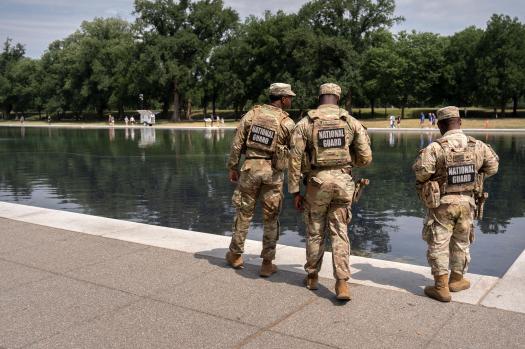
Hirsch also provides an account of the process of remembering the Tulsa riot. All history is political. Historians reading documents must constantly decide what to believe and what not to believe. On the surface this process depends on subtle distinctions — a small contradiction here, a suggestion of bias there. Ultimately, however, the politics of the historian comes into play. The more volatile the subject, the more obvious the politics. The story of the Tulsa Race Riot Commission demonstrates how volatile and how political history can be. Most white Oklahomans did not want to affix any blame. Admitting that the city had failed to protect black property, or that the National Guard had sided with the whites — both of which were true — might open the way to lawsuits or support reparations. On the other hand, many blacks not only wanted to find blame, but they also asserted there was a conspiracy by rich whites to destroy Greenwood to take control of valuable commercial property near downtown. Accepting this position leads to the conclusion that civic leaders, the city and the state were all culpable and needed to pay for their sins.
The gulf between these two views leads to different ways of reading evidence. For example, both sides agree that airplanes flew over Greenwood. The official explanation, accepted by most white scholars, is that these planes were used to survey the damage and pinpoint fires. Black oral testimony provides a different account; the people of Greenwood hold that the airplanes were used to start fires and shoot blacks, including women and children. In fact, as the story was related from one generation to another, the blacks were winning the battle of Greenwood until the airplanes appeared and tipped the scales in favor of the whites. The truth will never be known, but accepting one version or the other matters. If the planes were just searching for trouble spots, one could argue that the forces of law and order were seeking to stem the rage of the mob. If the planes participated in the fighting, there may have been a conspiracy, because the planes must have been sent aloft by the powers that be-the government or the oil companies. Discussion over such details divided the commission and led to heated political debate.
Tim Madigan is not concerned with these subtleties. He seizes upon the black version and makes it his own. He proudly proclaims that Don Ross, a black Oklahoma politician who at first thought Madigan was an ” ‘ignorant white boy,’ ” later dubbed him ” ‘an honorary Negro.’ ” Taking this perspective is not necessarily a bad thing. Given the conspiracy of silence concerning the riot, the black approach may be closer to the truth. In his effort to tell as many personal stories about the experience of living through the riot, however, Madigan engages in questionable practices. It is one thing to relate the words used in an oral interview from a direct witness. It is another to report as truth information from some nephew “well-versed” in family history.
But the problem with Madigan’s methods goes deeper. In the author’s note, he admits that “in some cases” he has “taken the license of approximating dialogue for the purpose of maintaining the narrative.” He defends this action by saying “[t]hese instances are totally consistent with the character of the people involved as my research revealed them to be, and wholly true to the events as they unfolded in 1921.” We never know when Madigan is using a real quotation or one he made up. Worse, somehow he is able not only to tell us what someone said, he is also able to state their thoughts, including the reflections of the last moments of a dying man. The result of this approach is historical fiction.
The Tulsa race riot needs to be remembered. Race still divides our society, and politics will continue to intrude on our history. However we may debate the details, we should strive to get as close to the truth as possible. Tim Madigan has failed to do so. James Hirsch has not only written a good history of the riot but has also shown the long and difficult trail we have followed in recollecting a painful event. Both books illuminate for us how important it is to recognize that the hatred and violence we see abroad can happen here.