Now that consumers are increasingly comfortable with the idea of buying books, compact discs and collectibles of dubious antiquity over the Internet, it seems natural to scroll down the computer screen in search of fine wine. At the same time, a byzantine web of laws throughout the nation make the online shopping experience a novelty for most people, who soon find that wine orders are under much more scrutiny than other products.
Yet many retailers are beefing up their Web sites in order to make their inventory available to those who can take advantage of online availability. Consumers will find detailed home pages from wineries across the country, from the lesser-known Swedish Hill Vineyard in New York’s Finger Lakes region to the high-volume Murphy-Goode Estate Winery in Geyserville, Calif.
The computer, not the wine cave, is becoming a bigger part of the wine business, whether customers are turning to Web sites for convenience or simply for more information about wine in general.
You can read the staff picks on the Web site for the Brown Derby International Wine Center in Springfield, Mo. (www.brownderby.com), or investigate suggested food and wine pairings, such as Emmenthaler cheese with German rieslings, from Sam’s Wines & Spirits in Chicago (www.samswine.com). Hawthorne Mountain Vineyards in the wine country of British Columbia, Canada, provides its Internet visitors with notice of regional wine festivals (www.hmvineyard.com), while www.buywine.com posts a wine glossary along with their inventory of discounted wines.
“We get people from all around the world” visiting the Web site, said Sean Ludford, director of content for Sam’s Wines’ Web site.More than 21,000 members have signed up at www.winebid.com, an online auction house, since the company was launched in 1996, according to CEO Jerry Zech.
“A lot of our wines are not available at retail stores,” Zech said. “We specialize in hard-to-find and rare wines, so it is a real niche market, but (our membership) is growing about 35 percent annually.”
Rare wines also are a draw at K&L Wine Merchants (www.klwines.com), a 26-year-old company with several stores in the San Francisco Bay area. With the construction of a Web site five years ago featuring staff recommendations and a link to the stores’ inventory database, the online aspect has become a “very important part of our business,” said technology director Brian Zucker.
Several retail business owners said that some customers simply use the Internet sites to research the wines they want, then bring a printout into the store to shop in person.
There’s a catch
But while people in the wine industry are busy exploring this latest sales avenue, many consumers are not aware that technology isn’t all that’s needed to track down a favorite bottle of merlot, or the case of sauvignon blanc enjoyed at a friend’s house.
Unlike a popular paperback, a box of brownies or a bathing suit, wine sales are subject to laws that vary from state to state and that can make the Internet almost irrelevant. It’s an issue that frustrates wineries, wine consumers and many retailers as they face numerous and sometimes confusing prohibitions.
Illinois consumers are ahead of most wine lovers in the U.S., because it is legal for residents here to have wine shipped to them from out of state. Did Wine Enthusiast Magazine’s review of the 1999 estate-bottled Chalk Hill Chardonnay catch your interest? You can try to order some online from the winery if a trip to your local wine store proves fruitless.
Planning to have some sent as a gift to relatives in Maryland or Florida? Forget it. In those states, along with Georgia, Kentucky and Tennessee, direct shipment by wineries is a felony. Only consumers in possession of a permit can order wine in Connecticut and Nevada. You won’t need one in Iowa or Oregon, but in those states your purchases are limited to two cases a month.
In Illinois, the law is even tighter; we can only order two cases per year.
Then there are the states where the shipping laws fall in between: In Minnesota, it is possible to purchase wine over the phone but not over the Internet.
Marlene Kjelsberg, of the Alcohol and Gambling Enforcement division of Minnesota’s Department of Public Safety, said the state’s legislature likely wanted to discourage another point of sale that would help consumers avoid paying taxes in Minnesota.
State governments have offered various reasons for prohibiting direct sales of out-of-state wine to consumers: Loss of tax revenue and the unintentional sale to minors are two of the objections cited. Those on the other side of the argument say the laws are mainly the result of lobbying by well-funded wholesale merchants who object to a loss of business.
The laws are in place even as the market has grown larger. According to the Wine Institute, a trade group based in California, the number of American wineries has tripled in the last 20 years, while the number of wholesalers who help distribute the wineries’ product has shrunk from 11,000 to 3,000.
Lynda Abbott, director of the Vintner’s Select Club of Dry Creek Vineyard in Healdsburg, Calif., calls the wine shipping laws “horrible.”
The regulations confuse many customers and surprise others who are disappointed to learn they can’t send wines home after sampling them in Dry Creek’s tasting room.
As for the argument that minors might abuse the online ordering system, Abbott said that underage drinkers are more likely to seek beer or other inexpensive alcoholic options that can be purchased in volume. In any case, an adult signature is required for wine deliveries in any state.
“I would really like to see an instance where a child got hold of a credit card and ordered a $50 bottle of wine for `that special dinner,’ ” Abbott said. “It’s absurd. It just doesn’t happen.”
Industry fights back
The issue is now being taken on by consumer and wine groups, such as Napa, Calif., Free The Grapes! (www.freethegrapes.org). Public education about the laws and lobbying are two of the group’s efforts, according to executive director Jeremy Benson.
Its third tactic is litigation. Free the Grapes! coordinates lawsuits around the country, challenging states’ rights issues with the commerce clause to the Constitution, which prohibits discrimination against out-of-state businesses.
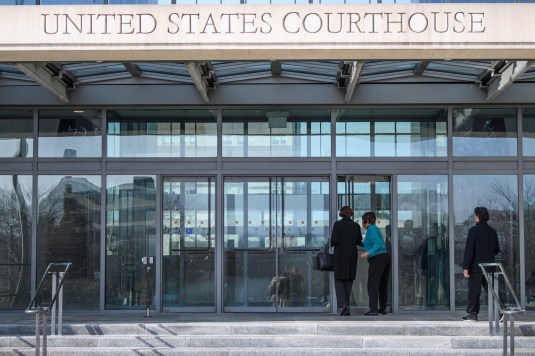
In recent months, the movement has had several victories, with U.S. District Court judges in Texas, North Carolina and Virginia ruling that the prohibitions are unconstitutional. The 11th Circuit Court of Appeals ruled in November that the state of Florida must demonstrate why interstate, direct-to-consumer wine shipments are a felony when that is not the case for in-state wine shipments.
And on December 10, a federal judge gave New York State wine-lovers a break when he issued an injunction against the current law, which prohibits interstate sales. Consumers there now have 30 days, the length of the appeal window, to purchase wines from around the country.
Hearings and appeals on these rulings are under way, and Benson says that some of these decisions may end up being settled by state legislators. If not, he says, the goal is to take the issue all the way to the Supreme Court.