(Fixes name of HRW researcher Kine)
* State Department says activist, family en route to U.S.
* Dramatic escape, stay in U.S. embassy cause diplomatic
rift
* Relatives remain in northeastern Chinese village
By Maxim Duncan and Sui-Lee Wee
BEIJING, May 19 (Reuters) – China allowed a blind legal
activist, Chen Guangcheng, to leave a hospital in Beijing on
Saturday and board a plane bound for the United States, a move
that could signal the end of a diplomatic standoff between the
two countries.
Chen’s escape from house arrest in northeastern China last
month and subsequent stay in the U.S. embassy caused huge
embarrassment for China and led to a diplomatic rift while U.S.
Secretary of State Hillary Clinton was visiting Beijing for
talks to improve ties between the world’s two biggest economies.
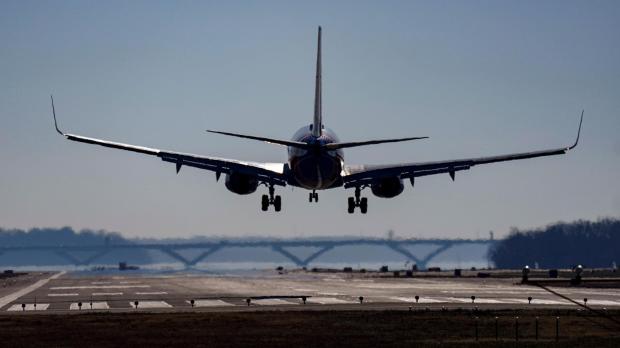
The U.S. State Department said he was en route to the United
States, along with his wife and two children. He boarded a
United Airlines flight bound for Newark.
State news agency Xinhua said Chen had applied to study in
the United States under legal procedures, in the first official
account of Chen’s activities, but made no mention of whether he
had left the country. The Foreign Ministry said this month that
Chen could apply to study abroad, a move seen as a way of easing
Sino-U.S. tensions on human rights.
Chen’s friend, Jiang Tianyong, cited the activist, one of
China’s most prominent dissidents, as saying that he and his
family obtained their passports at the airport hours before he
was due to board a flight.
“I’m obviously very happy,” Jiang said. “When he boards the
plane, he can finally say: ‘I’m free’. At the same time, I feel
a sense of regret because such a large country like China can’t
even tolerate a citizen like him to exist here.”
There was no immediate indication where Chen might pursue
his studies, but New York University’s law school has previously
offered him a position as a “visiting scholar”.
A statement by State Department spokeswoman Victoria Nuland
struck a conciliatory note, saying Washington was “looking
forward” to Chen’s arrival.
“We also express our appreciation for the manner in which we
were able to resolve this matter and to support Mr. Chen’s
desire to study in the U.S. and pursue his goals,” it said.
Beijing has accused the United States of meddling in its
affairs in the Chen case.
Chen’s abrupt departure for the airport came about three
weeks after he arrived at the Chaoyang Hospital from the U.S.
embassy, where he had taken refuge after an escape from 19
months under house arrest in his home village.
Chen, 40, who taught himself law, was a leading advocate of
the rights defence movement. He gained prominence by campaigning
for farmers and disabled citizens and exposing forced abortions.
He was jailed for a little over four years from 2006 on what
he and his supporters say were trumped-up charges designed to
end his rights advocacy.
He had accused Shandong officials in 2005 of forcing women
to have late-term abortions and sterilisations to comply with
strict family-planning policies. Authorities moved against him
with charges of whipping up a crowd that disrupted traffic and
damaged property.
Formally released in 2010, he remained under house arrest in
his home village, which officials turned into a fortress of
walls, security cameras and guards in plain clothes.
POLICE AT THE AIRPORT
United Airlines flight UA 88 departed around 5.50 p.m. (0950
GMT), with police officers and plainclothes officers following
passengers down the mobile corridor leading to the plane’s door.
The cabin crew waited for passengers to take their seats
before closing the curtain to the front section, where the
business class seats were located, a Reuters witness said.
Chen had earlier told Reuters he was at the airport along
with his wife, two children and hospital staff and he believed
he would be put on a flight to the United States.
Two police cars were stationed below the walkway to the
plane, and about 10 security officials in plainclothes
circulated around the airport.
Passengers at the gate to Chen’s flight appeared not to know
that he would be on the same flight.
“If our country is a body, his plight is like a sickness
that in the future will help the body to protect and strengthen
itself,” said Xi Jingwen, who was awaiting to board a flight to
the United States, when asked about Chen Guangcheng.
Chen’s confinement, his escape and the furore that ensued
have made him part of China’s dissident folklore: a blind
prisoner outfoxing Communist Party controls in an echo of the
man who stood down an army tank near Tiananmen Square in 1989.
The Chen case comes at a tricky time for China, which is
engaged in a leadership change. The carefully choreographed
transition has already been knocked out of step by the downfall
of ambitious senior Communist Party official Bo Xilai in a
scandal linked to the apparent murder of a British businessman.
Chen’s supporters welcomed his departure, saying he had
indicated that he would like to return to China.
“I even told him…that he has to do a repeat of him scaling
walls. If not, we wouldn’t be able to believe it,” Nanjing-based
activist He Peirong said of her earlier conversation with Chen.
She was one of six activists who drove Chen from Shandong to
Beijing after his escape.
Phelim Kine, senior Asia researcher at New York-based Human
Rights Watch, said “getting Chen Guangcheng and his family on a
plane is the easiest part of this saga.
“The harder, longer term part is ensuring his right under
international law to return to China when he sees fit,” Kine
said in an emailed statement.
Kine urged Western countries to ensure that Chen’s
relatives, friends and supoorters secured due protection.
The U.S. embassy had earlier thought it had stuck a deal to
allow Chen to stay in China without retribution, but that fell
apart as Chen grew worried about his family’s safety. He changed
his mind about staying and asked to travel to the United States.
Human rights are a big factor in relations between China and
the United States, even though Washington needs China’s help on
issues such as Iran, North Korea, Sudan and the global economy.
The village of Dongshigu, where Chen’s mother and other
relatives remain, is still under lockdown.
Chen’s nephew, Chen Kegui, was denied his family’s choice of
lawyers on Friday to defend a charge of “intentional homicide”,
the latest in a series of moves to deny him legal
representation, and underscores the hardline stance taken
against the blind dissident’s family.
(Additional reporting by Chris Buckley and Michael Martina in
BEIJING and Arshad Mohammed in WASHINGTON,; Editing by Ron
Popeski)