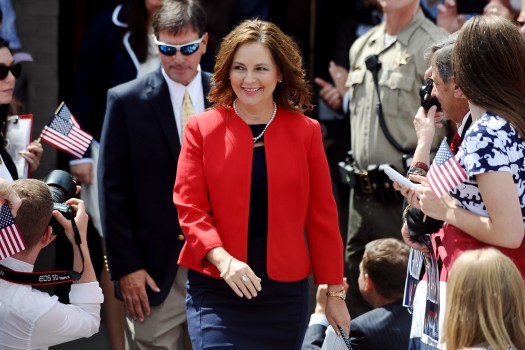
* Clinton says “sorry” for Pakistan military losses
* Deal ends stalemate after months of haggling
* Impasse had cost U.S. $100 million per month
(Adds NATO, U.S. lawmaker)
By Andrew Quinn and Qasim Nauman
WASHINGTON/ISLAMABAD, July 3 (Reuters) – Pakistan and the
United States reached a deal on Tuesday to reopen land routes
that NATO uses to supply troops in Afghanistan, ending a
seven-month crisis that damaged ties between the two countries
and complicated the U.S.-led Afghan war effort.
U.S. Secretary of State Hillary Clinton, in a telephone call
with Pakistani Foreign Minister Hina Rabbani Khar, apologized
for a November NATO air strike that killed 24 Pakistani soldiers
last November and prompted an infuriated Islamabad to slam the
supply routes closed.
“We are sorry for the losses suffered by the Pakistani
military. We are committed to working closely with Pakistan and
Afghanistan to prevent this from ever happening again,” Clinton
said in a statement following the conversation.
Khar, in turn, informed Clinton that Pakistan would reopen
the supply routes and, in a major concession to the United
States, would not follow through on threats to dramatically hike
the transit fees.
The deal, which came after several previous attempts at
negotiation had failed amid a dispute over a U.S. apology,
opened the prospect of broader improvement in U.S.-Pakistan
ties.
But even with this hurdle down, others remain. They include
Pakistan’s opposition to U.S. drone strikes on its territory,
and Washington’s allegations that Islamabad condones, or even
assists, anti-American militants.
In her statement, Clinton said the supply lines agreement
“is a tangible demonstration of Pakistan’s support for a secure,
peaceful, and prosperous Afghanistan and our shared objectives
in the region.” She added that the deal would allow the United
States and its NATO partners to conduct their planned military
drawdown from Afghanistan at a much lower cost.
U.S. officials said the United States was spending $100
million more a month to send supplies across a long alternate
route overland across Central Asia and into Afghanistan.
PAKISTANI TALIBAN THREATENS CONVOYS
The Pakistani Taliban militant group immediately threatened
to attack trucks that resume carrying supplies into Afghanistan,
where most of the 128,000 NATO soldiers are due to withdraw by
the end of 2014.
“We will attack NATO supplies all over Pakistan. We will not
allow anyone to use Pakistani soil to transport supplies that
will be used against the Afghan people,” the group’s spokesman
told Reuters by telephone from an undisclosed location.
U.S. Defense Secretary Leon Panetta, who said last month
that Washington was losing patience with Pakistan because of the
safe havens it offers to insurgents in neighboring Afghanistan,
welcomed the news that the supply routes would reopen.
In an interview with Reuters, Panetta all but ruled out an
apology to Pakistan over the NATO air strike.
Pakistan’s Prime Minister Raja Pervez Ashraf told senior
government leaders on Tuesday that continued closure of the
routes was harming Islamabad’s relationship with Washington.
Pakistan’s Ambassador to the United States Sherry Rehman said
the supply route deal could help to spur more cooperation
between the two uneasy partners.
NATO Secretary-General Anders Fogh Rasmussen welcomed the
announcement, saying it highlighted the important role Pakistan
has in supporting a stable future for Afghanistan.
U.S.-Pakistan ties turned markedly worse after the U.S. raid
that killed al Qaeda leader Osama bin Laden on Pakistani
territory last year. Relations have been further poisoned by the
U.S. drone strikes to target suspected militants and
Washington’s charge that Islamabad turns a blind eye to Haqqani
network militants operating from within its borders.
Republican Senator Lindsey Graham, who is among a growing
number of U.S. lawmakers who have voiced doubts about the
Pakistan alliance, welcomed Tuesday’s announcement, but said
more needed to be done to put the relationship on the right
footing.
“If the Pakistani military intelligence services would
engage in aggressive efforts to combat terrorism in coordination
with coalition forces, it would tremendously enhance our
successes in Afghanistan,” he said in a statement.
“THREE LITTLE WORDS”
Clinton’s careful statement was not the full-throated
apology that Pakistan demanded for the deadly November attack,
but went further than Washington had before in expressing regret
for an incident that NATO described as an unfortunate accident.
“Foreign Minister Khar and I acknowledged the mistakes that
resulted in the loss of Pakistani military lives,” Clinton said,
adding that she had reiterated U.S. regrets for the deaths of
the soldiers and offered condolences to their families.
The U.S. administration, seeking to shield President Barack
Obama from Republican criticism months before November’s
presidential election, had resisted an outright apology and
political analysts said the moderate expression of regret came
following an expensive delay.
“Three little words – ‘We are sorry.’ If they’d been
delivered seven months ago, they might have saved hundreds of
millions of dollars,” said Jonah Blank, a former aide to
Senator John Kerry, who is now at the Rand Corporation.
With a deal reached, both sides were set to benefit.
The agreement appeared to include a commitment by the United
States to initially pay Pakistan $1.8 billion in military aid
arrears.
But Washington would only have to provide $250 in handling
fees for each shipment of NATO supplies going into Afghanistan,
the same amount paid on those shipments before November. In
recent months, Pakistani officials had demanded fee hikes that
some suggested could have amounted to a twenty-fold increase, at
about $5,000 per shipment.
Payment of aid arrears could be a windfall for Pakistan’s
unpopular government, which is under pressure to deal with a
struggling economy, chronic power cuts and inflation in the
lead-up to parliamentary elections expected early next year.
(Additional reporting by Missy Ryan and Michael Georgy in
Islamabad and David Alexander in Washington.; Editing by Warren
Strobel and Christopher Wilson)