Our summer houseguest promised to send us a bottle of wine from his country after he arrived home.
We’re still waiting.
We had tried to be polite hosts during his monthlong stay, but maybe we were too nice. My husband and I practically high-fived each other after he left.
The guest kept his bedroom tidy, ate very little and didn’t complain about our pets. So why did I feel so used and embarrassed that I had foisted this stranger upon my family? I had expected a healthy cultural exchange, but I knew the relationship was over when he laughed at my husband, our cook, for taking the “woman jobs.”
During the holidays, many of us open our homes and hearts to houseguests — and not all of them are moochers, blowhards or slobs.
I have heard stories of perfectly pleasant people who clean up after themselves and spring for a dinner out.
But this column is not about those people. Instead, I fill this space with the what-not-to-dos, in case you are ever tempted to plop yourself on someone’s couch for more than three days and never offer to do dishes or buy groceries.
I cut our guest a lot of slack, assuming cultural differences. But surely he knew better than to open all our doors and windows while the air conditioner was running, because he preferred the sweltering July heat.
And yet it could have been worse. One of my friends is still reeling from her experience with a young houseguest who refused to obey a few simple rules, such as to stay away from the family’s work computer.
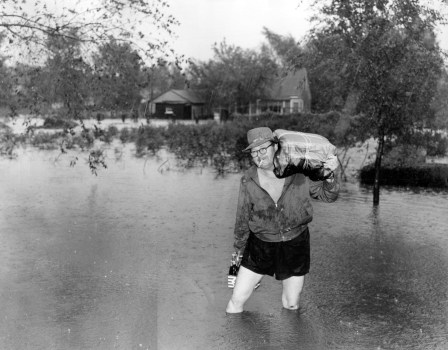
That turned out to be a mere annoyance. The young woman also ignored warnings not to flush hygienic products down the toilet. What happened next was a frantic call to family members, who were not home at the time, and a second-floor bathroom overflow that caused $15,000 in damage.
“The flood went through to the first floor, destroying our kitchen and most of our living room, and all the way down to the basement, shorting out our water heater and our furnace — in November, just weeks before Thanksgiving!” said my friend, who, like others who shared their lousy guest stories, asked that their names not be used.
Another friend, Mike, recalls that when he was a child, an acquaintance of his mother’s decided to spend a few days with the family. “Geraldine,” in her 70s, was having such a lovely time that she decided to extend her stay.
Her daily routine consisted of sleeping in until noon, then promenading through the house in her “duster,” trilling, “Oh, what a beautiful morning,” until breakfast was served.
Eight days into the visit, she talked Mike’s parents into driving her to see a friend who lived near the Wisconsin border. Mike’s father, Frank, was driving about 75 mph on Interstate 294 while his mother and her friend sat in the back seat, chatting about former students, he recalled.
They pondered the members of one family, the Schmidt brothers. What were their names? Bob, Tom and … they couldn’t remember the third.
“After about a five-minute silence, Geraldine screams out ‘FRANK!!! FRANK!!!'” Mike recalled. “My dad almost lost control of car, had to drive onto the side of the tollway, thinking they were all in peril.”
Geraldine, unflustered, responded: “I wasn’t talking to YOU, Frank.”
“Frank was the name of the third Schmidt brother,” she said.
Her bags were packed the next day.
Our houseguest did not threaten safety or well-being. He was just rude, and it had nothing to do with his nationality.
He really didn’t need to point out all the American shortcomings — our obesity, our wastefulness, our dependence on cars. I tried to beat him to the punch and point out those things myself, but it didn’t work.
He scoffed at the television in his room, since he’d much rather be doing worldly things. His phone didn’t work, so we helped him buy another. He used our computer during his entire stay and nearly turned down free White Sox tickets because, he said, he thought that the game would be boring.
We thought about launching an awkward conversation with him, but because his stay was limited, we waited it out.
Later, I thought, Ellie Carlson could provide some perspective.
Carlson, of elliepresents.com, is a museum curator who researches historical figures, then dresses in character and performs entertaining, one-person dramatic lectures. I first met her when she was speaking on the “rise and fall” of women’s undergarments through history.
She dug up some historical books on etiquette that confirmed that our guest violated just about every rule that still applies today.
The 1883 edition of “Hill’s Manual of Social and Business Forms: A Guide to Correct Writing, Showing How to Express Written Thought Plainly, Rapidly, Elegantly and Correctly” by Thomas Hill, for instance, offers that guests should furnish their own work materials and avoid treating friends’ homes as a hotel by coming and going at all hours.
The book, kept by the Aurora Historical Society, notes that it is in “extremely bad taste to … speak disparagingly of things about the home or town in which the visit is being made.”
More timeless advice comes from “A Manual of Etiquette with Hints on Politeness and Good Breeding” by Daisy Eyebright, aka Sophia Orne Johnson, dated 1873.
“Guests will never take the part of either host or hostess in any trifling disagreement of opinion,” according to the book. “As visitors, they can express their ideas upon various matters, of course; but shun any partisanship.”
Leaving a thank you note always shows good form.
I would settle for that bottle of wine instead.