


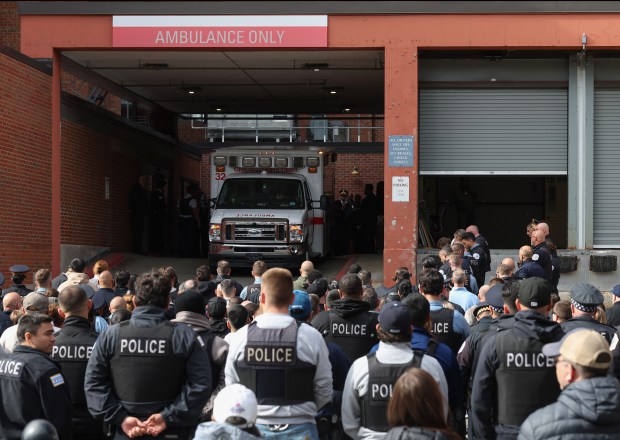
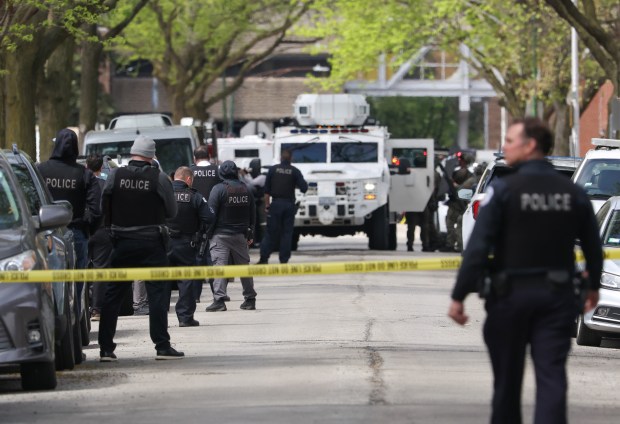
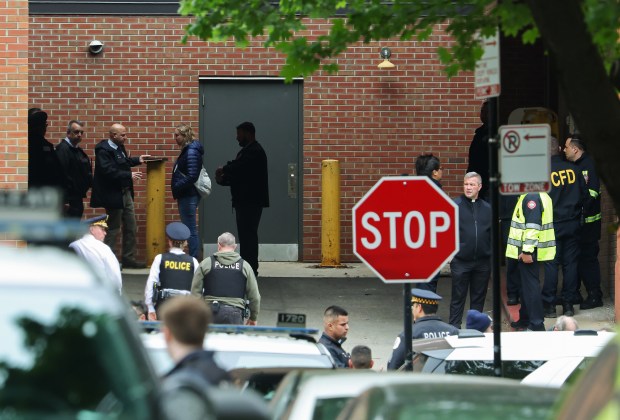
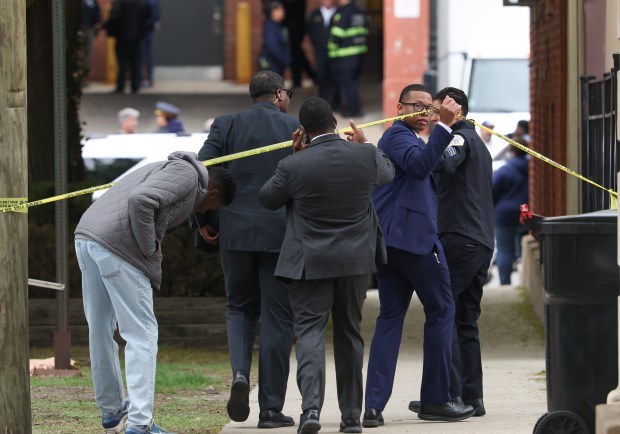
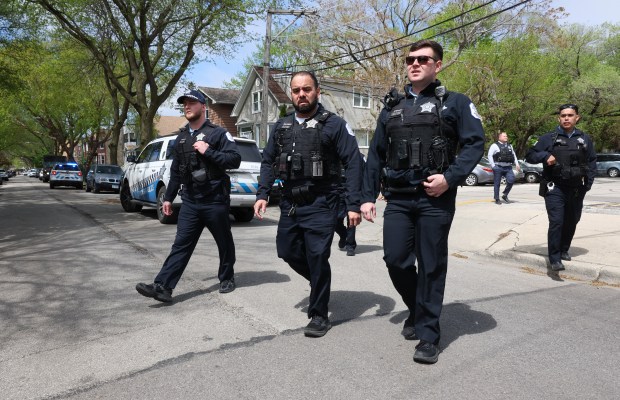
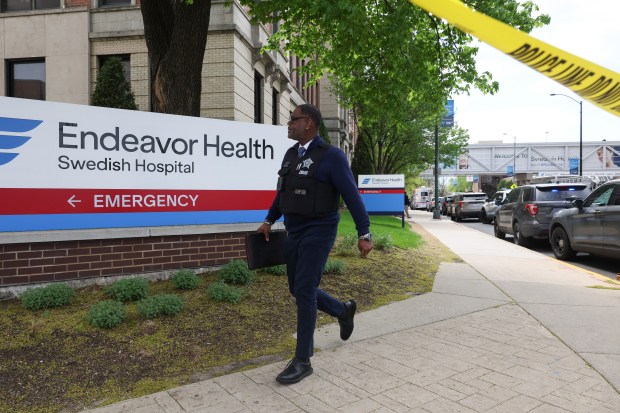


About seven weeks before Alphanso Talley allegedly snuck a gun into a Lincoln Square hospital and shot the pair of cops guarding him, his electronic monitor went into “sleep mode” and officials lost track of him.
The chief judge’s office had tightened its electronic monitoring violation policy over the winter, instituting a new requirement that any absence longer than three hours would need to be reviewed by a judge within a day. The policy still gave judges the discretion on whether to issue a warrant in the event of an absence.
Indiana woman who bought gun used in Chicago police shooting at hospital remains jailed
In Talley’s case, the presiding judge did issue a warrant. But he did so at a hearing that took place more than 48 hours after the violation occurred, per court records — about double the time required under the new policy.
Talley’s device shut off at 7:44 a.m. March 9. Under the new policy, the violation should have gone before John Lyke, the judge on Talley’s case, March 10.
As Lyke noted in a court transcript of that hearing reviewed by the Tribune, it was 1:06 p.m. on March 11 by the time officials and Talley’s attorney officially concluded they couldn’t find him — more than 48 hours after the electronic monitor shut off.
At that hearing, Talley’s lawyer said she hadn’t heard from him since Sunday and asked to schedule a hearing for the near future so that Talley could come in.
Lyke rejected the request.
“These are armed robbery matters, aggravated vehicular hijacking matters,” he said. “You haven’t had any contact since Sunday. His family hadn’t had any contact. It’s now 11 — I mean, it’s 1:06 p.m.”
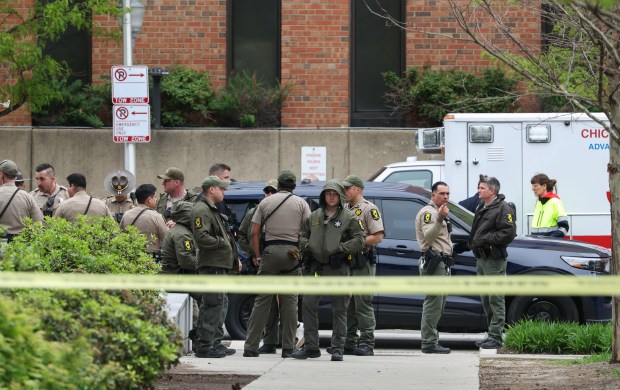
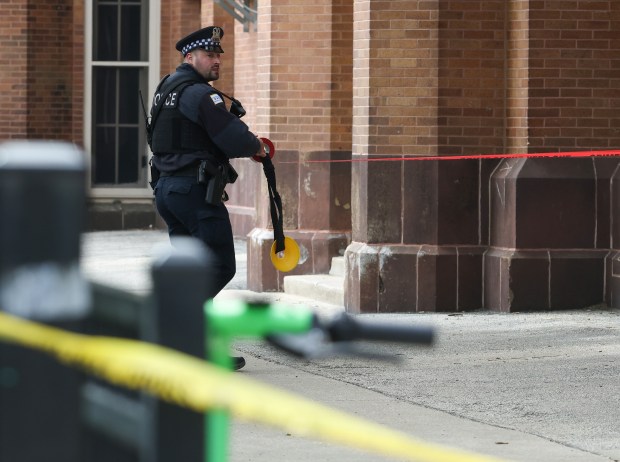
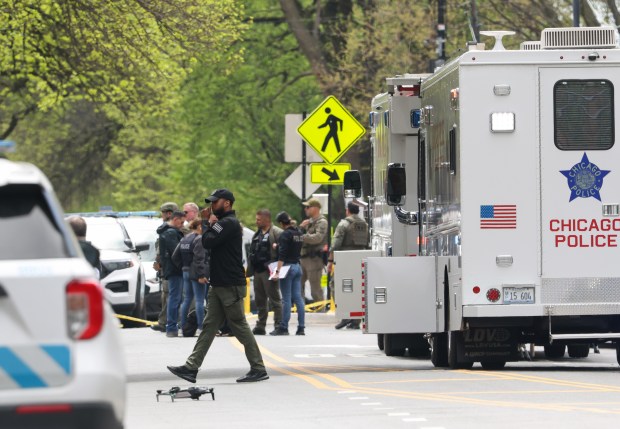
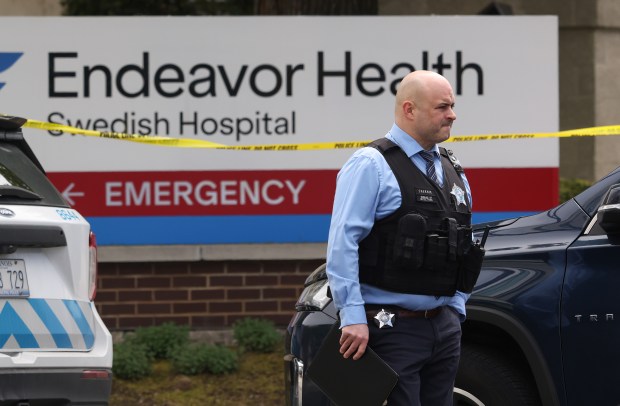
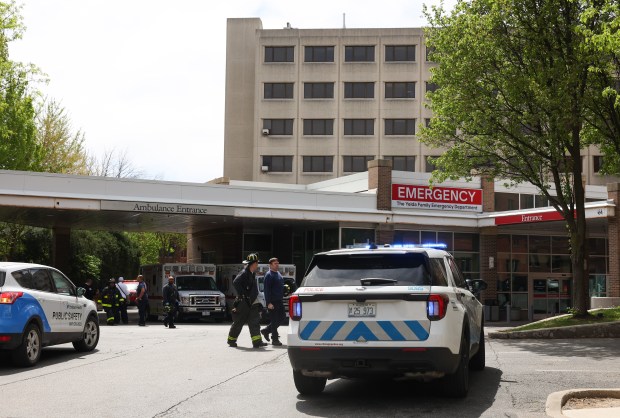
He ordered a warrant issued for Talley’s arrest, which remained outstanding until Saturday, when Talley was re-arrested from under a Lincoln Square porch after he allegedly killed Officer John Bartholomew, critically wounded a second officer and shot out a hospital window to escape from Endeavor Health Swedish Hospital. It was a shooting that cast new light on a set of old questions about how to safely monitor those awaiting trial while on electronic monitoring.
Arrest warrants for a defendant’s failure to appear are extremely common in the court system and often go unexecuted for months at a time. In a statement, the Cook County sheriff’s office said it did not receive a request for assistance with Talley’s failure to appear warrant.
“The Sheriff’s Office has always offered to assist any law enforcement agency — including the Office of the Chief Judge, members of the judiciary, and the Cook County Adult Probation Department — with enforcement of their outstanding warrants,” the statement read.
The chief judge’s office didn’t immediately respond to questions from the Tribune about how the office approached the notifications that Talley had dropped off the map, or comment on what led to the 48-hour lag time before a hearing.
When the office first announced the policy changes in January, Chief Judge Charles S. Beach II said in a statement that the move would “reinforce the Court’s commitment to timely judicial oversight and clear lines of responsibility.” There are about 2,200 people currently on electronic monitoring around Cook County, per weekly data released by Beach’s office.
In a Tuesday statement, a representative said Beach offered his condolences to Bartholomew’s family and said the chief judge “takes seriously any concern about the effectiveness of electronic monitoring and the safety of our communities,” but that the office wouldn’t comment on the specifics of the case.
The shooting has reignited a smoldering public debate about the Pretrial Fairness Act, often referred to as the SAFE-T Act, which eliminated cash bail in Illinois and instead left it to judges to determine who would be held pending trial and who would be released.
Court transcripts show that Lyke referenced the act when weighing whether to release Talley on electronic monitoring at a Dec. 11 hearing. At that point, assistant states’ attorneys were arguing that Talley’s past criminal history meant he should be held pending trial for a pair of April 2025 charges alleging armed robbery and carjacking. He’d been on electronic monitoring then, too, prosecutors said.
“The Pretrial Fairness Act was designed for the judges to take a critical look at cases on an individual basis and whereas in the past with cash bail, there’s no doubt these bails would have been set at monetary amounts that (Talley) presumably couldn’t afford,” Lyke said.
The judge said the new allegations against Talley “may in certain instances shock the conscience” and said he was convinced that Talley was eligible for detention, but said he didn’t think there was no combination of conditions he could impose that would protect overall public safety.
“It appears that his mind is finally developing and he may be on the path to making better decisions,” he said, citing Talley’s completion of anger management courses, what appeared to be “a pretty strong support system” seated in the courtroom gallery and the ages at which he’d committed the crimes that led to his previous convictions.
The top Republicans in the Illinois House and Senate in a news conference on Wednesday called for changes to the SAFE-T Act in the wake of the fatal shooting over the weekend, including an amendment to detain people who are on pretrial release for a felony and then are arrested for another felony.
“Had this law been in place, we’d have two police officers heading out today to serve the citizens of Chicago. Instead, a violent criminal was allowed a decade of chances to then murder in cold blood a local hero, a police officer, and we have another local hero, second Chicago police officer, who is fighting for his life,” said Senate GOP Leader John Curran, speaking at a Zoom press conference with House GOP Leader Tony McCombie.
“In this instance, the judge would not have even been able to make that decision had we never passed the SAFE-T Act, so I would disagree strongly with the proponents of the SAFE-T Act,” Curran said. “This decision should have never been in front of this judge. It should’ve already been a mandatory hold. … This is on the SAFE-T Act, this particular instance.”
In a statement responding to Republican legislators’ statements, the Illinois Network for Pretrial Justice said the changes the lawmakers suggested would “eliminate judicial discretion” and “flies in the face of the foundational principles of due process.”
“Mandating detention based only on the low standard of probable cause ignores the importance of reviewing the government’s evidence before one’s liberty is taken away,” the statement read. “Republicans have stated that this tragedy never would have happened under the old system, but the reality is that it was probably even more likely when Illinois relied on money bond in the majority of cases.”
Responding to a question about Republican proposals to change the SAFE-T Act, Gov. JB Pritzker on Wednesday said he hadn’t seen a specific bill but shifted the blame onto the judge’s decision to allow pretrial release, rather than on the law itself.
“In this case, it’s a tragedy what’s happened. Awful. And as you’ve seen in most of the cases where Republicans have complained about the SAFE-T Act, it’s actually been the bad decision by an elected judge in Illinois or no hearing at all, because the prosecutor didn’t bring it to the judge, and that has been the reason why somebody gets let out,” Pritzker said. “A judge can make this decision. A judge should’ve made the decision to keep that person in jail.”
The judge in this case made a mistake, Pritzker said.
“You saw that the judge wants to blame everyone else, but it was right before the judge. Judge could’ve made the decision, didn’t make the decision,” he said.
The governor said he did not want someone to violate the terms of their mandatory supervised release “and then remain out.”
“I would like it if people were immediately apprehended when they violate the terms of their MSR,” Pritzker said.
But Northwestern University law professor Stephanie Kollmann suggested that as politicians have hurried to blame Lyke or the law itself, he made a decision within the bounds of the law based on the information that was available to him at the time about whether Talley presented a “real and present threat involving articulable fact.”
She said she was not trying to affirm or second-guess Lyke’s decision but “didn’t see anything that was out of line with the statute.”
“When something this tragic happens, we are very uncomfortable talking about that tragedy as though it was unavoidable, as though this was a case where the system and the law were operating as they should,” she said. “But that doesn’t mean that that isn’t the case. And it’s really hard to look at that squarely for everyone because it’s emotionally freighted and very difficult.”
She pointed out that the shooting allegedly took place after Talley was already in police custody, and that it is still not clear how the gun made it into Swedish Hospital following his arrest.
“I don’t know that’s a pretrial law issue,” Kollmann said. “There may be a policing practice issue. and I think it makes everyone uncomfortable to say so.”
Chicago Ald. Andre Vasquez, 40th, a progressive whose ward covers the shooting site, said in a statement Wednesday that he believed blame to the SAFE-T act was “misplaced.” Like Pritzker, Vasquez instead directed his scrutiny at Lyke.
“The burden, more than ever, is on our judges to exercise discernment in who can be safely released,” he wrote. “I have questions and concerns regarding the judge who allowed Alphanso Talley to be released pre-trial on electronic monitoring, especially as the State voiced its concerns.”
Talley is next set to appear in court Thursday for a full detention hearing before Judge Luciano Panici Jr.