

The last time Alphanso Talley came before Judge John Lyke, things seemed to be going well.
Talley was on electronic monitoring after being paroled in January from the Illinois Department of Corrections, where he’d been serving sentences for aggravated battery to a police officer and possession of a stolen vehicle. He also had a pair of cases pending for alleged carjacking and armed robbery, records show.
“Good morning, Mr. Talley,” Lyke said, according to a court transcript of a Feb. 19 hearing. “You’re looking good.”
The assistant state’s attorney on the case said there had been some “issues” with Talley violating the terms of his electronic monitoring, but as of Feb. 19, “it does seem that Mr. Talley has been starting to comply with curfew.”
That day in court, the prosecutors, defense attorney and judge agreed to modify the terms of Talley’s monitoring to allow for a dentist appointment. The assistant state’s attorney asked that Talley be warned that “if something happens, we will be bringing a motion.”
Lyke reminded Talley that he needed to follow the instructions of the pretrial monitoring officials, and keep in touch with his attorney. Then the judge sent him on his way: “All right, Mr. Talley, be well. Take care of yourself. Don’t get in no trouble.”
But a little more than two months later, as it turned out, Talley would be charged in the shooting of a pair of Chicago police officers, including one who was hit in the head and killed. It’s a crime that has brought renewed attention to when defendants should be released on electronic monitoring before trial and what should happen if they skip out on court proceedings.
Back in court
Talley found himself back before Lyke on Tuesday, the day after another judge had ordered Talley detained while the police shooting case advances.
Court records show Talley continued to violate his curfew in the weeks leading up to the shooting. His ankle monitor alerted on March 6 and March 8, then entered “sleep mode” on March 9. Lyke issued a warrant for his arrest March 11, the date he was last set to appear in court.
That warrant, available to every police officer in the state, went unexecuted by law enforcement in the intervening weeks. A spokesperson for the Cook County sheriff’s office said in a statement to the Tribune that the office “did not receive a request to expedite execution of the warrants issued for Talley’s arrest.”
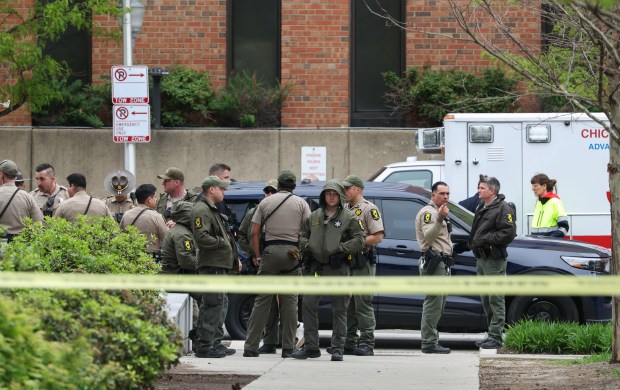
Talley reappeared before Lyke for about two minutes to address the outstanding warrant Tuesday. Surrounded by sheriff’s deputies, he stood in a green jail jumpsuit with his head bowed, periodically looking over his shoulder.Lyke acknowledged the new accusations against Talley but said almost nothing else, beyond setting Talley’s next court date for June 2.
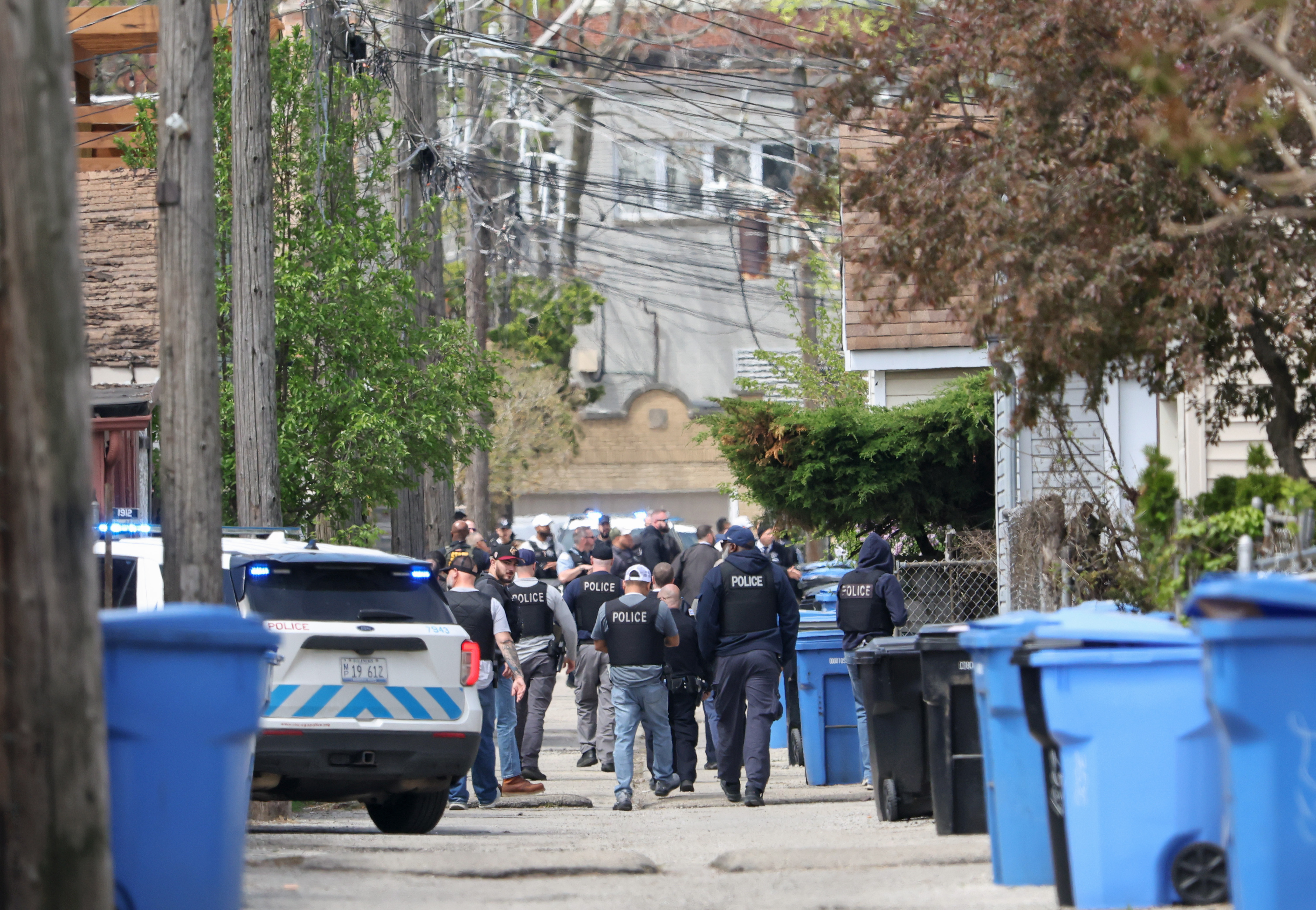
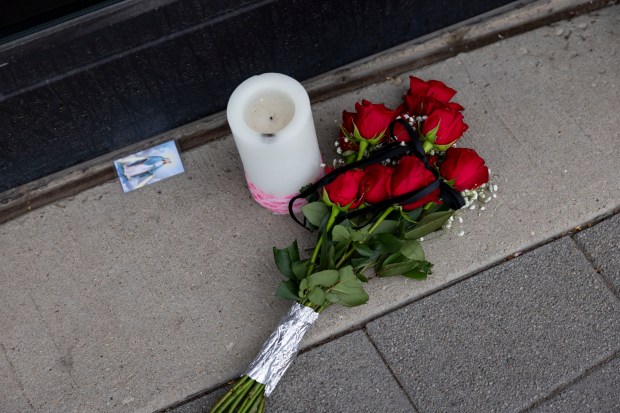
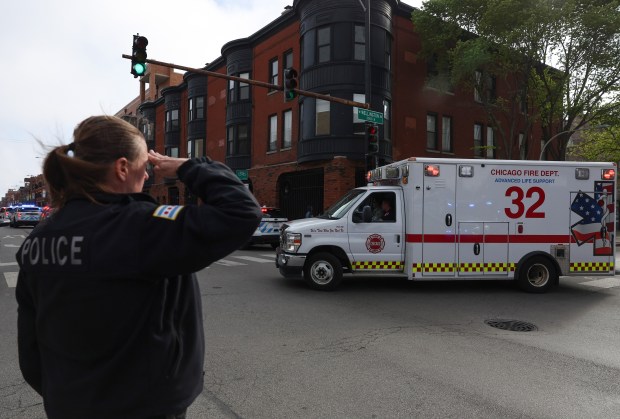
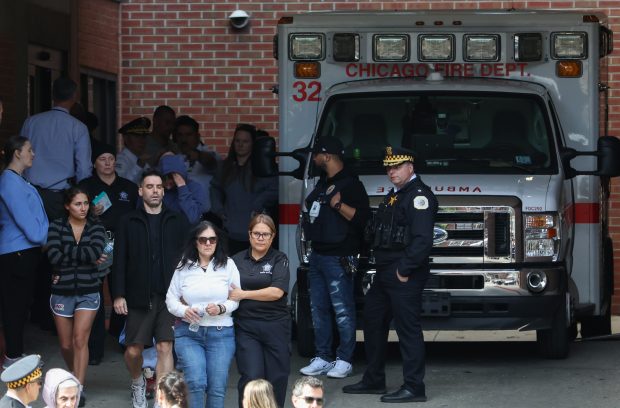
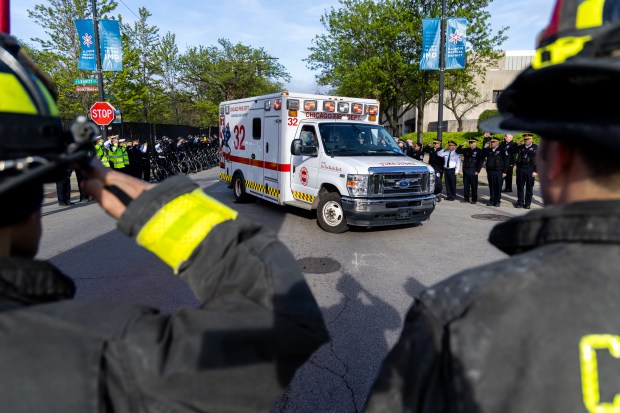
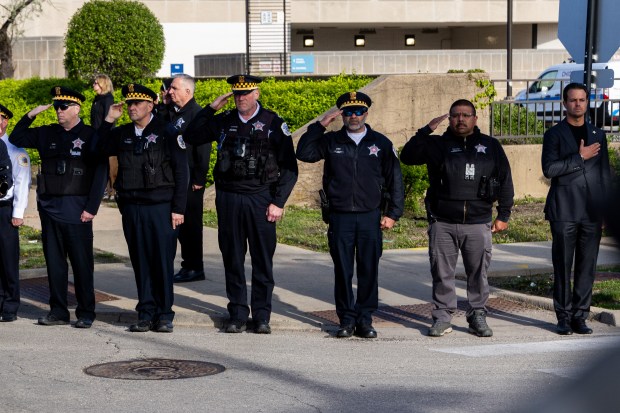
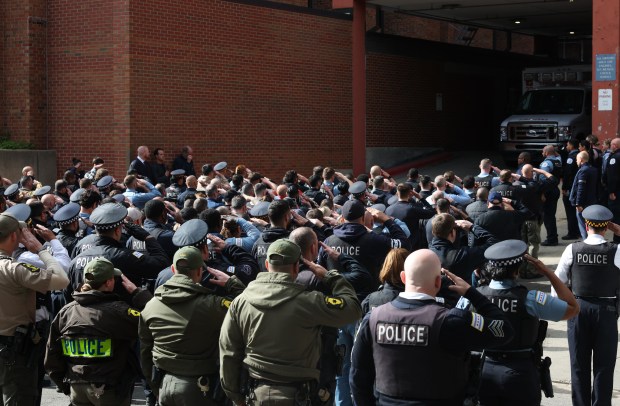
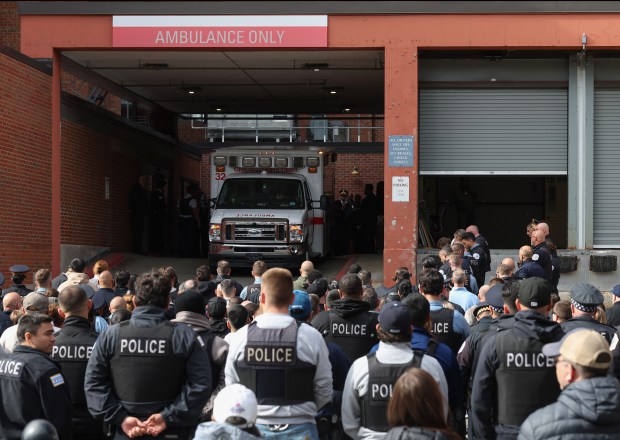
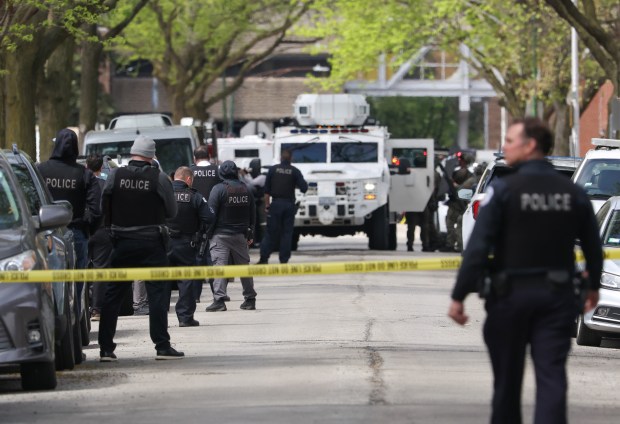
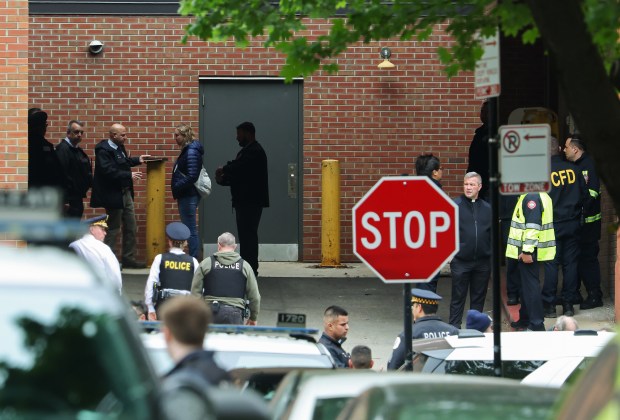
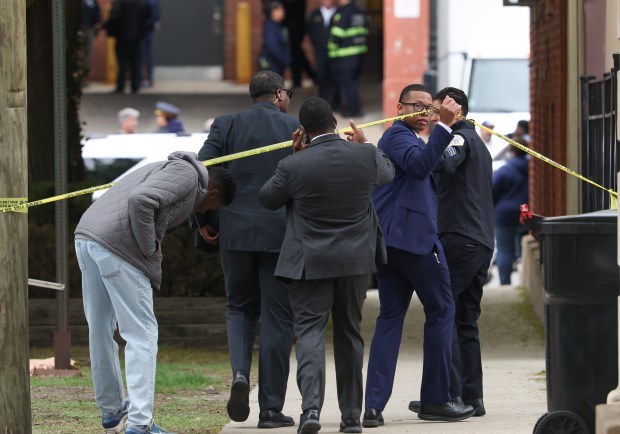
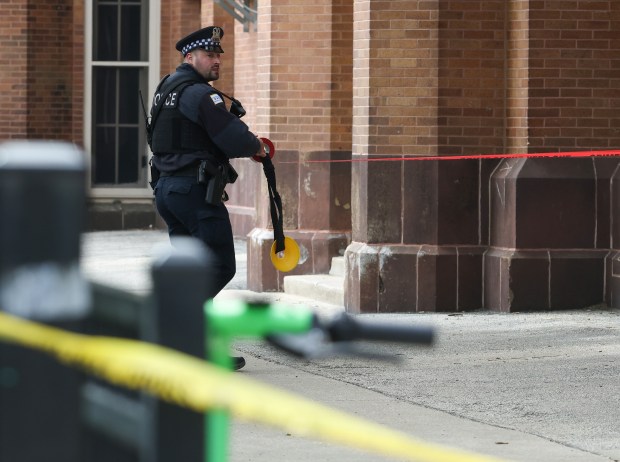
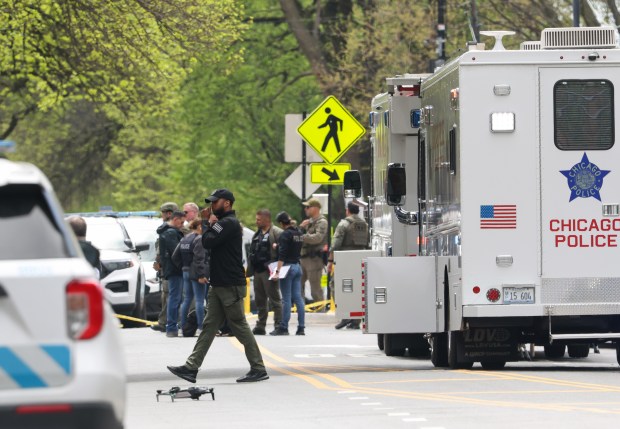
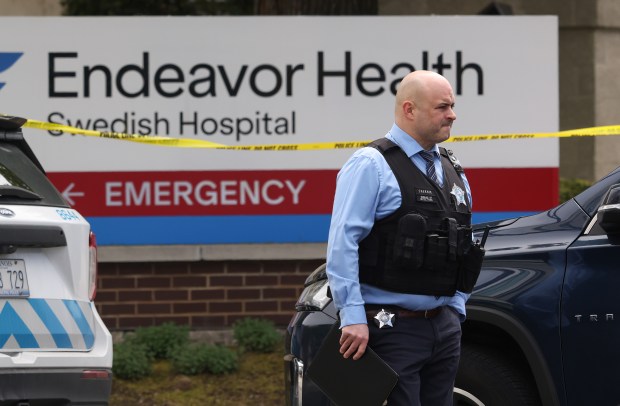
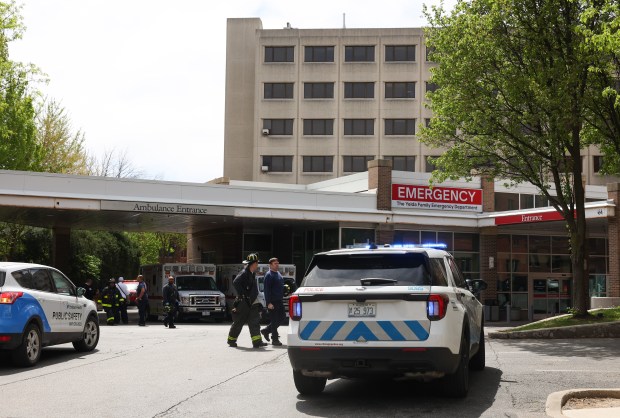
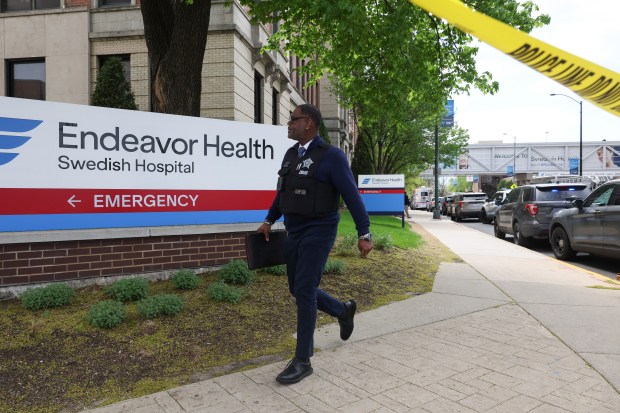
On Saturday morning, Talley was arrested and taken to Swedish Hospital after an attempted armed robbery at an Albany Park dollar store. He now faces a litany of charges in the shooting death of Chicago police Officer John Bartholomew, who was guarding him while inside the hospital. Bartholomew’s partner was shot in the chin and left in critical condition.

Prosecutors said at an initial appearance Monday that Talley — who had told police he’d swallowed several bags of drugs and was having trouble breathing — had been undressed and given a hospital gown at Swedish on Saturday while preparing for a CT scan, but that Talley kept a blanket over him. When Bartholomew uncuffed him from the hospital bed, prosecutors said, Talley reached underneath the blanket, pulled out a 10-millimeter Glock 29 and shot Bartholomew, shot and critically wounded a second officer and shot out a window to escape from the building.
It’s still not clear how Talley might have gotten the gun, which federal authorities allege was illegally purchased, into the hospital.
It was the first time two police officers have been shot in an on-duty incident in more than four years. Ella French was killed and her partner, Carlos Yanez, was severely wounded in the last such case.

Yanez was at Tuesday’s hearing, speaking to reporters briefly afterward. He said he wanted to hear Lyke acknowledge that he had “released (Talley) back to the streets.”
“Not everyone can be rehabilitated,” he said, before questioning whether officials had done their due diligence keeping track of Talley.
“Who was looking out for this guy who was on probation?” Yanez asked. “What was being done? There are so many questions that need answers.”
Officials respond
Cook County State’s Attorney Eileen O’Neill Burke on Tuesday said her office had opposed Talley being released on electronic monitoring.
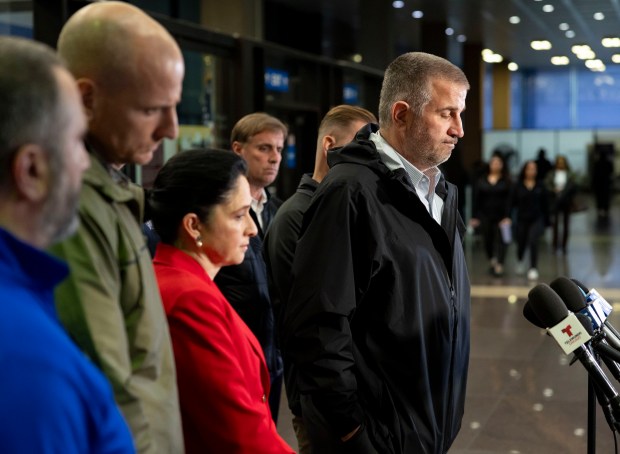
Burke, speaking to reporters in the courthouse lobby, said the case underscored one of her frequent refrains: “Electronic monitoring is not an alternative to detention. It does not keep people safe.”

Burke has repeatedly remarked that her office asks for detention if prosecutors believe someone is a danger to public safety.
“If we’re not asking for detention I don’t care if they are monitored or not,” she said. “They can go about their lives and get ready for trial.”
But in Talley’s case, she continued, “we established that he had four pending violent felonies, and in spite of that, he was placed on electronic monitoring.”
She called the system — taken over in April 2025 by the chief judge’s office from the Cook County sheriff — “broken.”
Burke also said there were a number of ways authorities could have lost track of Talley, remarking that “there are so many steps here it could have fallen through the cracks at any point.”
She said she wanted to see warrants for electronic monitoring violations issued within 24 hours of a violation alert, but declined to comment on what it would take to make that speed of enforcement a reality.
“If somebody is given the benefit of being on electronic monitoring and they’re violating that, that benefit needs to be taken away immediately,” she said.
After Talley’s initial court hearing Monday, Fraternal Order of Police Lodge 7 President John Catanzara and Illinois Comptroller Susana Mendoza were among several officials who harshly criticized the passage of the SAFE-T Act and Lyke’s decision to grant Talley pretrial release.
Under the law, judges have discretion to detain people suspected of a variety of violent crimes including carjacking with a firearm, a charge that Talley still faced trial on while he was not in custody. But Republican Darren Bailey, a former state senator who is challenging Gov. JB Pritzker in November as the governor seeks a third term, blasted Pritzker on X, saying: “His SAFE-T Act raised the burden so high that judges stopped detaining dangerous people.”
In a statement, the Illinois Network for Pretrial Justice offered condolences to Bartholemew’s family while pushing back on those “attempting to turn the pain of others into their own political gain.”
“No pretrial system can prevent every single tragedy, but it’s clear that Illinois has the tools in place to respond to concerns about public safety,” the network’s statement said. “The reality is that the new system — which gives judges more time and information to make release and detention decisions — is far better than the one that allowed the size of someone’s bank account to be the primary factor deciding who was released and who was jailed while awaiting trial.”
In a statement, Chief Judge Charles Beach offered “deepest condolences” to Bartholomew’s family and to the Chicago Police Department and nodded to a set of January moves meant to toughen protocols around electronic monitoring as the number of people fitted with ankle monitors has risen. Those included the reporting of major violations within 24 hours.
“The Chief Judge takes seriously any concern about the effectiveness of electronic monitoring and the safety of our communities,” the statement read. “As he has stated since taking office, accountability and continuous improvement are non-negotiable.”
A long history
Court records show Talley first faced felony charges in 2017 when he was accused of robbing several people in River North and Lakeview. Charged in four separate cases, Talley pleaded guilty in September 2019 to aggravated robbery and was sentenced to seven years in the Illinois Department of Corrections. He received credit for nearly two years spent in the Cook County Jail awaiting trial.
Less than two years later, in July 2021, Talley was arrested by CPD in Auburn Gresham. Court records show he was charged with being an armed habitual criminal and being a felon in possession of a firearm. He pleaded guilty in October 2022 and was sentenced to three years in prison with credit for 445 days in the county jail.
Ten months later, in August 2023, Talley was arrested by Illinois State Police troopers after leading them on a pursuit in a stolen car on I-57 on the Far South Side, records show. While awaiting trial in jail, Talley allegedly attacked two sheriff’s deputies and was charged with two counts of aggravated battery to a peace officer.
Talley was out of custody in April 2025 but was arrested that month by CPD in connection with an armed carjacking and a separate armed robbery, police records show. After he was arrested, Talley allegedly told officers that he swallowed several bags of crack cocaine and he was taken to St. Bernard Hospital for observation, according to court records.
Talley was indicted in two cases the following month and ordered held in jail before trial. In December 2025, records show, Lyke granted a motion for pretrial release with home monitoring over a “rigorous” objection from the state’s attorney’s office.
During that December hearing, Talley’s attorney told Lyke that, as a teen, Talley was in the Illinois Department of Children and Family Services and stopped going to high school after his junior year. He’s the father to a girl born in October 2025. While held in jail, Talley took part in education and anger management courses. He also takes prescriptions to treat anxiety and depression, his lawyer said.
“Mr. Talley has been in front of this court since at least 2023,” Lyke said, according to a transcript of the hearing. “This court has had an opportunity to watch him. I have seen attitude adjustments. He came in this court in 2023 extremely angry. Mad at the world, for the most part.”
If Illinois still operated a cash bail system, Lyke said, “Presumably (Talley) would have had a minimum collectively of $1 million bail and he would have needed $100,000 to get out. Our esteemed legislature says, no, we’re not going to do that anymore. We’re going to make judges take a critical look at it.”
Lyke granted the motion despite noting that prosecutors did show “by clear and convincing evidence that the proof is evident, the presumption great that this defendant committed an eligible crime under the Pretrial Fairness Act.”Speaking with the Tribune on Monday, Talley’s mother, Tamika Vaughen, said her son has been in and out of treatment facilities and medicated for mental health challenges his entire life. She said she spoke with him Sunday while he was in custody and that he told her he did not remember anything.
Chicago Tribune’s Jeremy Gorner contributed.