














People can question the cleanliness of Rio’s waterways, its infrastructure, its commitment to help the poor and the danger of its mosquito population.
No one will ever deny Rio de Janeiro’s determination and ability to party. That free-wheeling, joyous vibe was on full display Friday night during the Olympics’ opening ceremony at the enormous Maracana Stadium, where futbol star Pele once reigned.
Before giving way to the Parade of Nations, the hour-long spectacle saluted a country of great diversity, culture and warmth. It also contained a stern warning about the dangers of global warming.
Brazil, the first South American nation to host the Games, did itself proud despite working with a limited budget.
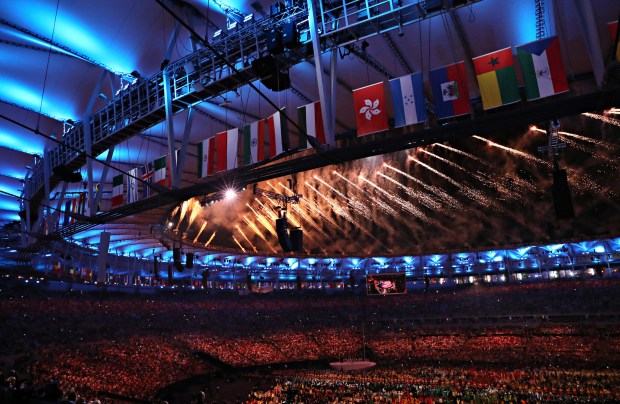
Beijing spent $100 million on its show in 2008, but Rio 2016 creative director Fernando Meirelles said such an expenditure would have been inappropriate in a country reeling from an economic crisis. A fireworks display, forming the word “Rio” in the sky, was modest.
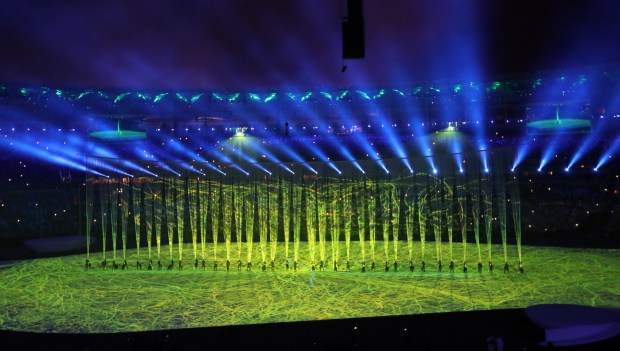
Suffice to say that none of the witnesses in the 78,000-seat stadium left with dissatisfaction on a clear, 73-degree night. OK, the stadium’s two video screens were practically small enough to fit in the kitchen of Cowboys owner Jerry Jones, but the stage rocked with a mix of colors and music.
Paulinho de Viola, a Brazilian sambista celebrated for his songwriting and soft voice, performed his nation’s National Anthem with the aid of violins, cellos and an acoustic guitar.
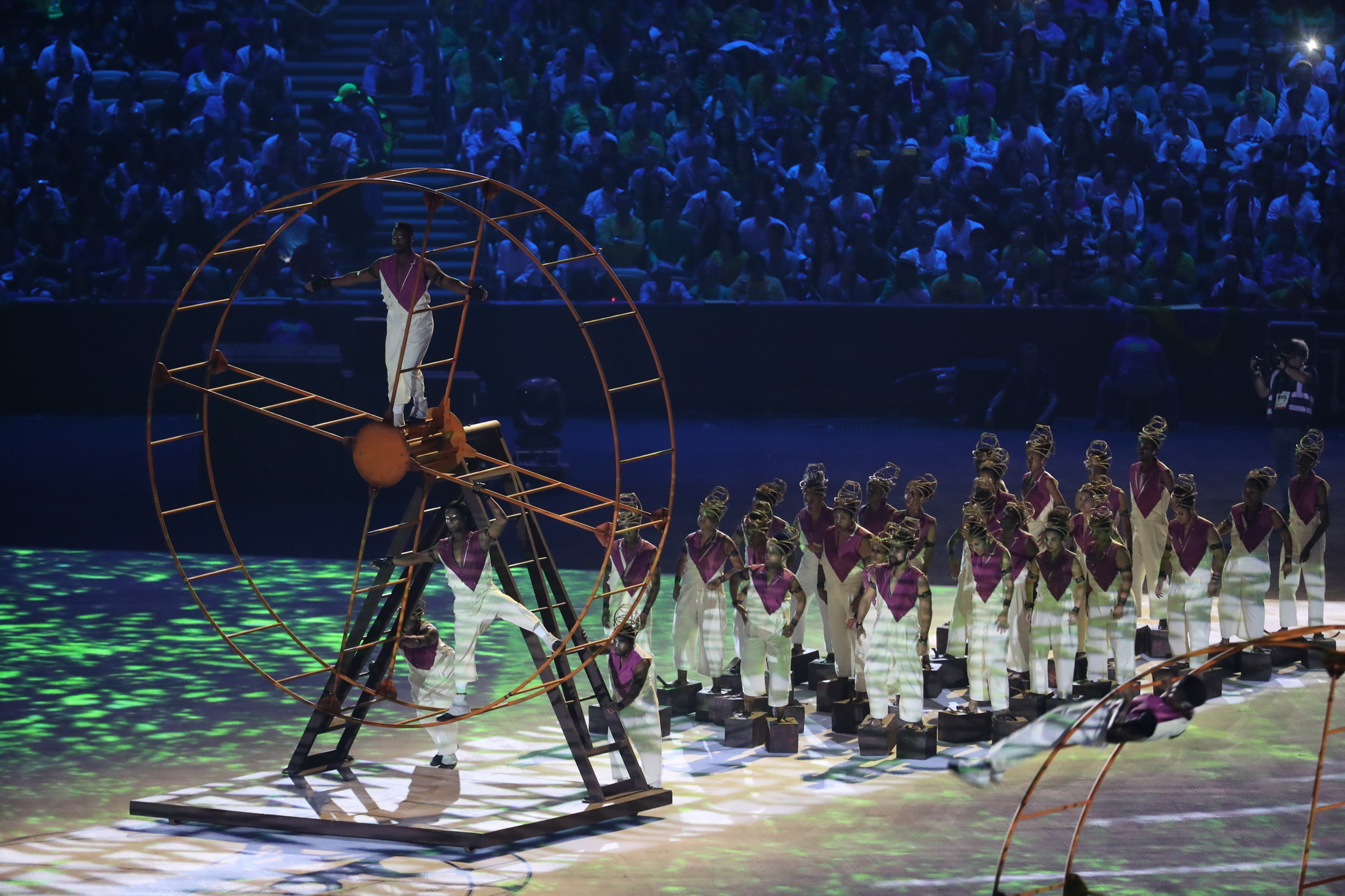
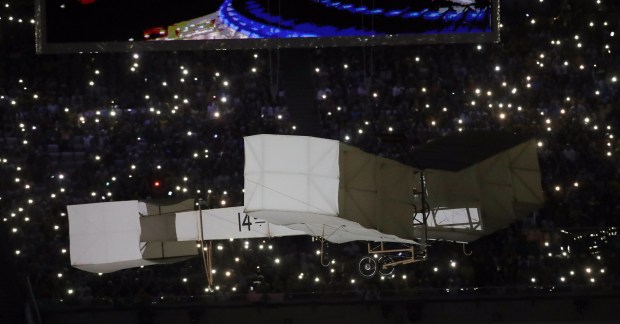
An appearance of crashing waves soon followed, and then came digitized images of giant yellow butterflies, reflecting the Amazon. Acrobats somersaulting off the roofs of buildings, adding a touch of Cirque du Soleil.
The show took on an elegant, nostalgic feel when Gisele Bündchen strolled across the length of the stage. She wore a silver-colored evening gown and strode to the tune of “The Girl from Ipanema,” a 1960s bossa nova hit. Tom Brady’s better half was described in Olympic literature as an “ubermodel.”
The stadium then became a giant jukebox, pulsating to Samba music that originated from favelas, Rio’s most underprivileged neighborhoods.
A giant hand of green and yellow, the colors of the Brazilian flag, emerged from a box with two fingers, forming the “peace” sign. A powerful female voice called out: “Here is to diversity! Let’s dance!”
And then, with all the subtlety of a slap in the face, the tone turned serious.
“The heat is melting the ice cap,” a voice called out. “Look at Greenland in the last decade; it’s disappearing very quickly.”
Screen maps inspired by NASA models displayed alarming projections in the event of a 4-degree temperature increase, including Rio being overtaken by water. It also touched on the deforestation of the Amazon, in Brazil’s northwest area.
Opening ceremony organizers had promised to anger Donald Trump, a denier of climate change who in 2013 tweeted that “global warming is a total, and very expensive, hoax.” This was that moment.
Actor Judi Dench, who appeared in seven James Bond films, read a poem with a title that translates to “The Flower and the Nausea.”
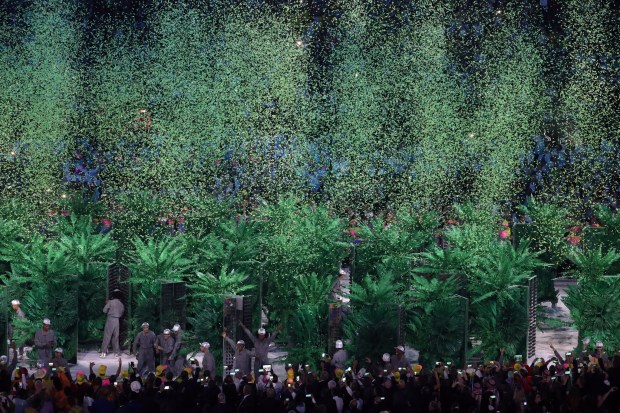
It carried a message of hope — “A flower rose from the street” — and concluded with a 13-year-old boy named Cristian do Passinho planting a tree. Athletes entering the stadium for the Parade of Nations received a seed to be planted in the Olympic Park.
As is customary, Greece entered first, a nod to its status as the first nation to host the Olympics.
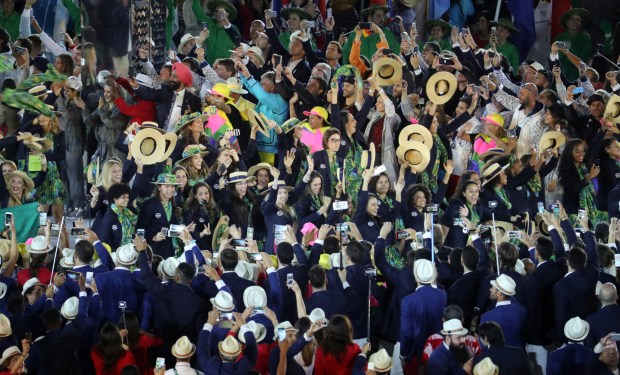
At 9:34 p.m. local time, shortly after the Federated States of Micronesia (who knew?) emerged, the United States took center stage. Because of scheduling or personal preference, many in the 549-member delegation did not appear, but the group still looked massive and diverse, wearing navy blazers.
Michael Phelps, the 18-time gold medalist, carried the American flag. The U.S. Olympians who voted could have selected an athlete with a more uplifting tale, not to mention one without two DUIs on his record. But everybody loves a winner. Phelps did not stay for the duration of the ceremony, opting to rest in preparation for his first race Sunday night.
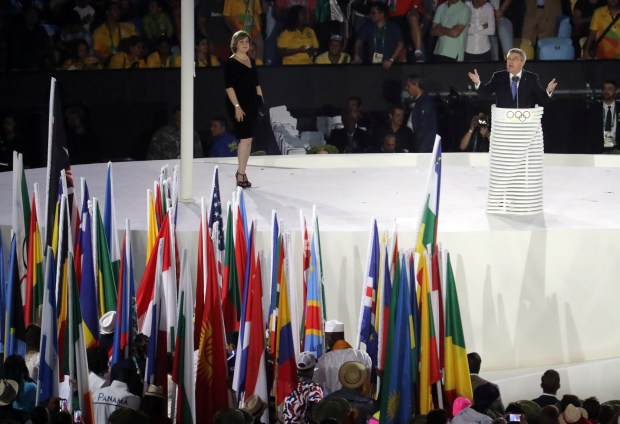
The 10-member Refugee Olympic team, representing 19 million asylum seekers displaced around the world, drew a standing ovation. And then Brazil, the host country, entered to a Samba beat and the house erupted.
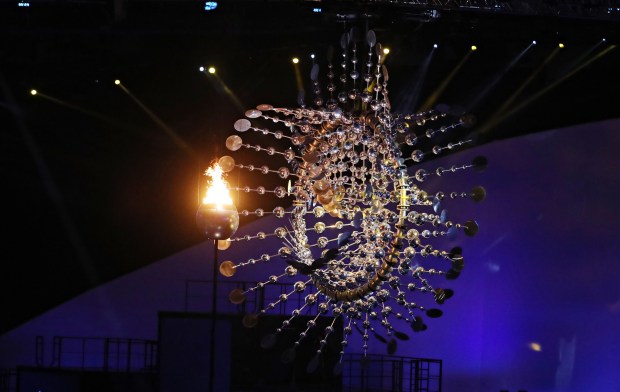
The only bummer: Pele was not able to light the cauldron. Hip surgery has taken a toll on his 75-year-old body, leaving him unable to walk without a cane, according to his spokesman.
The hope was that Brazil’s iconic sporting figure would dazzle as Muhammad Ali did in Atlanta in 1996, but that honor went to Vanderlei de Lima, a Brazilian marathoner who led with four miles to go in Athens in 2004. He finished third after being tackled by a spectator but was hailed for his sportsmanship. “It’s bronze but means gold,” he said in 2005.
And this was a lively, gold-caliber celebration, a fitting start to Summer Games that just might flourish in the face of concerns over crime, traffic, polluted waters and the Zika virus.
tgreenstein@chicagotribune.com
Twitter @TeddyGreenstein


