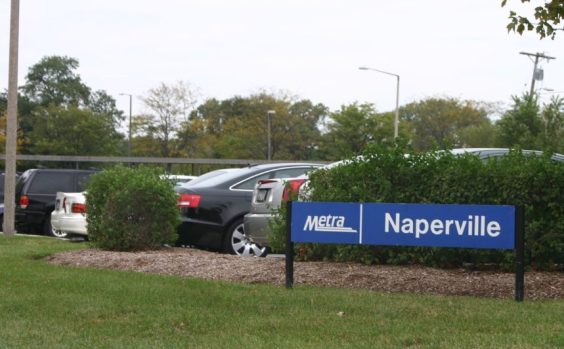

Naperville is known for many things.
Best city to live in America. Best city to buy a house in America. Best city to raise a family in America.
But living in Illinois’ third largest city comes with its tradeoffs, including a tough commuter journey for those regularly traveling to Chicago for work, according to a new study from mental health care provider A Mission for Michael.
In a survey of 3,002 people, the organization found that Naperville has one of the worst “burnout belts” in the country, referring to commutes from suburban areas to major U.S. cities that regularly contribute to chronic stress, exhaustion and burnout for workers.
“Burnout is often framed as something that happens at work, but for many people it starts and ends with the commute,” Anand Meta, executive director at A Mission for Michael, said in a news release.
The study asked participants to identify the commutes across the U.S. that contribute most to feelings of burnout. Respondents were asked about the routes they regularly take to work and which ones they find most mentally and physically draining due to a combination of heavy congestion, ongoing roadwork and long travel time.
Naperville ranked No. 10 in the U.S., the only Illinois-based city to crack the top 10 list.
“A significant portion of the day is already spoken for before the office even comes into view,” the report said. “The commute from Naperville into Chicago reshapes everything around it — mornings surrendered early, evenings arriving halfway spent. What’s left for personal time feels borrowed rather than earned.”
The commute from Palmdale, California, to Los Angeles took the No. 1 spot on the list, followed by the journey from White Plains, New York, to New York City at No. 2 and the trip from Tracy, California, to San Francisco at No. 3.
Other Illinois-based commutes included the drive from Chatham to Springfield at No. 50 and the trip from Belvidere to Rockford at No. 80.
While Naperville ranked among the country’s toughest commuter routes, data suggests fewer residents are making that daily commute to the office in Chicago since the COVID-19 pandemic.
A study released by SmartAsset earlier this year found that Naperville had one of the highest rates of remote workers in the country, with about 26% of residents working remotely.
And fewer Naperville residents are using Metra to regularly commute to work.
In 2019, the city-owned parking lots at the Route 59 and Naperville Metra stations were about 85% full on an average weekday. By 2025, that number had dropped to about 56%. So far in 2026, usage is averaging about 55%, according to city spokesperson Linda LaCloche.
The figures reflect average daily occupancy — or the percentage of parking spaces filled — across both stations.
“Metra lot usage has decreased from the impacts of the higher prevalence of workers that have hybrid schedules where they are not coming into the office every day,” LaCloche said. “This trend began at the onset of the COVID-19 pandemic in early 2020.”
While survey respondents did not specify what made the Naperville-to-Chicago commute especially draining, the study did find that distance is not necessarily what wears workers down the most. Rather, it’s the constant traffic congestion that tends to be most taxing for workers, according to David Asch, clinical director for A Mission for Michael.
“People are cutting each other off, people are honking, people are waiting. Everybody’s trying to get where they’re trying to go as quickly as possible,” Asch said. “It’s not just that I have a long commute. It’s that everybody’s doing this and everybody’s upset while they’re doing this.”
For those who are feeling burned out from their work commutes, there are ways to reduce the negative effects. Asch recommends finding a driver-friendly activity to make time on the road feel less draining, such as listening to an audiobook or podcast. While workers may not be able to get away from their one- or two-hour commute, they can give their brain something to enjoy while traveling, he said.
cstein@chicagotribune.com