






























































Since the Baseball Writers of America first issued the sport’s most prestigious award in 1931, there has been some debate contained directly in the game: What, exactly, does the “valuable” in most valuable player mean? Indeed, the first sentence of the note to voters (two in each league city) reads: “There is no clear-cut definition of what most valuable means.”
Washington Post writers are prohibited from voting for all of these awards, so anything I argue is pointless. Still . . . I’ve always been a little uncomfortable with that word. The easy explanation revolves around a superb player on a last-place team: How “valuable” was his season, because if he hadn’t played, the team would have finished last anyhow?
But that assessment also involves things well out of the player’s control — like, how good were his teammates? That seems just silly.
Now, does that make this just a stats grab, in my mind? Well, no. There needs to be room for context, such as: Did the player perform in meaningful games or at crucial times? This might be a splitting-hairs distinction, because that clearly would give players from contending teams an advantage.
Whatever. These points have been quibbled about in the past, and they’ll be quibbled about in the future. Know that this year’s decisions, in this space, weren’t made without giving too much weight to a player’s team’s position in the standings, but with some consideration of how they performed in important situations.
American League candidates
Jose Altuve, 2B, Astros: 158 games, .337 average/.396 on-base percentage/.534 slugging percentage, 24 home runs, 96 RBI, 107 runs scored
Mookie Betts, OF, Red Sox: 154 games, .320/.365/.538, 31 HR, 112 RBI, 119 runs
Josh Donaldson, 3B, Blue Jays: 151 games, .286/.407/.559, 37 HR, 98 RBI, 122 runs
Manny Machado, 3B, Orioles: 153 games, .298/.348/.538, 36 HR, 94 RBI, 103 runs
David Ortiz, DH, Red Sox: 147 games, .316/.401/.622, 37 HR, 124 RBI, 78 runs
Mike Trout, OF, Angels: 156 games, .318/.441/.556, 29 HR, 99 RBI, 123 runs

Let’s get one thing out of the way to start: Ortiz. The 40-year-old Boston icon has sentiment (in some corners) on his side, given that this is his final season, and he already has more homers than anyone ever in their final season, and his final season ranks among his best campaigns ever, perhaps trailing only his 54-homer, 137-RBI, 1.049-OPS season in 2006. Ortiz leads the majors in doubles and extra-base hits. But (you knew there was one, and it’s a big one) he doesn’t play a defensive position.
This is to take nothing away from Ortiz’s season, but as an MVP candidate, it has to count: His team is limited when it goes into National League parks, and it is hurt by his inflexibility — not to mention his lousy base running, hindered by his aching feet. He’s had a great year and career. He can’t be the MVP.
So here comes the question of “valuable.” Some of Machado’s value has to be the fact that, when shortstop J.J. Hardy missed six weeks in May and June, he played a superb shortstop. But it’s possible that an unorthodox Baltimore teammate, closer Zach Britton, was actually more valuable to the Orioles. Britton closed out Wednesday night’s improbable 3-2 victory over Toronto, making him 47 for 47 in save opportunities. I already argued against Britton for Cy Young, but in an odd way, he has a better case for MVP than for Cy Young. He has allowed an earned run in four of 68 games. What a boon to a team’s psyche to know a game is over after eight innings.
But the real argument is among the rest of the field. Altuve, for some people, is the favorite. He is about to win his third batting title in three years, and he is such a dynamic, disruptive player — packing his .935 OPS into his 5-foot-6 frame — that he becomes enticing. He has 28 more stolen bases this year (down from previous seasons, when he led the AL), and he has been caught a league-leading 10 times.
So in reality, Altuve’s case to trump the others doesn’t hold up. For that matter, neither does Betts’s. The Red Sox right fielder has enjoyed a breakout season — third in batting, third in runs scored, a remarkable eighth in OPS and fourth in RBI. He plays good defense, but his case isn’t enhanced by playing a premier defensive position.
That leaves Trout vs. Donaldson, the 2014 winner vs. the 2015 winner. (Not that this is relevant for this year’s campaign, but this is a reminder that this is Trout’s fifth full major-league season. His finishes in the MVP voting to this point: 2-2-1-2.)
This is so, so, close. Their AL ranks in:
On-base percentage: Trout No. 1, Donaldson No. 2
Slugging percentage: Donaldson No. 2, Trout No. 3
OPS: Trout No. 2, Donaldson No. 3
Runs scored: Trout No. 1, Donaldson No. 2
Wins above replacement (WAR, according to FanGraphs: Trout No. 1, Donaldson No. 3 (with Betts second)
The argument against Trout will surely be an argument against his Angels, who haven’t sat higher than fourth in the AL West since June 4. Really? We’re going to penalize the best player in baseball because the people who run his team have done a poor job constructing it.
Donaldson is a worthy candidate, the heart of a Blue Jays’ team that is likely to appear in the postseason for the second straight year. After an early-September slump, he has responded over the past dozen games, posting a 1.116 OPS.
But I can’t escape the specter of Trout. He has lost MVP awards for the wrong reasons before (2012, when Miguel Cabrera won the old-school Triple Crown of batting average, homers and RBI). Let’s not let him lose for reasons he can’t control, like who else is on his team and where that team finished.
The winner: Mike Trout, Angels
National League candidates
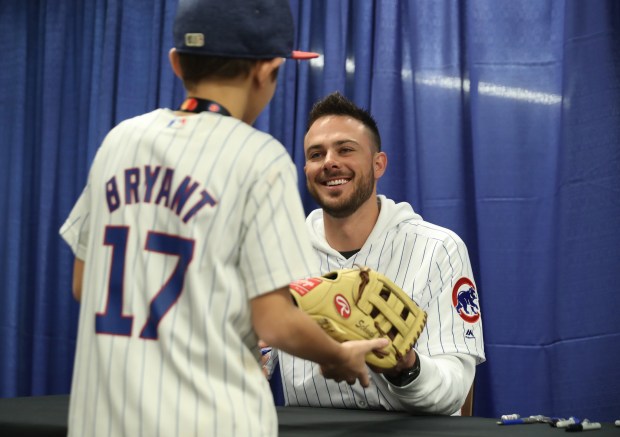
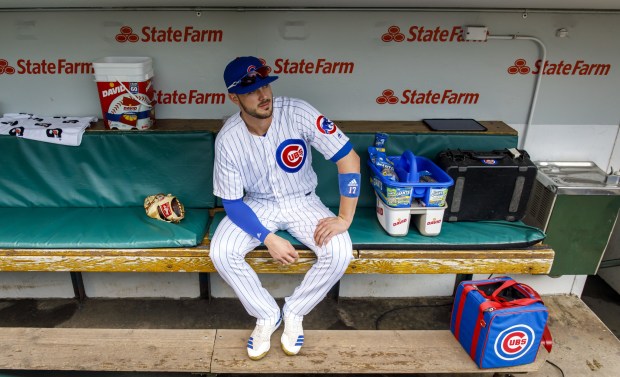
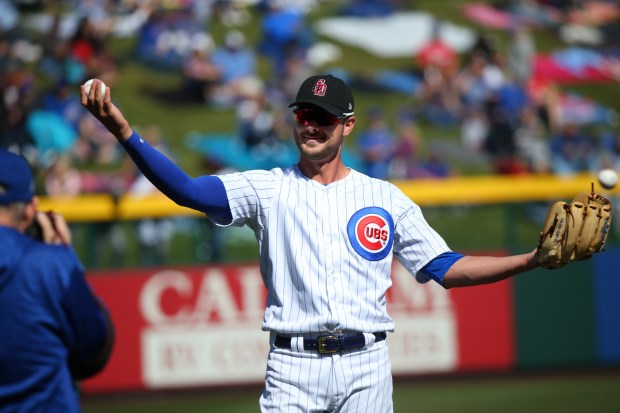
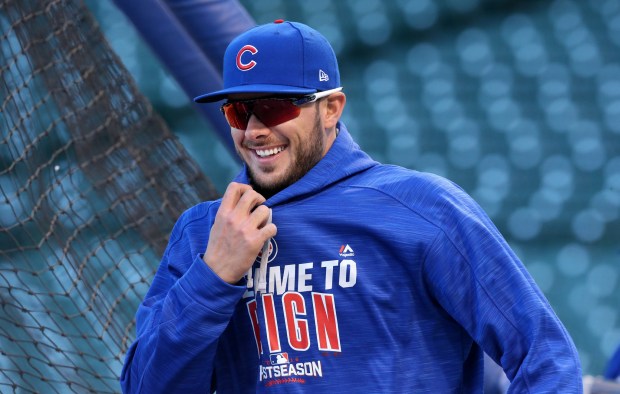
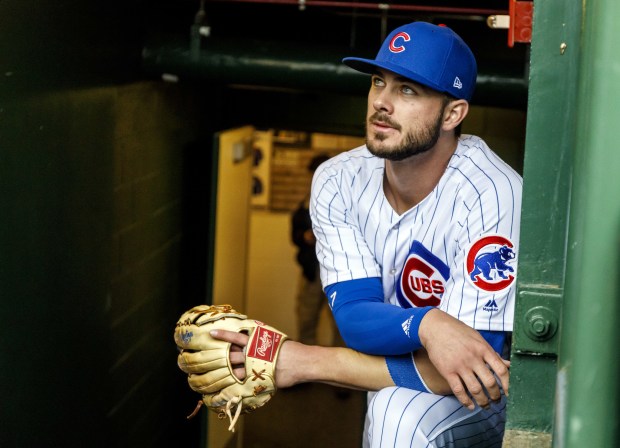
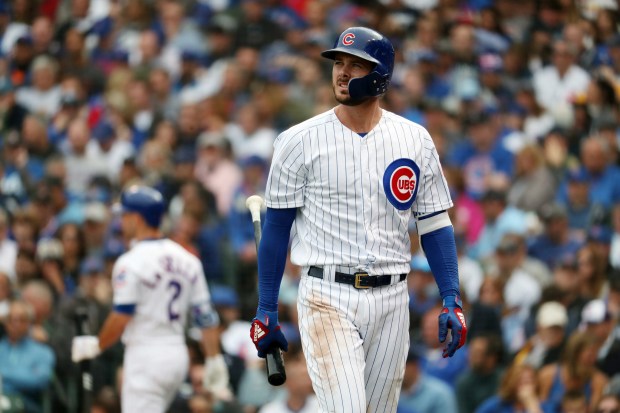
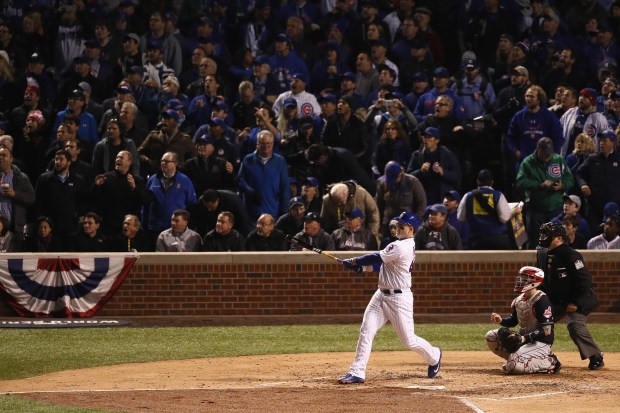
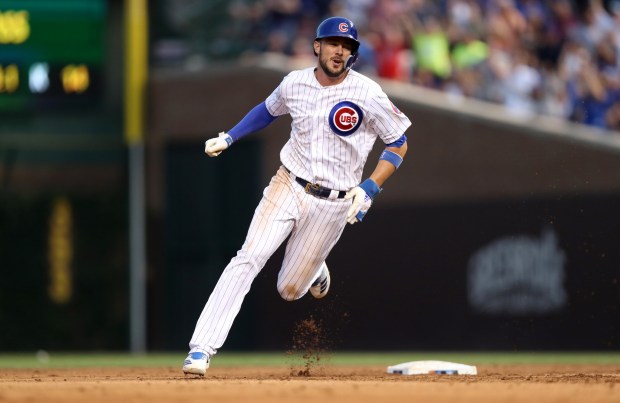
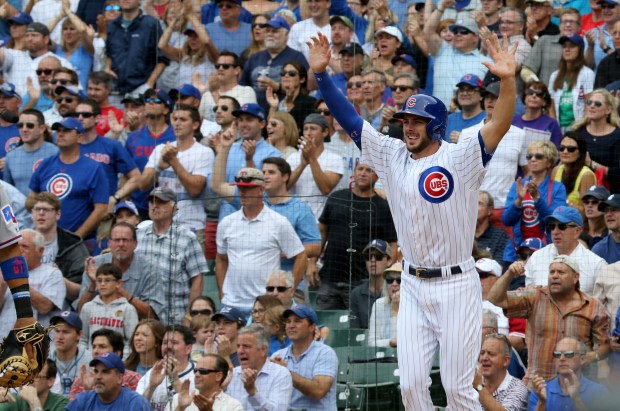
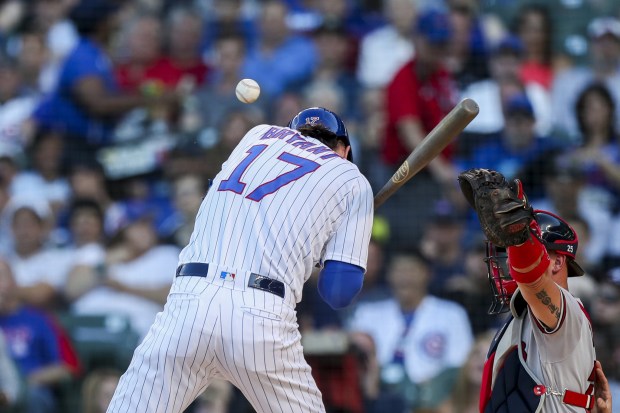
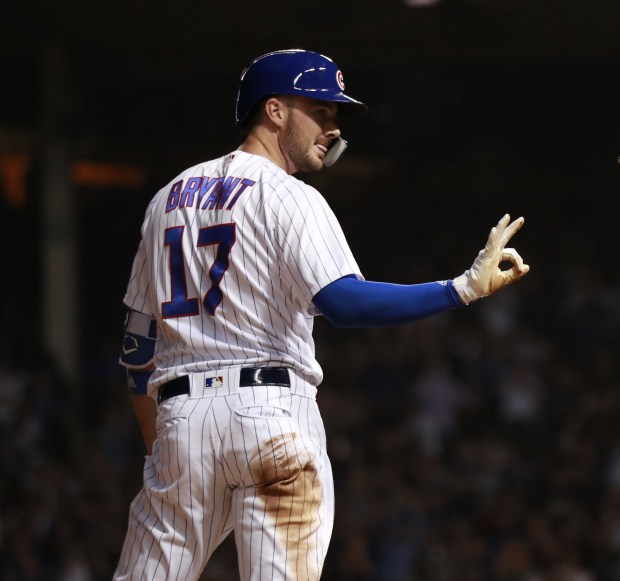
Kris Bryant, 3B/OF, Cubs: 151 games, .295 average/.369 on-base percentage/.564 slugging percentage, 39 home runs, 101 RBI, 120 runs scored
Freddie Freeman, 1B, Braves: 154 games, .308/.406/.576, 33 HR, 88 RBI, 101 runs
Daniel Murphy, 2B, Nationals: 141 games, .347/.391/.596, 25 HR, 104 RBI, 88 runs
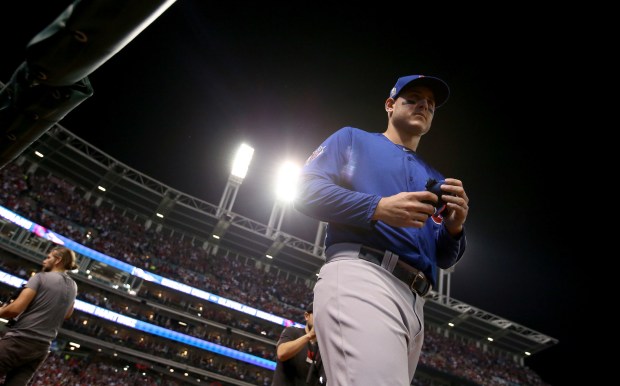
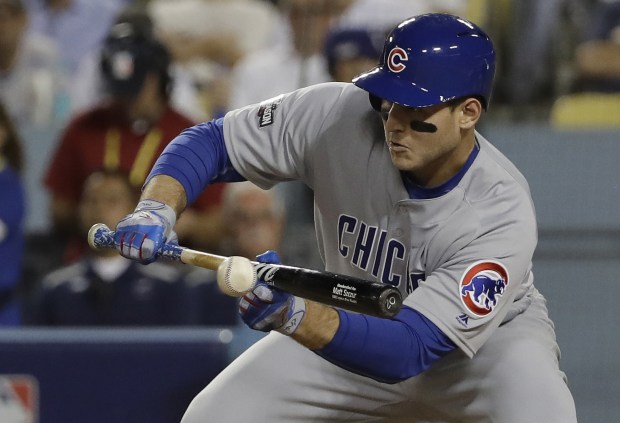
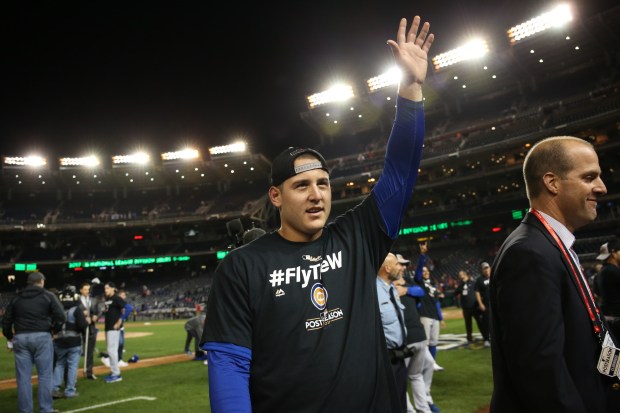
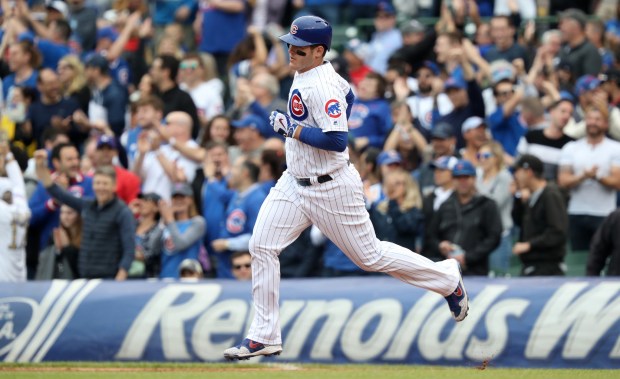
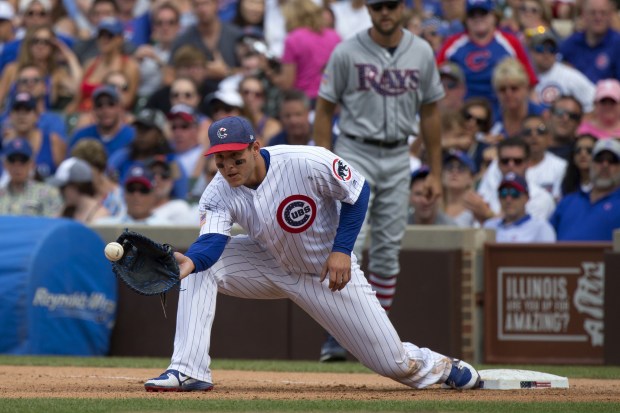
Anthony Rizzo, 1B, Cubs: 151 games, .292/.387/.545, 31 HR, 105 RBI, 91 runs
Corey Seager, SS, Dodgers: 154 games, .311/.369/.519, 26 HR, 72 RBI, 104 runs
Joey Votto, 1B, Reds: 154 games, .321/.433/.542, 28 HR, 92 RBI, 99 runs
Because their teams were essentially eliminated before the season began, some would quibble with the inclusion of Freeman and Votto on such a heady list. But look at their numbers, and consider that they put them up with lineups that were, for the most part, thin. (The Braves, for instance, rank next-to-last in the NL in runs scored.)
But as solid as those two seasons are, neither Freeman nor Votto will be the MVP. There is also a candidate who will appear on ballots, probably lots of ballots, who doesn’t appear here.
Colorado third baseman Nolan Arenado leads the league in homers and (by a wide margin) RBI and is second in slugging percentage. But even though, through Tuesday, he had played three more games on the road, he had significantly more homers and driven in significantly more runs at Coors Field (24 and 83, respectively) than on the road (16 and 46). His OPS at home: 1.032. His OPS on the road: .826. Hard to justify considering Arenado above the previously listed candidates given that dramatic home-field hitter’s advantage (though he should get credit for superior defense).
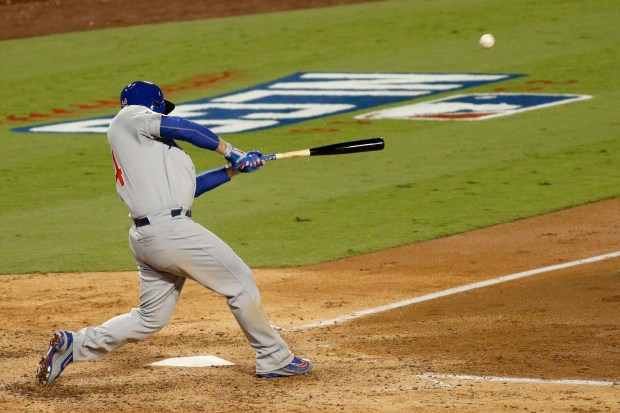
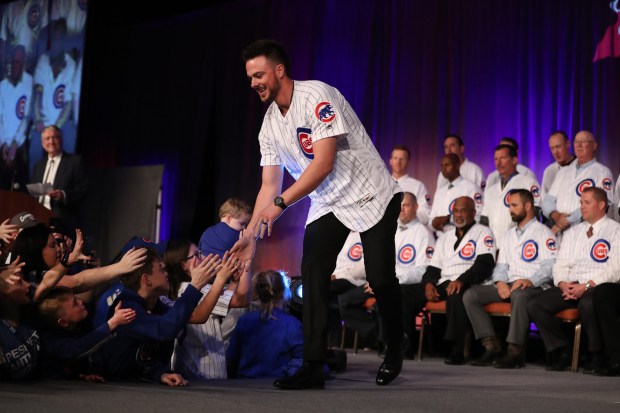
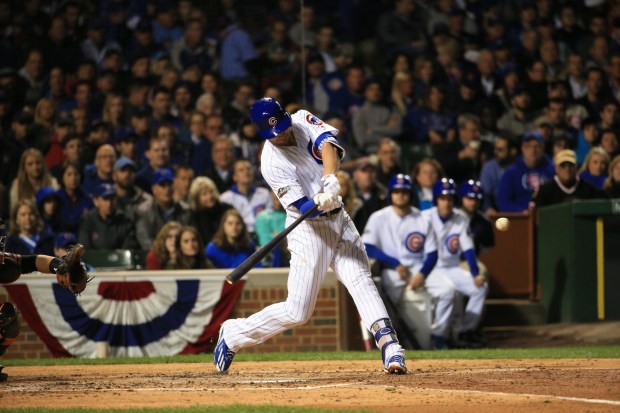
Enough, then, about who won’t win. Bryant heads into the final few days of the season as the favorite, and he has solid arguments in the counting stats (battling Arenado for the league lead in homers, first in runs scored, fifth in RBI) and the more telling percentages — he trails only Murphy in on-base-plus-slugging percentage and ranks eighth in on-base percentage and fourth in slugging. Though he’s not a Gold Glove defender, he has started games at all three outfield positions, as well as first base, in addition to his 97 starts at third.
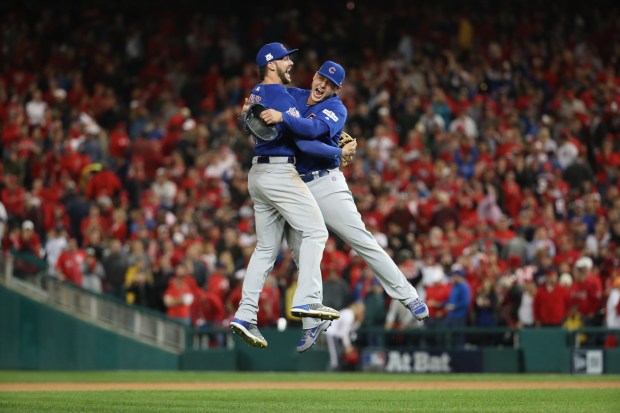
Bryant and Rizzo (who trails only Arenado in RBI) will certainly receive votes because the Cubs have been a juggernaut, and they have been the two players who have appeared in the most games, — the most consistent and important pieces of the offense.
Seager gains consideration here because of his all-around contributions and his stability in the Dodgers’ lineup — hitting second or third all year, as a 22-year-old rookie — while other pieces moved around. By FanGraphs’ calculations, Bryant leads the NL in wins above replacement (WAR) at 8.4. Second: Seager, at 7.6. He is already an excellent defensive shortstop, and he will be in this conversation for years to come.
But really, the discussion should center around Murphy and Bryant. Given that Murphy came into this season as a .288 hitter who had never hit more than 14 homers or driven in 78 runs in a season, his appearance here is remarkable. But consider his ranks in some key categories: first in slugging and OPS (helped by a league-high 47 doubles), second in average (behind Colorado’s DJ LeMahieu, who hits .394 at home and .303 on the road), third in RBI (even though he hasn’t played since Sept. 20 because of an injury) and fifth in on-base percentage.
That is a compelling argument. Murphy’s best month, too, came in May, when he hit .416 at a time the Nationals needed someone to carry them (what with Bryce Harper hitting .200). Murphy’s supporters would add, too, that his defense hasn’t been as bad as expected; he made just nine errors. But advanced metrics tell a different story, that among 21 qualifying second baseman, Murphy ranks 19th in both defensive runs saved (-9) and ultimate zone rating (-7.1).
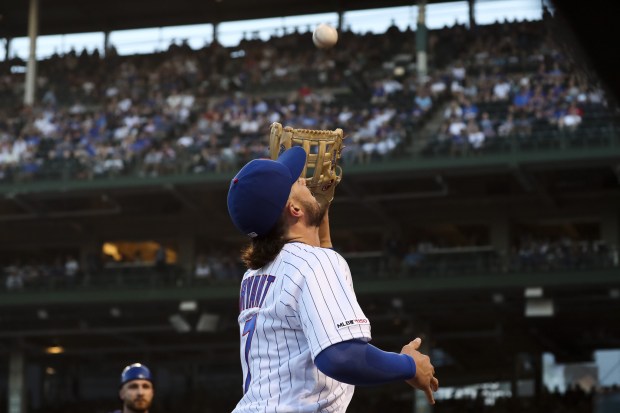
Bring it back, then, to Bryant’s defense. Don’t get me wrong: He will never win an MVP award based on his defense. But in this case, while evaluating him against Murphy, he gains a significant advantage. Among 23 third basemen with at least 700 innings at the position, he ranks ninth in defensive runs saved and sixth in UZR. He is a plus on defense. Plus, Manager Joe Maddon can put him elsewhere — say, if Javier Baez needs a day at third — and not suffer at any position. Plus, he hit 40 bombs.
Tough choice, but …
Winner: Kris Bryant, Cubs


