
With the help of a hired consultant, the Orland Park Village Board on Wednesday discussed ways to attract development within four chosen areas of the village as part of a larger review of its comprehensive plan.
The board also considered challenges of revitalizing the sectors known as the Old Orland Historic District, Gateway to LaGrange District, Harlem Avenue Corridor and I-80 Employment Corridor, as well as connecting them with a new downtown.
“This is Orland’s destiny,” Mayor Jim Dodge said. “It’ll take 20 years, but it’s Orland’s destiny.”
Urban planning and design firm Houseal Levigne plans to collect and incorporate ideas shared by board members, as well as village businesses and residents during upcoming community meetings and through an online survey. The village expects to finalize the plan for board approval next summer.
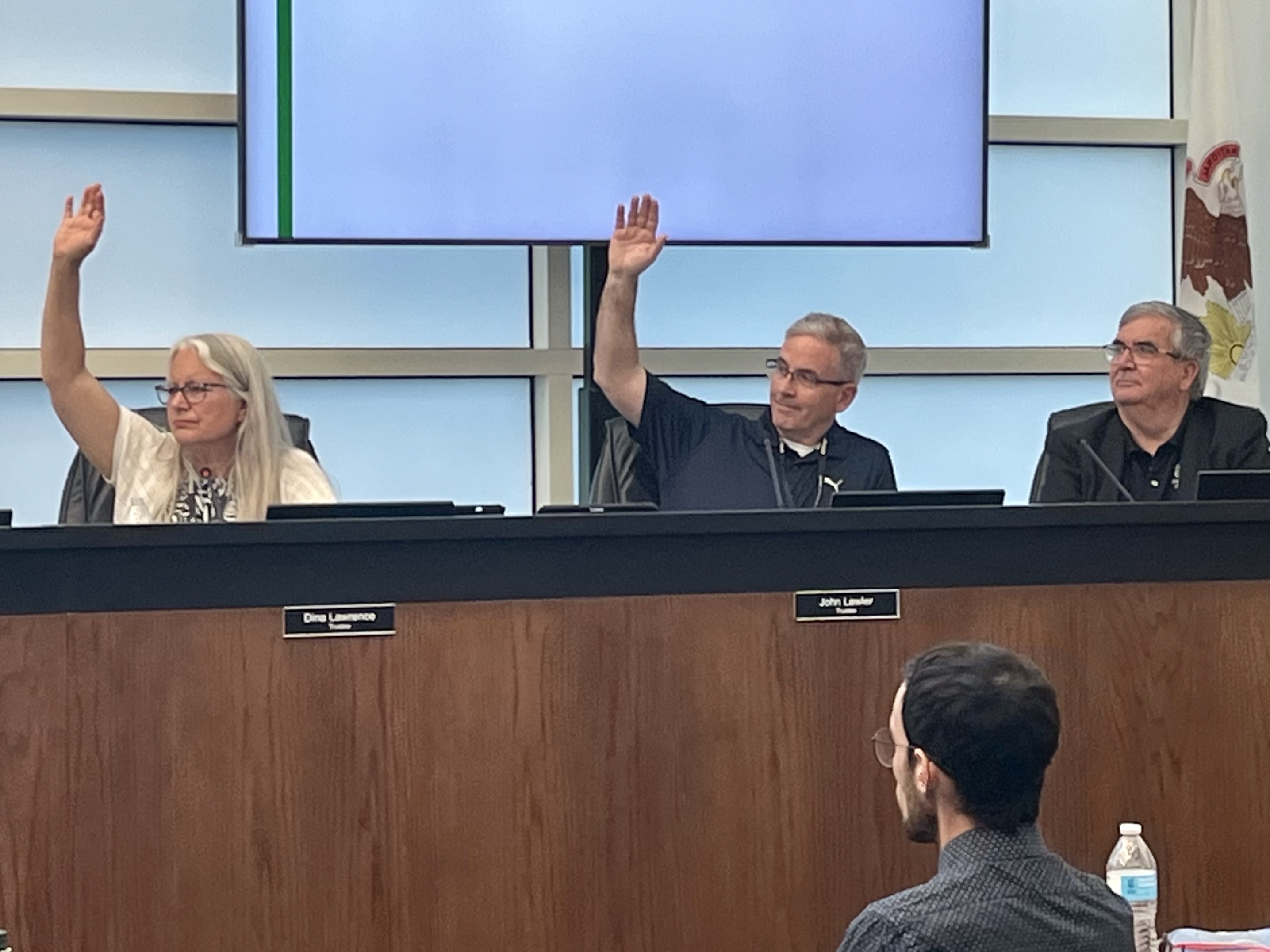
Board members were asked to fill out a worksheet listing three issues facing each area and discuss them openly before selecting the concern they thought to be most important.
“You’ve got to go through the process of getting ideas on a piece of paper,” Dodge said. “And it was funny — not everybody had voted for what they originally said.”
For the Old Orland Historic District, which extends south of 143rd Street to 144th Place and east of West Avenue to Beacon Avenue, priorities agreed on by more than one board member included giving existing properties a facelift and balancing historic preservation with development.
Board members were also asked to identify the strengths of the area, which for Old Orland included its central location and unique feel.

“It has a charm that’s lacking in other subdivisions, because of the age of the structures,” board member Cynthia Katsenes said.
For several of the areas under consideration, particularly the I-80 Employment and Harlem Avenue corridors, board members discussed the types of development they hope to encourage.
Board member Michael Milani pondered failed efforts to attract corporate headquarters and office spaces to the I-80 corridor, saying the village likely needed to establish a new identity for the area amid the post-COVID-19 surge in people working from home.
Katsenes and Milani expressed differing opinions about exploring the potential for a data center in the area, with Katsenes opposed to the idea due to nearby senior living and other housing. Many communities considering data center development have been met with strong opposition due to the centers’ high water and electricity demands as well as noise pollution.

Meanwhile, Milani floated data centers as a positive alternative to warehouse development, as they tend to generate more tax dollars.
“We have a lot of key areas where we could have one where no one would ever hear it,” Milani said.
While many of the changes to the four targeted areas are years away, Dodge said he was excited to hear more perspectives on what development should look like, especially as the board zeroes in on a proposal for its downtown triangle.
The village is expected to present its plan for the area, which is incorporated into a tax increment financing district, during one of next month’s board meetings.
“I’m thrilled for the process, because it forced the board in a nonformal way to share the ideas — what we see, what we think — we all live here,” Dodge said. “And then it’ll be interesting to see what kind of feedback we get from the residents.”
ostevens@chicagotribune.com