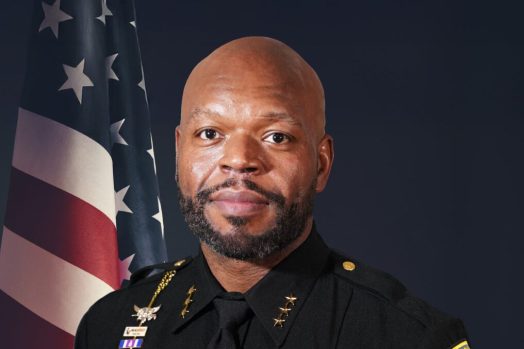
A Chicago police officer accused of tipping off an acquaintance about a narcotics investigation will likely lose his department paycheck after a federal judge ruled Tuesday he must give up his gun and firearm owner’s identification card while free on bond.
Officer Ronald Coleman, a 17-year veteran of the force who had been detailed to work with the U.S. Drug Enforcement Administration, was put on paid desk duty after his indictment last week on a charge of obstructing a federal grand jury investigation, according to court records.
After Coleman pleaded not guilty Tuesday to the charges, his lawyer, Thomas Needham, asked U.S. District Judge John Darrah to allow the officer to keep his FOID card while free on bond in order to remain on paid status with the department.
But Assistant U.S. Attorney Shoba Pillay said Coleman’s gun-carrying privileges should be revoked, arguing he was “a danger to the community” who had violated his oath as an officer and put his fellow officers in jeopardy.
The judge sided with prosecutors, ordering Coleman to relinquish his service weapon and FOID card to court officials while he was free on a recognizance bond.
While officers can typically continue working desk duty even after surrendering their weapon, the department’s policy requires them to have a valid FOID card in case they need to be put on the street in an emergency.
Chicago police spokesman Anthony Guglielmi confirmed in an email to the Tribune after the hearing that the department’s Bureau of Internal Affairs will now review the court’s decision before moving Coleman into a nonpay status.
The indictment unsealed Nov. 1 alleged that in June 2014 Coleman conducted surveillance for the DEA on a residence in the 1600 block of South Trumbull Avenue as a longtime acquaintance of Coleman’s, identified as Individual B, was meeting with a known heroin supplier.
A few days later, Coleman called another associate — Individual C — to pass the word to Individual B “to stop engaging in illegal activity” and to warn him that police would be executing search warrants on the houses soon, the indictment alleged. After Coleman made the phone call, the heroin supplier was seen moving a large quantity of drugs to a different location.
Authorities later raided several homes and recovered eight handguns, an assault rifle, cash as well as heroin and cocaine, according to the U.S. attorney’s office.
The investigation of the Conservative Vice Lords street gang culminated with 27 people being charged, including Kenneth Shoulders, who allegedly controlled the narcotics operation on Chicago’s West Side. Shoulders has pleaded guilty to a drug trafficking charge and is awaiting sentencing, court records show.
The indictment against Coleman did not say whether the person he allegedly tipped off was among those charged.
City records released this year show that Coleman, who joined the department in December 1999, has amassed more than 60 complaints in his 17 years on the force, including false arrest, illegal searches and improper use of his weapon. Only one complaint led to disciplinary action — in 2001 when he was suspended for a single day for improper inventory procedures, according to the records.
Coleman also has been named in at least three federal lawsuits during his career, including two alleging he participated in illegal strip searches of suspects. A third suit alleged Coleman was involved in the 2004 police shooting of a man who claimed he was shot multiple times by officers while running from them on a South Side street.
All three suits were settled by the city, but the amounts of the payouts were not listed in court records.
Twitter @jmetr22b