


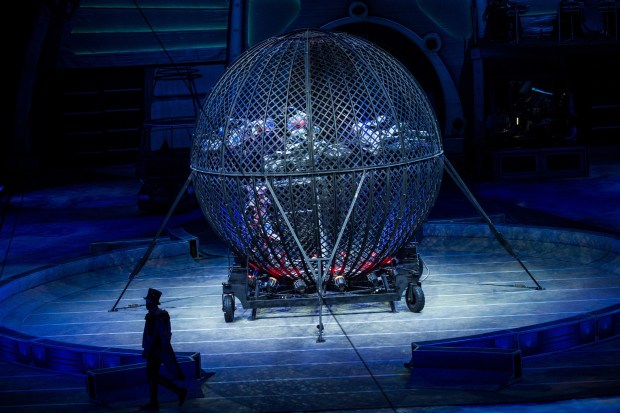


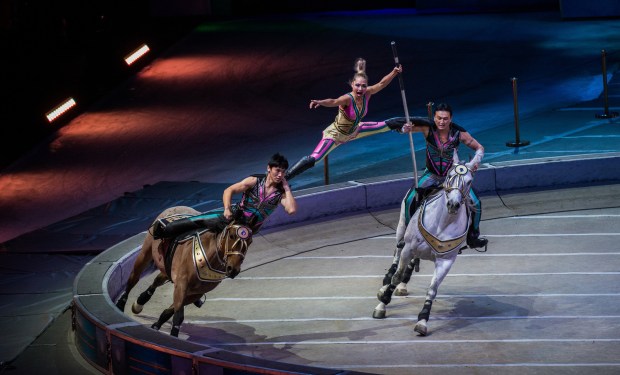


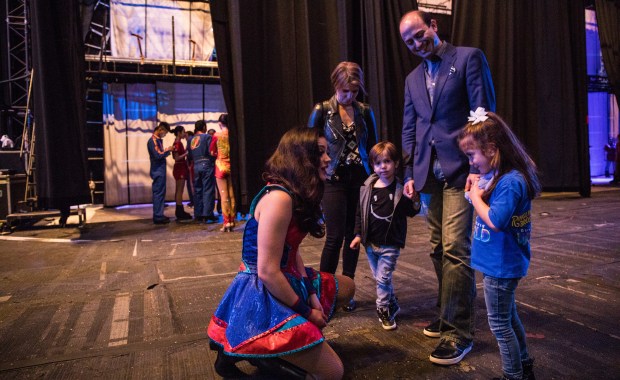
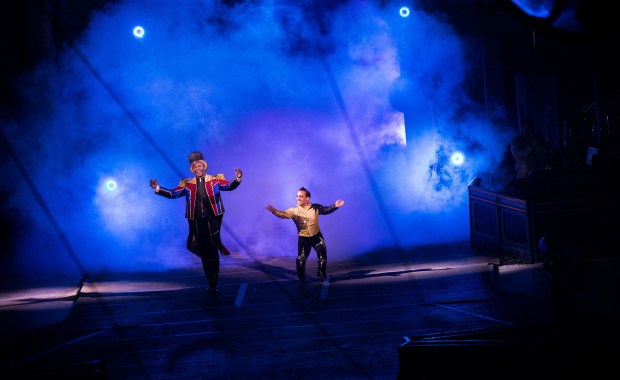


What killed the Ringling Bros. and Barnum & Bailey Circus?
Was it really as simple as elephant lovers and the internet?
Or did the notions that fed the circus die off in a nation that once gloried in the reach of empire, with strange creatures on display to certify Western Man’s dominion over Earth?
What are “nations” and “dominion” in a world without borders, anyway? And can we even think the words “Western Man,” or have we self-censored them, root and stem?
In a few weeks, explaining the circus, with its animal acts and little people clowns and women in leotards as eye candy for the dads might be impossible.
Like explaining the prints on the wall of the bedroom I shared with my little brothers when I was a boy. The prints were of civilized boys from another time.
Our Canadian-born mother — in her heart she’s still a loyal subject of Queen Elizabeth of England — put them up. Perhaps she was reaching for an older understanding of things, some civility in our neighborhood of meat processing and taverns on every corner and hardworking men getting drunk and fighting under the streetlights.
We lived in an apartment on Peoria Street, on the South Side, in the heart of White Sox country. Our two-flat was only a few blocks from the Union Stock Yards, where livestock by the tens of thousands were processed each day to feed America. You could smell it then, clouds of animal and wet wool wafting over our neighborhood.
Sometimes, if I catch a whiff of wet natural wool, I can smell the neighborhood to this day.
That was our world. But those two prints were not.
One was of a boy in a 17th-century blue velvet suit, off the Thomas Gainsborough painting “Blue Boy.” The other was of a boy in green clothing, holding a stick and a wooden hoop because that’s what boys were apparently supposed to play with, once.
My two brothers and I would stare at them before we went to sleep. We never understood them. We would have gladly punched them if they were real, and we’d stare at them in dim light.
“The green one’s lips are moving!” I’d say. “Look!”
“Don’t! No!” my little brothers would say. Then Dad might pound on the wall and we’d shut the heck up.
Blue Boy had that irritating face of entitlement you see on the children of career politicians. The green boy, with the stick and hoop, was sad.
What’s so fun about playing with a stupid stick and a stupid hoop anyway?
We had nothing in common with the boys on the wall. They were aliens of another time and not from our world.
But the circus? That was part of our world, along with “Ripley’s Believe it or Not” books or Tarzan grunting “Ungowah!” on TV between Community Discount Store commercials.
For the Shrine Circus, we’d walk into that mysterious Medinah Temple, where men wore fez hats, and so we thought they were Turks. Rarely, we’d get tickets to the Ringling Bros. At either one we’d stuff ourselves with cotton candy and hope that a lion might bite off the lion tamer’s head.
Someone had told us there was always a sharpshooter high above ready to kill the lions if they turned. So I’d miss half the circus by staring up at the rafters, looking for the killer.
The clowns weren’t funny. Kids laughed at clowns because it made their parents happy. But long before John Wayne Gacy, clowns were sad and rather creepy and every American kid knew this. And there were elephants and noise and color and it smelled like the neighborhood.
I suppose I should have driven up to Baraboo, Wis., home of the Circus World Museum and the old staging grounds of the now-dead circus. But that’s a three-hour drive, and it would have been depressing. Not that I have anything against Baraboo. Betty and I spent a cold, terrible weekend in a cheap cabin there years ago.
It smelled of Pine-Sol and was all we could afford. She was a modern dancer. And I was a reporter for The Daily Calumet and a boxing writer for the Italian sports paper, The Red White & Green, making $124 a week.
A cold, slanty rain was falling and the Circus Museum was closed, so we never did visit the painted wagons or learn about P.T. Barnum or Tom Thumb the tiny half man.
We stayed in, opened the windows and in the afternoon watched a prizefight on TV. “Boom Boom” Mancini and Duk Koo Kim had a championship war over 14 rounds that cost Kim his life. Betty and I had a terrible argument about boxing.
Later, to make up, we went out for pie and coffee in an empty diner — like the opening scenes of a “Twilight Zone” episode. We asked our elderly waitress to put slices of Wisconsin cheddar on our pie.
“Cheese?!” she shouted, an old, pinch-faced angry woman, 80 if she was a day. “CHEESE?! On pie!!!???”
The old woman stalked off angrily and we laughed and forgot our argument. We still laugh about it today.
But it was long ago.
That screaming waitress is gone, like “The Twilight Zone,” like Blue Boy and green boy, like the stockyards, and the circus.
They were of this world, once. But they ran out of time.
Listen to “The Chicago Way” podcast, with John Kass and Jeff Carlin, at www.wgnradio.com/category/wgn-plus/thechicagoway.


