
This Sunday marks the 22nd anniversary of the day Amazon sold its first book. If you’re curious, that book was “Fluid Concepts and Creative Analogies: Computer Models of the Fundamental Mechanisms of Thought” by Douglas Hofstadter.
Hofstadter, a professor of cognitive science is probably best known for his book, “Gödel, Escher, Bach,” which his publisher described as “a metaphorical fugue on minds and machines in the spirit of Lewis Carroll,” whatever that means. I guess 1995 was that kind of year.
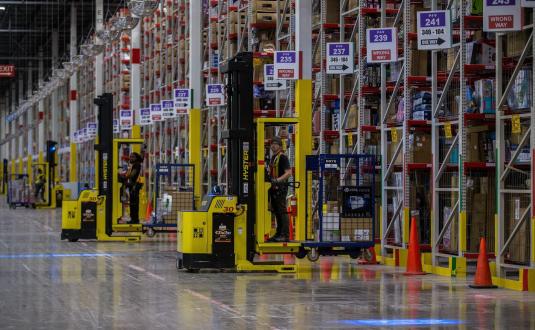
Since then, Amazon has of course become a virtual Gargantua of retail, selling almost anything you can imagine and prompting some to predict traditional brick-and-mortar stores will soon become extinct. Will that happen, and if so what does that mean for Naperville’s downtown?
It’s easy to see why some folks think walk-in stores are dying because a lot of them give that impression. I’ve done a lot of manufacturing consulting and, believe me, I understand how important it is to manage inventory, but inventory is a big part of the reason people go to stores.
If you don’t carry any, people won’t go. A few years ago, I wanted a bread machine. I read up on them and knew pretty much what I wanted. So I started going to stores in and around Naperville. A few said they sold them, but didn’t have any on hand “because people don’t buy those any more.” They said I could order one and pick it up at the store next week.
One store had one, literally a single bread machine, but it didn’t have any of the features I wanted. A couple of stores told me of places in Chicago where I could probably find what I was looking for. So I went home and ordered one from Amazon that does exactly what I wanted.
Another way some of our stores are aiding in their own demise is with service. In a restaurant, the quality of the server is far more important than the quality of the food. I believe service is even more important in a retail store, where information and experience are critical.
Once I was looking for a particular piece of kitchen equipment in one of our local stores. I couldn’t find it and neither could the saleswoman. We approached the fellow who apparently knew where everything was. He was just leaning against the wall, but he informed us he still had five minutes on his break. I wish that experience was rare. I ended up using Amazon again.
I don’t believe traditional retail will ever die because it can provide so much more than an online store ever can. Amazon isn’t even anything new. Owner Jeff Bezos simply picked up the business Sears didn’t want any more. You used to order everything from the Sears catalog and it would be delivered either to you or to a pickup center near you. Naperville’s was on Washington Street.
Amazon is simply doing the exact same thing with modern tools while Sears’/Kmart’s assets were being stripped away by management. No, computers don’t kill stores, store owners kill stores. I believe there will always be a demand for the rich shopping experience that retail stores can provide.
But it has to be done right. You have to learn what to carry and how to cultivate the best, most knowledgeable sales people. That can be difficult, but it can be done. Store owners just have to try.
And we all have to remember that Naperville is a brand, including its identifying symbols and amenities, such as the iconic Millennium Carillon, which looks great but sounds lousy. Anybody can enhance that brand and anybody can diminish it. But it’s entirely in our hands. Amazon has nothing to do with it.