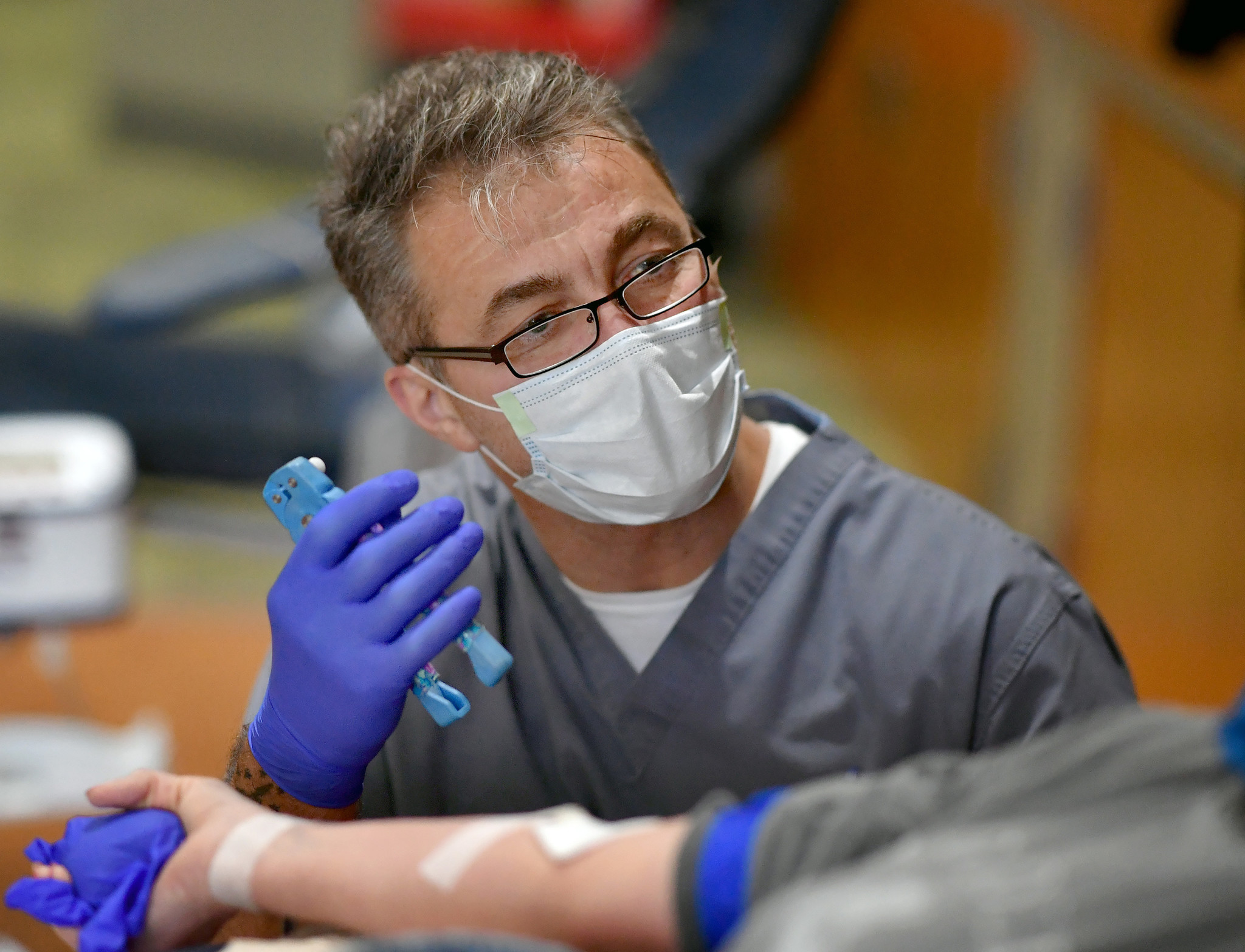
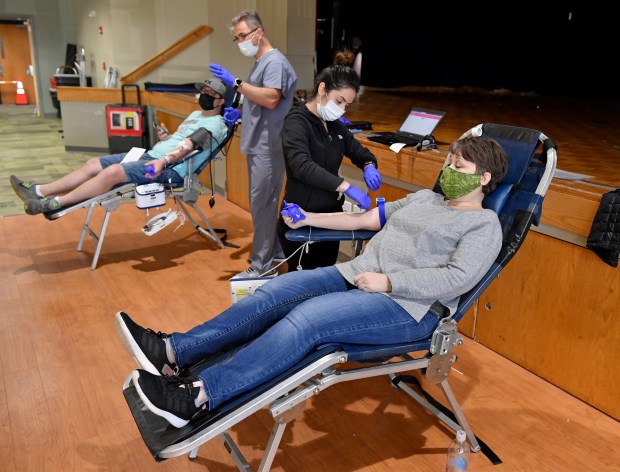

Even with the coronavirus pandemic forcing residents to stay inside their homes, a recent blood drive hosted by the Vernon Hills Lions Club exceeded the group’s collection goal.
The response is encouraging given the unusual circumstances, experts in the Chicago area say, and marks one of many blood drives in recent weeks that have helped blood donation supplies rebound across the nation following a shortage last month brought on by the pandemic.
Gary Zabilka, a blood drive chairman with the Vernon Hills Lions Club, said the organization collected 45 pints of blood, with each donor giving one pint, during the drive April 18 at the Sullivan Center in the village.
The total pints collected was above the club’s average of 30 to 35 pints a drive, he said. All 45 pints also were collected from those who scheduled appointments before the start of the drive.
“This (blood drive) in particular is even more unique, in that there were 45 (people) who were pre-scheduled to donate,” Zabilka said. “That’s the first time we’ve ever had a full slate scheduled. We had to turn away walk-ins because we had so many people.”
The club’s blood drives support Vitalant, a blood collection nonprofit with a strong presence throughout the Chicago area.
To ensure proper health protocols amid the pandemic, Vitalant required anyone entering the Sullivan Center for the drive to go through temperature readings. Blood drive workers also wore masks along with their other usual personal protective equipment, Zabilka said.
“The process was pretty typical,” Zabilka said. “I’d say 90% of the people coming through the doors had masks on, as well.”
Holly Seese, a spokeswoman for Vitalant in Illinois, characterized the organization’s current blood donation supply in Illinois as stable.
Vitalant is encouraging individuals to schedule appointments for the end of May and the month of June, as the summer season historically brings a 20% dip in blood donations under normal circumstances because of vacations and other factors, she said.
According to the AABB, formerly known as the American Association of Blood Banks, the supply of donated blood was significantly interrupted at the beginning of the March as the spread of COVID-19 intensified across the nation.
Seese said nearly 95% of mobile blood drives at Vitalant locations in Chicago were being canceled around that time.
Eduardo Nunes, vice president of quality, standards and accreditation with the AABB, said the blood supply began stabilizing by the end of March after health officials called for the postponement of elective surgeries.
Donors also began to come out and donate more understanding the need during the pandemic, he said.
“Blood, however, has a limited shelf life, so AABB continues to encourage donors to contact their blood centers and make an appointment to donate in the coming weeks or months,” Nunes said.

But donations for convalescent plasma still remains in need.
Blood centers have begun collecting convalescent plasma from those who have recovered from COVID-19, Nunes said. Plasma is rich in antibodies and can be transfused to critically ill patients, he said.
Vitalant also is looking to work with recovered COVID-19 patients in Illinois, according to Seese.
The transfusion treatment is classified as experimental by the Food and Drug Administration, according to Seese. But earlier this month, the FDA released guidance on eligibility and requirements for clinics to follow if administering the transfusion treatment.
For the Vernon Hills Lions Club, the recent blood drive happened during the pandemic but originally was scheduled for last year, according to Zabilka.
But the club felt the drive still was important to host because of the public health crisis, he said. The club typically hosts four blood drives each year.
The Vernon Hills Park District, which runs the Sullivan Center, also was more than willing to accommodate the club even though district facilities are closed to the public, he said.
“I reached out to the park district and asked them if they would be willing to open the facility and still host the blood drive, in light of the fact that they’re technically not open, but knowing this could be a good community service opportunity,” Zabilka said. “And they were more than willing to do that.”
jnorman@chicagotribune.com