
Orland Park parents, teachers and other community members appear to have won a battle in the so-called war on Christmas.
Amid community outrage, Orland Park Elementary District 135 reversed course to allow Christmas trees and other traditional observances this season after initially banning Christmas themed displays in an effort to be more inclusive.
“All celebrations will continue as they have in the past,” Superintendent John Bryk said in a recent message. “Moving forward, the district is committed to collaborating with community members to identify the best way to enhance our traditions, cultures and holidays that are representative of our diverse community.”
Bryk said in his message he wanted the nearly 5,000 students in the district’s 10 public schools to focus on more universal traditions of the season, such as the first snow, sledding, ice skating, making gingerbread and spending time with family and friends.
“Removing a decoration such as a Christmas tree was not to offend or show any disrespect to those who observe Christmas,” he wrote. “Rather, I was keeping in mind that our students have widely divergent religious celebrations.”
District 135 provided a copy of Bryk’s remarks but said he was unavailable for an interview.
Bryk’s initial directive about downplaying Christmas themed celebrations prompted community uproar in the days before Thanksgiving. Hundreds commented when Orland Park Mayor Keith Pekau publicly shared a message summarizing the directive on social media.
Pekau’s initial post encouraged parents, teachers and others to “make noise” and turn out at the district’s next school board meeting Dec. 13. Many said they were sorry children would be unable to celebrate Christmas at school with their friends this year.
“This is sad for our kids,” a parent wrote.
The pandemic has made this school year tough for a lot of students and teachers. Some looked forward to traditional holiday celebrations to ease stress and create a sense of normalcy.
Some said they were frustrated that schools were to exclude all symbols of Christmas. Penguins were OK, but Santa Claus was not.
“Santa is not a religious figure,” a woman wrote.
“Technically it is Saint Nicholas but it’s commercialized,” another woman replied.
Others wondered why the district could not maintain its traditional Christmas celebrations and include observances of Hanukkah, Diwali and Ramadan, which are observed in the Jewish, Hindu and Muslim faiths, respectively.
People discussed cancel culture, the left vs. right and freedom of speech and religion in America. Initially, school board members were subjects of complaints. Many commenters vowed to vote them out in the next election.
Two days after Pekau’s initial post, the mayor shared an update from the superintendent. In his mea culpa message, Bryk took responsibility for the directive, saying it was not a policy the board approved or discussed.
“Without the knowledge of the Board of Education, I encouraged a celebration of the time of year as opposed to a single religious holiday,” he wrote.

Bryk is highly qualified to lead a public school district. Before the board tabbed him to lead District 135 in January 2020, he was the district’s assistant superintendent of finance and operations for nearly five years. He previously was an administrator in the Minooka school district and as an assistant principal at Thornton Fractional North High School in Calumet City.
Bryk is also a lieutenant colonel with the Illinois Air National Guard. He was Joint Task Force commander for Illinois at the Jan. 20 inauguration of President Joe Biden in Washington, D.C. He commanded the Illinois Air National Guard’s 126th Security Forces Squadron.
He worked as a military diplomat in Europe. He holds master’s degrees in business administration, cybersecurity and business and organizational security management. He’s worked as an intelligence analyst. He has written articles and given talks about security of the nation’s utility infrastructure.
It is puzzling how a person of such intelligence and experience could so poorly misread the room and miscalculate how the Orland Park community would respond to a well-intentioned directive to be more inclusive about holiday observances.
“My hope was to ensure that all children, including those whose religious holidays fall outside of this time of year, are made to feel welcome and comfortable in their school building,” Bryk wrote.
Pekau praised the decision to reverse course and those who contacted school board members to voice their opinions.
“This is an example of peacefully and effectively making your voice heard and elected officials listening,” Pekau wrote. “This is a good decision for the students and for all residents of Orland Park.”
Bryk continued to face criticism online after the reversal. Some said he shouldn’t have implemented such a drastic change in policy affecting thousands of families without first obtaining explicit approval from the board and allowing opportunity for public input.
Others said the imbroglio over canceling Christmas raised concerns about Bryk’s management style and whether he sufficiently considered input from the district’s 367 teachers on other matters.
Pekau emerged from the hubbub as a winner, someone who not only understood concerns of his community but helped broker a different outcome by publicly encouraging people to contact their elected school board representatives.
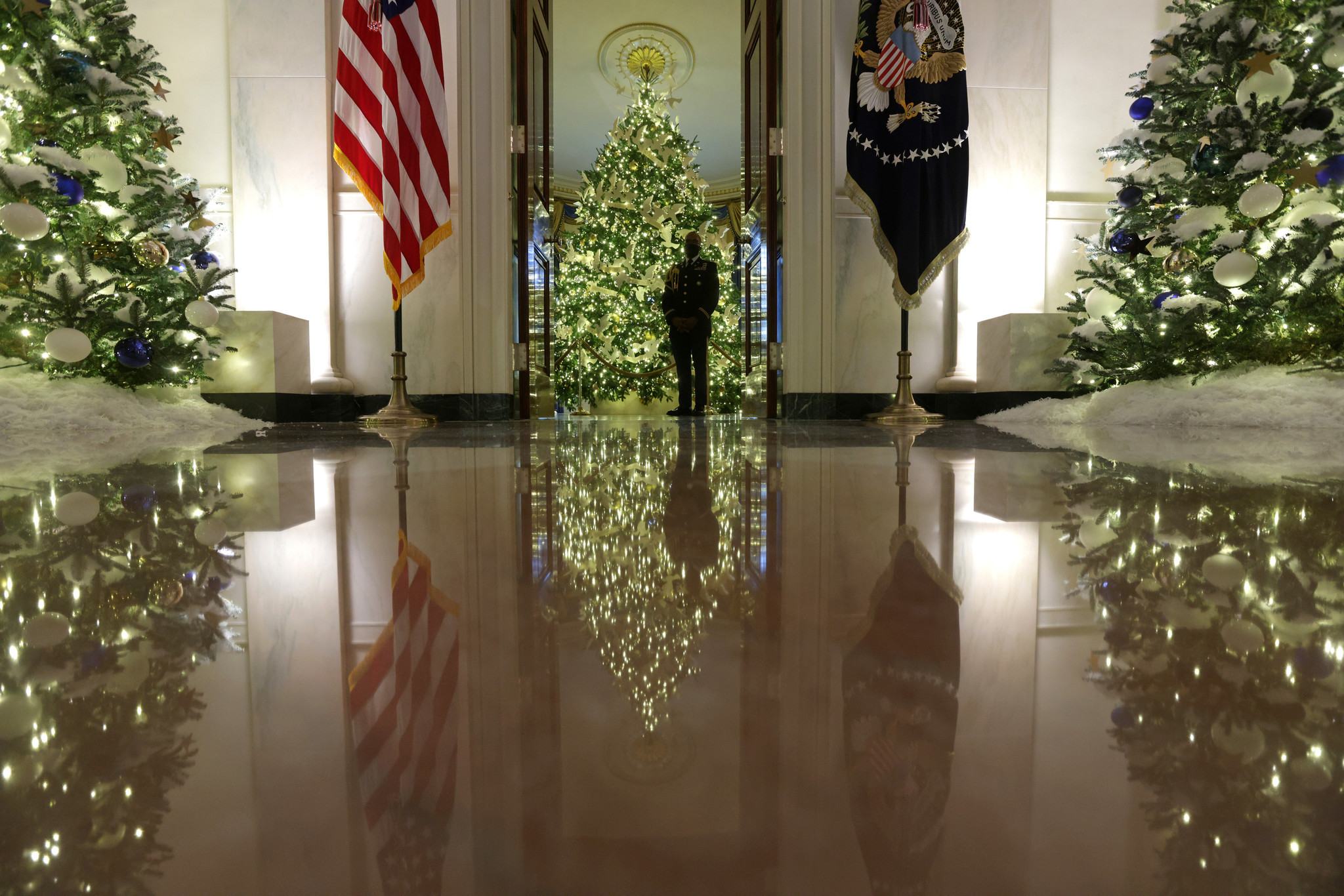
The flap should serve as a lesson that despite the right’s frequent complaints about a so-called “war on Christmas,” it’s actually fine to display Christmas decorations on public property. Even the White House has a Christmas tree.
“Public schools are limited to celebrating holidays that have both secular and religious significance,” according to the Free Speech Center at Middle Tennessee State University.
Courts have ruled that because Christmas is both a secular and religious holiday, teachers can wish students “merry Christmas,” schoolchildren can sing Christmas carols and schools can have Christmas trees.
“The myth that ‘God has been thrown out of public schools” is factually inaccurate and often carelessly asserted in a way that harms the public’s understanding of the appropriate and constitutional role of religion in the public schools,” according to the Baptist Joint Committee, an 85-year-old group that lobbies to advance religious freedom.
Numerous publications advise school officials that the key is to constitutional Christmas celebrations is to keep them educational and cultural as opposed to promoting a religious observance.
It shouldn’t be too hard for well compensated school administrators to know what types of Christmas observances are allowed in public schools. Then again, nuance and subtlety are among the biggest casualties of our increasingly divisive culture wars.
Ted Slowik is a columnist at the Daily Southtown.