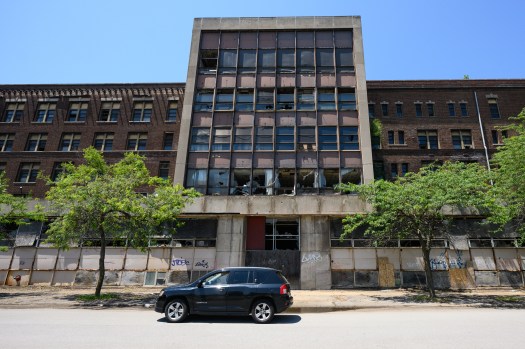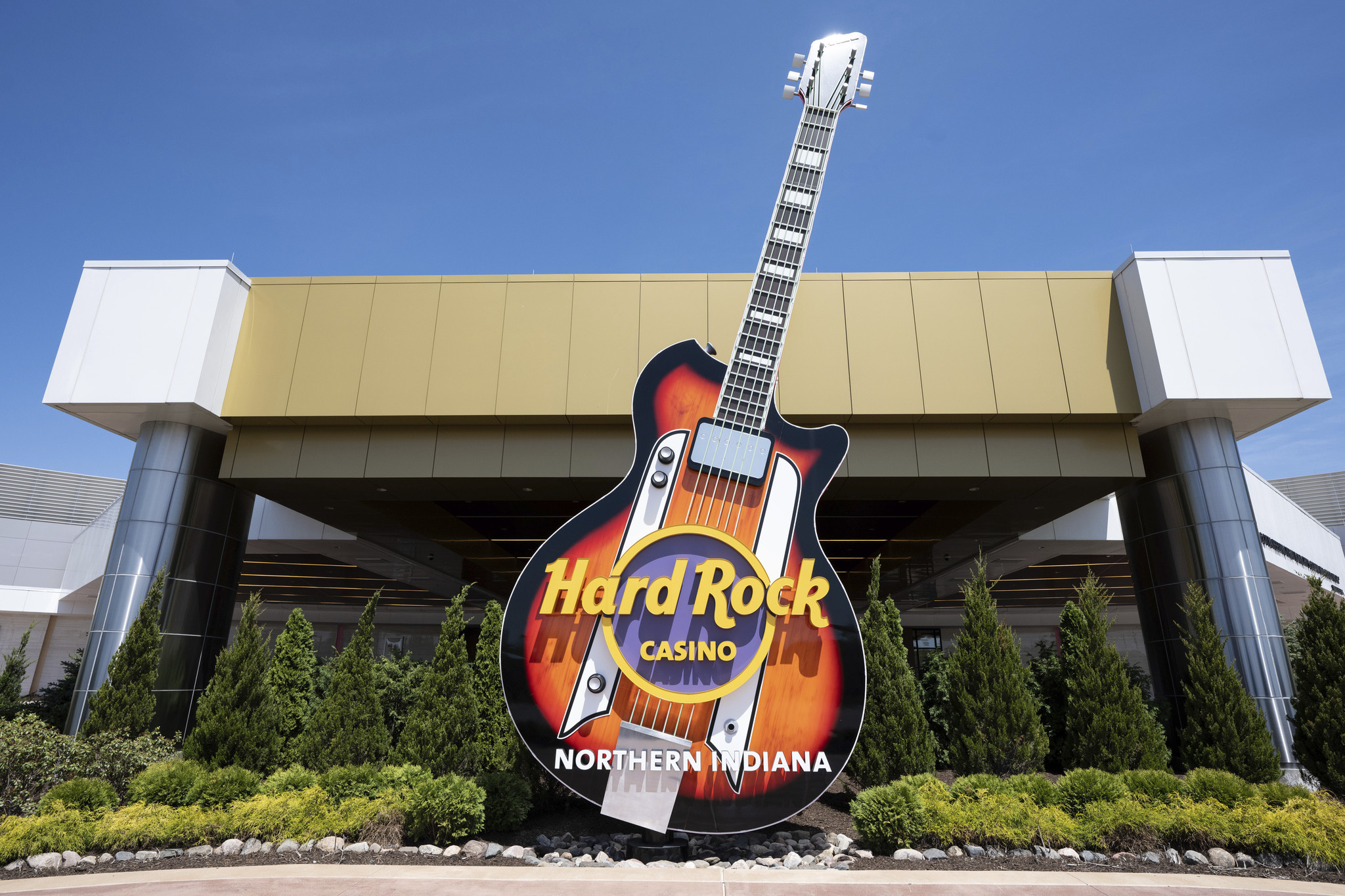

Changes to a bill that would create a Lake County Convention Center, revitalize the Gary Metro Station and fund blight elimination in that city was amended and passed through the House Ways and Means Committee bringing it one step closer to passage.
The amended bill will go before the full House Monday for second reading.
State Rep. Hal Slager, R-Griffith, penned a detailed amendment to the original bill authored by Sens. Eddie Melton, D-Gary; Ryan Mishler, R-Mishawaka, and Ed Charbonneau, R-Valparaiso, who provided new details on how the plan will capture gaming tax revenue to fund the three facets of the bill would work.
He said the bill as originally presented did not have a lot of detail on how this money would be divided, how it would be managed, and who would own the properties once developments are complete.
“Amendment No. 10 is an attempt to fill in those blanks,” Slager said.
He said he had discussions with the bill’s authors, the Gary mayor’s office, the Regional Development Authority, Lake County Board of Commissioners and the County Council — along with representatives from Hard Rock Casino Northern Indiana — before crafting the amendment.
“I think we’ve gotten input and have some feedback from all these groups. We are not operating in a tunnel,” Slager said.
State Rep. Jeffrey Thompson, R-Litzon, chair of the Ways and Means Committee, said Slager’s amendment made a difference.
“Without Rep. Slager’s work, this would have never moved out of committee,” Thompson said.
Gaming tax revenues earmarked for the projects laid out in the bill do not become available until fiscal year 2026. In the meantime, Slager’s amended bill calls for the creation of a blighted property demolition fund to get that process started as soon as possible if the bill becomes law.
The RDA has agreed to fund up to $3 million a year in matching dollars for the blight removal until the gaming tax revenues become available. Any dollars the RDA allocates for the blight removal will be reimbursed by the state at that time.
Gary Mayor Jerome Prince said he worked with Slager to acknowledge the concerns of the General Assembly while still creating a pathway to realize his administration’s priorities of blight removal and the establishment of the Metro Center.
Prince credited relationships going back some 20 years with legislators like Slager, State Sens. Rick Niemeyer, R-Lowell; Dan Dernulc, R-Highland; and Ed Charbonneau, R-Valparaiso. Prince said he first worked with Niemeyer and Dernulc when he served as a Lake County councilman and has collaborated with them all in various capacities over the years.
“(They) reached out expressing their concerns about the bill as presented to them in the original form and because of our involvement we were able to keep the entire bill on track,” Prince said.
Plans for the convention center and redeveloped Gary Metro Center can move forward in earnest when the funding becomes available in 2026. In the meantime, proposals for what those projects will look like can be presented.
All of the projects will require matching dollars. The city will be able to work with one of two local development agreements it has with Hard Rock Casino to fund its match. One LDA provides the city with a minimum of about $6 million in gaming tax revenues that are used by the city in its general fund. The second LDA captures gaming tax revenues above the $6 million threshold to be used for projects that would benefit the casino in some way. A convention center is that type of project, Slager said.
The RDA will oversee the funding and how it is distributed and fulfill the quarterly reporting requirements to the budget committee. The bill now also requires the RDA to update the convention center feasibility study originally commissioned the 2018.
“It establishes a mechanism for the Lake County Board of Commissioners to receive proposals for a convention center, the process and the timeline. If nothing is done regarding a convention center by 2028, the funds set aside by the state for the project would be returned to the general fund,” Slager said.
According to the amended bill, any convention center project will not be built without appropriate designated rooms for conventioneers.
“Otherwise it becomes little more than a civic center,” Slager said.
He said the casino is not interested in owning or operating a convention center or a hotel servicing it. Rather, they are interested in a convention center being built as it will benefit its operations as well as the construction of a hotel that would largely service the casino, Slager said.
The bill creates the Lake County Convention Center Authority that would own the proposed convention center, Slager said. The county council would be able to increase the innkeepers tax by up to 5% to help fund the project. The new board governing the convention center would be comprised of three members from the private partner needed to make the convention center a reality, three members appointed by county commissioners and a tie-breaking member appointed by the governor’s office.
Slager said the new authority needs to include the private partners because while the authority will own the convention center, the private partner ultimately will be responsible for running the convention center.
“The tourism bureau, they have no experience managing and operating a convention center,” Slager said.
David Uran, chairman and CEO of the South Shore Convention and Visitors Authority, and Andy Qunell, chairman if the SSCVA board, both said they were pleased to see the legislation moving forward.
“The thing that I’m excited about is it looks like we are still moving ahead,” Qunell said.
“It’s a great opportunity for Lake County to have something built we desperately need in our region that is not paid by property tax owners,” Uran said.
Both men said they were hopeful as the measure moves forward through the House, but they want legislators to reconsider the governing authority.
“As this thing progresses forward, the state always doesn’t want to have extra layers of government. Hopefully that is looked at. Historically, people want to see government smaller not bigger,” Uran said.
Qunell said he has spoken to the SSCVA’s lobbyist Bose Public Relations Group of Indianapolis about the changes but has not had a chance to thoroughly review the document. The pair will be working with the lobbyist next week concerning the measure.
“I don’t know why they want to create another layer of government,” he said. “We will be doing our job working toward making sure the best legislation gets passed.”
Regardless who oversees the new convention center it will be the SSCVA’s job to fill it, Qunell said. He said it will be interesting to see who comes forward as a private partner in the project.
“I want to make sure this thing gets built and make sure who builds it is capable of proving really 30 years of matching funds,” Qunell said.
If the county council approves increasing the innkeeper’s tax by 5%, that money will go into a reserve fund managed by the RDA that will stipulate how the money can be spent.
Lake County Councilmen Ted Bilski, D-Hobart, and Pete Lindemulder, R-Schererville, said they were surprised by the number of changes made to the bill. They said it bears little resemblance to what the had previously discussed with legislators.
Whether the commissioners or council are responsible for the contract, Bilski said he will not support raising the innkeeper tax without council oversight of the entity’s budget.
“I cannot support the tax the way (the bill) is now,” Bilski said.