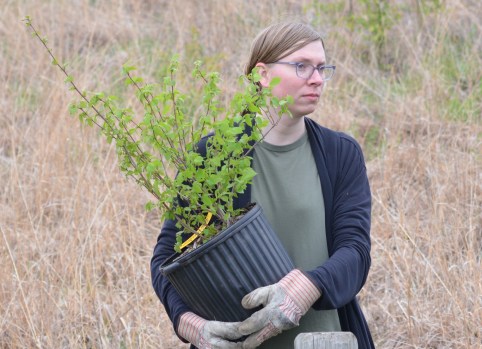


Pam Oliver knows the pain of losing a loved one to cancer, but she’s chosen to channel that energy into helping other people by volunteering for the Center for Food Equity in Medicine, based at Flossmoor Community Church.
“Like I tell everyone who is going through something or has lost someone so young, there are no perfect words to share the feeling or how you recover,” said Oliver, whose 31-year-old daughter Kristin died in 2020 from the rare cancer sarcoma of the heart. “But I know she would want to do this. Ever since she was younger, she was really involved in giving back.”
The organization, founded by cancer survivor Ann Jackson, provides healthy food for families in Chicago, the south suburbs and Joliet who are experiencing serious health conditions such as cancer and sickle cell disease.
Oliver heard about the organization through her job as an assignment editor at NBC in Chicago. The station’s story about it ran just two months after Kristin had died.
“After we did the story, I said in my heart I knew that Kristin would have been involved,” Oliver shared. “And with that in my heart, I said ‘I know there’s an issue. I know there’s a need.'”
Her daughter faced that need at her own home in Charlotte, North Carolina, because she struggled to buy food after paying for medication, treatment and living expenses. Oliver knew others had the same struggle, so when the choir at New Faith Church collected $600 in her daughter’s memory, she used it to create gift baskets for families served by the organization — something her daughter had wanted to do, “Kristin’s bags of love for young patients.”

Oliver bought sour Lemonheads, lotion, books of encouragement and blankets for the baskets.
“It helped me give a piece of her and her love to individuals who were dealing with illness like she did for so long,” she said.
Oliver still volunteers with the organization, delivering groceries and helping at pop-up events.
Jackson, who is executive director, was inspired to help others after undergoing treatment for breast cancer in 2017 at the University of Chicago, where she learned some families couldn’t afford food. She and the leadership team at the hospital’s cancer center opened a pantry in November 2017 to serve caregivers, patients and the hospital community. She soon realized she needed to “shift gears” and help people closer to home — and more of them.
In November 2019, the first year of working out of her driveway, 34 families were helped, but she soon realized that was not sustainable. The Center for Food Equity in Medicine was set up at Flossmoor Community Church and helped 42 families with food for Christmas in 2019.
Since then, the organization has served more than 8,000 people and almost 2,000 households, distributing almost 140,000 pounds of food, Jackson said in a news release. In addition to delivering groceries monthly, via the To Your Door Grocery Brigade, it sets up pop-up food markets so people can choose their own food.
“With an event, we try to tailor the offering to the group as best we can,” she said. “If it’s a group that has more than one cultural composition than another, we try to be more aware of that.”
Community events feature fresh fruits and vegetables but also allow people to select what they want.
“We’re encouraging people to center their diets with plants,” Jackson said.
“When we first started, we were serving people in eight ZIP codes,” she said. “Now we’re serving people in almost 50 ZIP codes.”
The center serves people as far as Joliet and goes almost to Rockford and has been to northwest Indiana.
“We’re striving to serve cancer families all over the state in the next 12 months. Our goal is to become a statewide organization and one day even branch out and serve cancer families around the country,” she said.
Jackson said she hopes to find corporate partners and organizations, hopefully in the food or service industry, to partner with the center for both donations and volunteers. Organizations already providing support include the Emmaus Community in Olympia Fields, Dunnings Market in Flossmoor, Pilsen Pantry, the Figueroa Wu Family Foundation in Chicago and the Cancer Support Center in Homewood.
“It’s not just one person,” she explained. “It is definitely a beautiful conglomeration of lots of big hearts helping out.”
People interested in volunteering or donating can find information at www.foodequityinmedicine.org/ or its Instagram and Facebook accounts.
“We’re very unapologetic about wanting to bring high-quality food to people,” Jackson said. “Wouldn’t you want them to have food to help them restore their bodies?”
A central component of the program is allowing people to have dignity while receiving assistance.
“We believe their humanity has already been stripped away or diminished in so many ways by entering the health care system and what it means to be facing a catastrophic illness,” Jackson said. “We try to be an interface from where you receive the treatment to where your family enjoys your meals.”
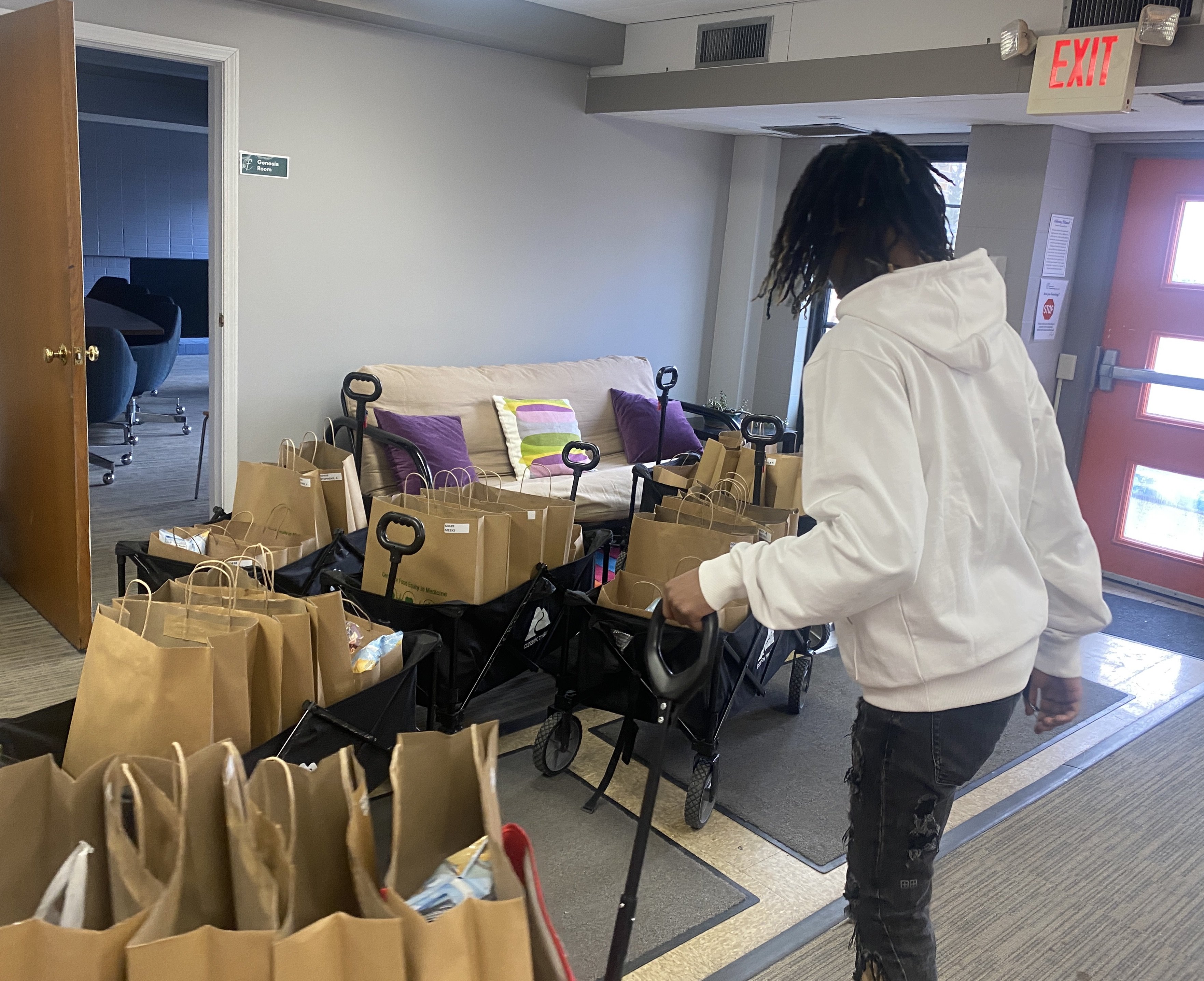
That philosophy feeds into Jackson’s belief that food security “should be a human right and that no matter what your situation is, you should have access to socially appropriate ways to get food.”
That means not having to scavenge in trash cans or shoplift, and not being questioned why you are asking for food at a pop-up event, she said.
“We are not in the business of shaming people. There is already enough stigma and uncertainty associated with whatever their diagnosis is,” Jackson said. “We are there to bring hope, light and good food and support.”
Oliver shares that belief, noting they also provide basic necessities such as toilet paper, paper towels and adult diapers.
She still remembers the organization’s early days, including volunteering to procure chicken that first Thanksgiving. At first the number was 10, but it soon grew to 40. A grocery store manager agreed to give her between 35 and 40 fresh chickens and gave her bags and boxes to put them in.
“I turned my kitchen into the chicken kitchen express!” she said.
A more recent experience involved delivering four bags of groceries to a cancer patient in Chicago Heights who left the hospital a month before.
“I wanted to hug her but couldn’t expose her. I held her hand and she was talking about the healing power of God and knew she’d be OK,” Oliver said. “I asked if I could pray with her, and she said ‘Absolutely.’ She just held my hand. It was true faithfulness.”
Melinda Moore is a freelance reporter for the Daily Southtown.