
Maybe Charlotte Newfeld prayed for rain.
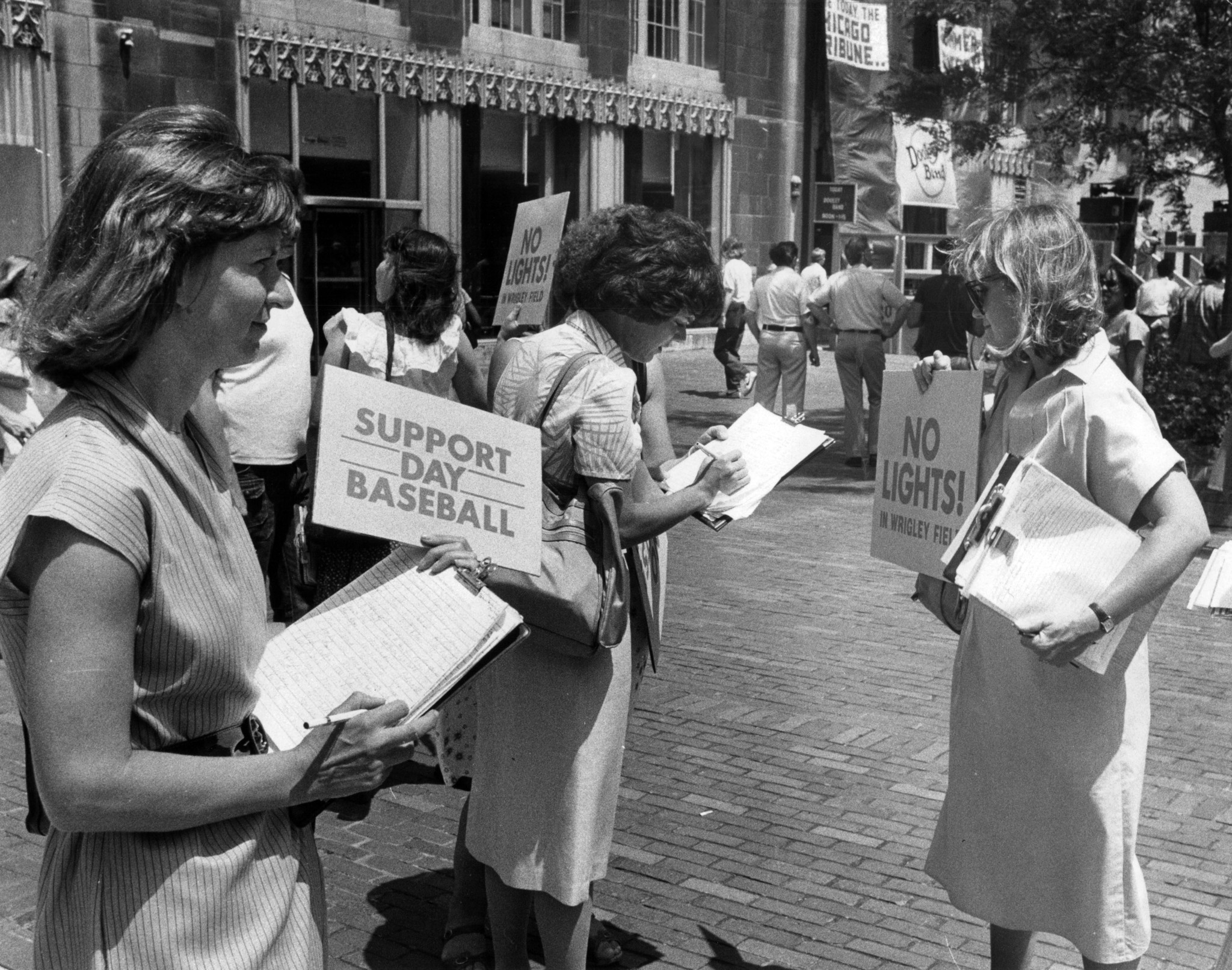
Two weeks before the Chicago Cubs were set to play their first game under Wrigley Field’s $5 million permanent lighting system, Newfeld stood outside the stadium during a Cubs Care fundraiser, for which the lights had been switched on. As the president of Citizens United for Baseball in Sunshine (CUBS), she opposed the Cubs playing homes game at night.
Then she said something prophetic: “It may rain Aug. 8.”
It did.
CUBS wasn’t successful in stopping nighttime baseball from coming to the North Side forever. Mother Nature was — for one day. Weather was a key factor 35 years ago when the Cubs became the last major league team to add lights to its home field.
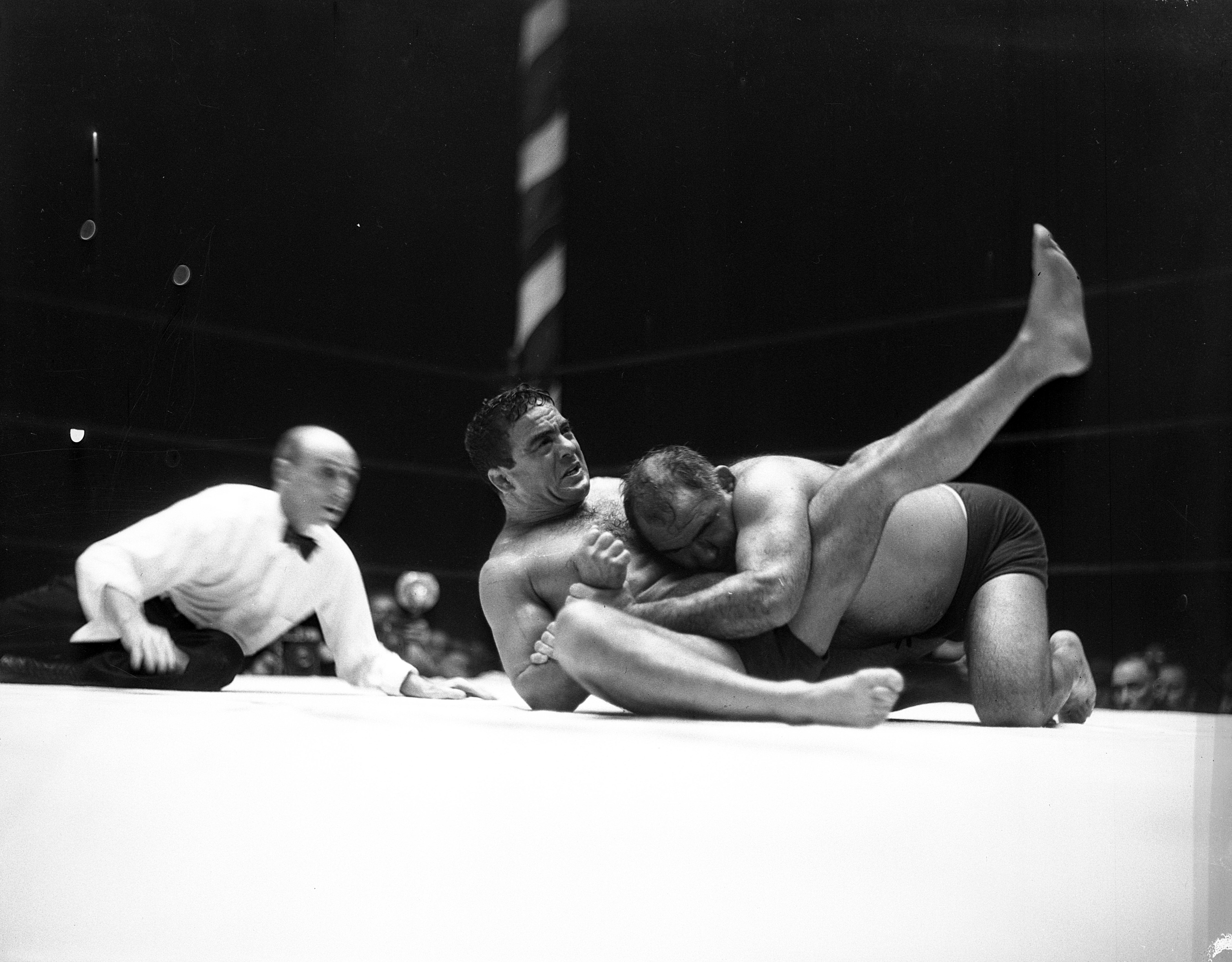
Wrigley Field had hosted events after dark previously — they just weren’t Major League Baseball games. Jim Londos pinned Ed “Strangler” Lewis for the world heavyweight wrestling championship on Sept. 20, 1934, preceding MLB’s first night game (played May 24, 1935, at Cincinnati’s Crosley Field) by eight months — thanks to temporary lights that illuminated the wrestlers but not the crowd surrounding them.
Lights were strung across the infield and over a boxing ring on Sept. 12, 1946, giving fans a better view when middleweight champion Jake LaMotta knocked out Bob Satterfield in the seventh round.
An All-Star game comprised of players from the All-American Girls’ Softball League (later known as the All-American Girls Professional Baseball League, as chronicled in the 1992 film “A League of Their Own”) happened late on July 1, 1943, according to the National Baseball Hall of Fame.
The first nighttime big-league game at Wrigley could have been a 6 p.m. Cubs-Cardinals affair on June 25, 1943 — but MLB officials considered that a day game. The Cubs would have to wait another 45 years.
With the anniversary of the Cubs’ first night home game approaching, here’s an illuminating look at night baseball in Chicago. As with everything in our city, it came at the intersection of politics, activism and tradition.
Aug. 14, 1939: ‘The inaugural of night Major League Baseball in Chicago’
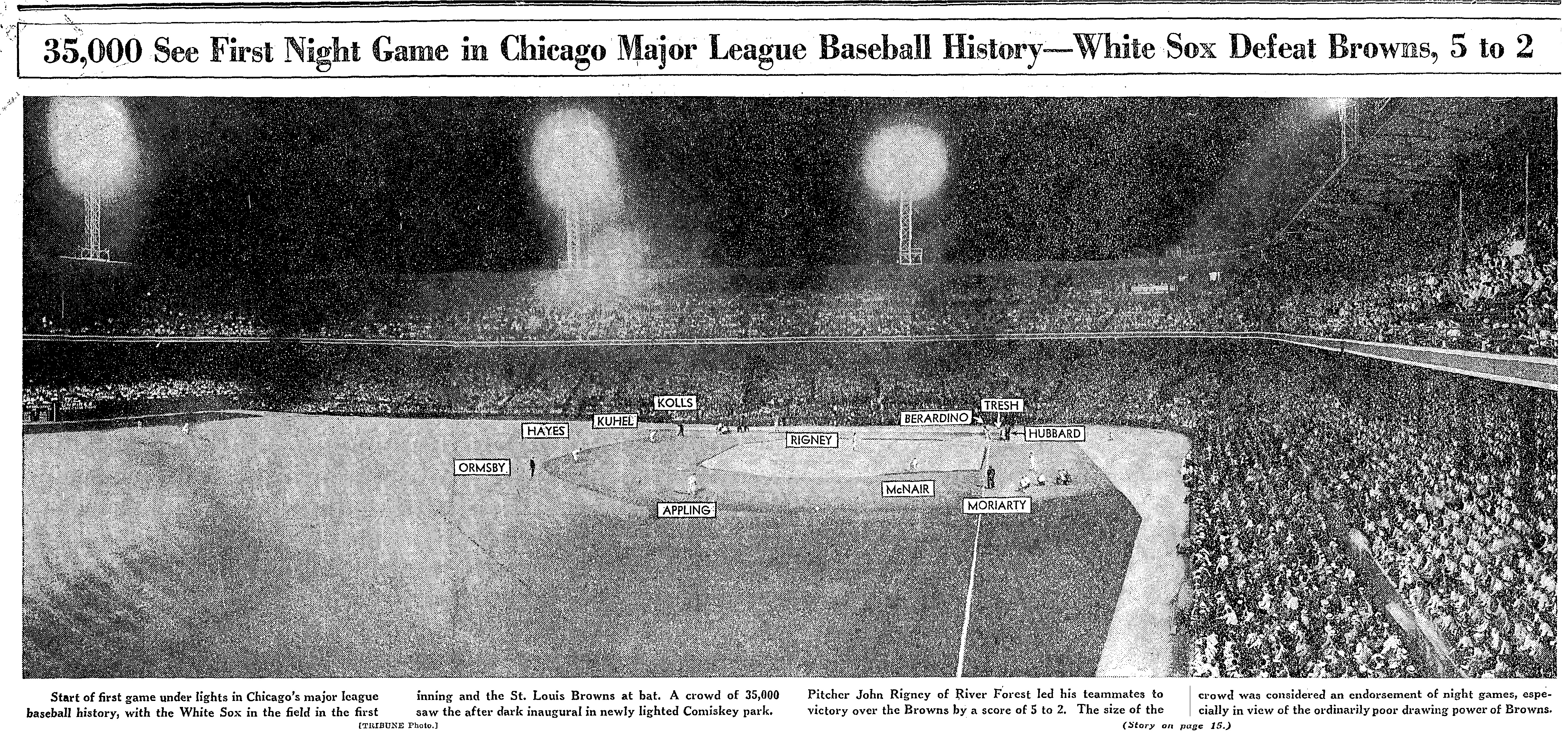
“It was as though one had suddenly walked into bright sunshine,” the Tribune reported after Charles Comiskey II flipped two switches at 8:25 p.m. to ignite Comiskey Park’s new $140,000 “illuminating plant.” Chicago White Sox pitcher Johnny Rigney then threw a three-hitter and struck out 10 St. Louis Browns in a 5-2 win watched by more than 30,000 fans.
Cubs executives — including future White Sox owner Bill Veeck — were also in attendance. Charles Drake, assistant to then-Cubs owner Philip K. Wrigley, told the Tribune that Wrigley Field would not be lit until the team is certain their fans want night baseball there.
1942: World War II changes ‘twilight game’ plans for Cubs
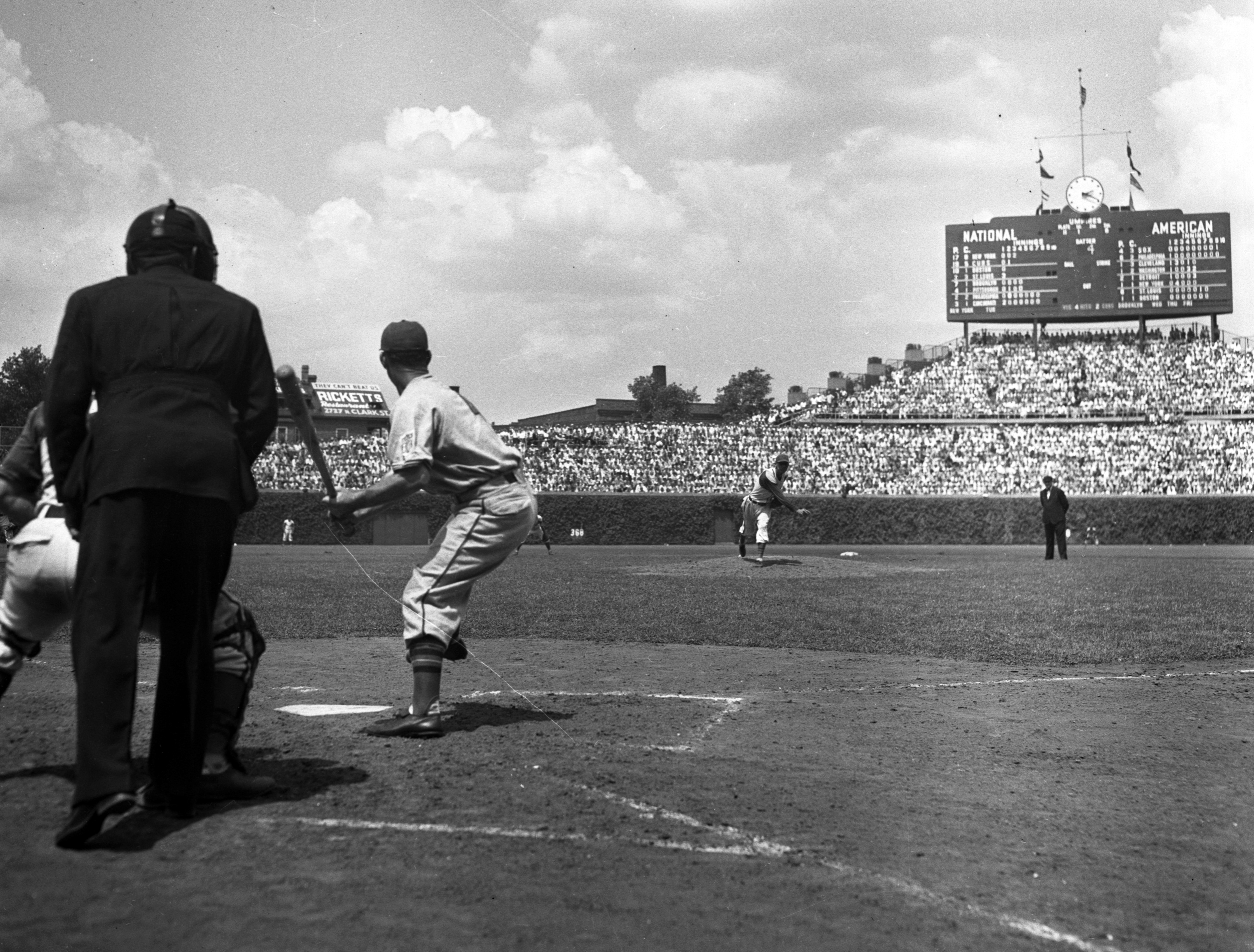
Plans for a $185,000 lighting plant comprised of 165 tons of steel, 35,000 feet of copper wire and 800 aluminum reflectors connected to six towers are abandoned and the material offered to the Department of Defense following the bombing of Pearl Harbor on Dec. 7, 1941, which thrust the United States into World War II.
When the switch was flipped on at Briggs Stadium in Detroit on June 15, 1948, Wrigley became the only major league stadium without lights.
June 16, 1981: Tribune buys the Cubs
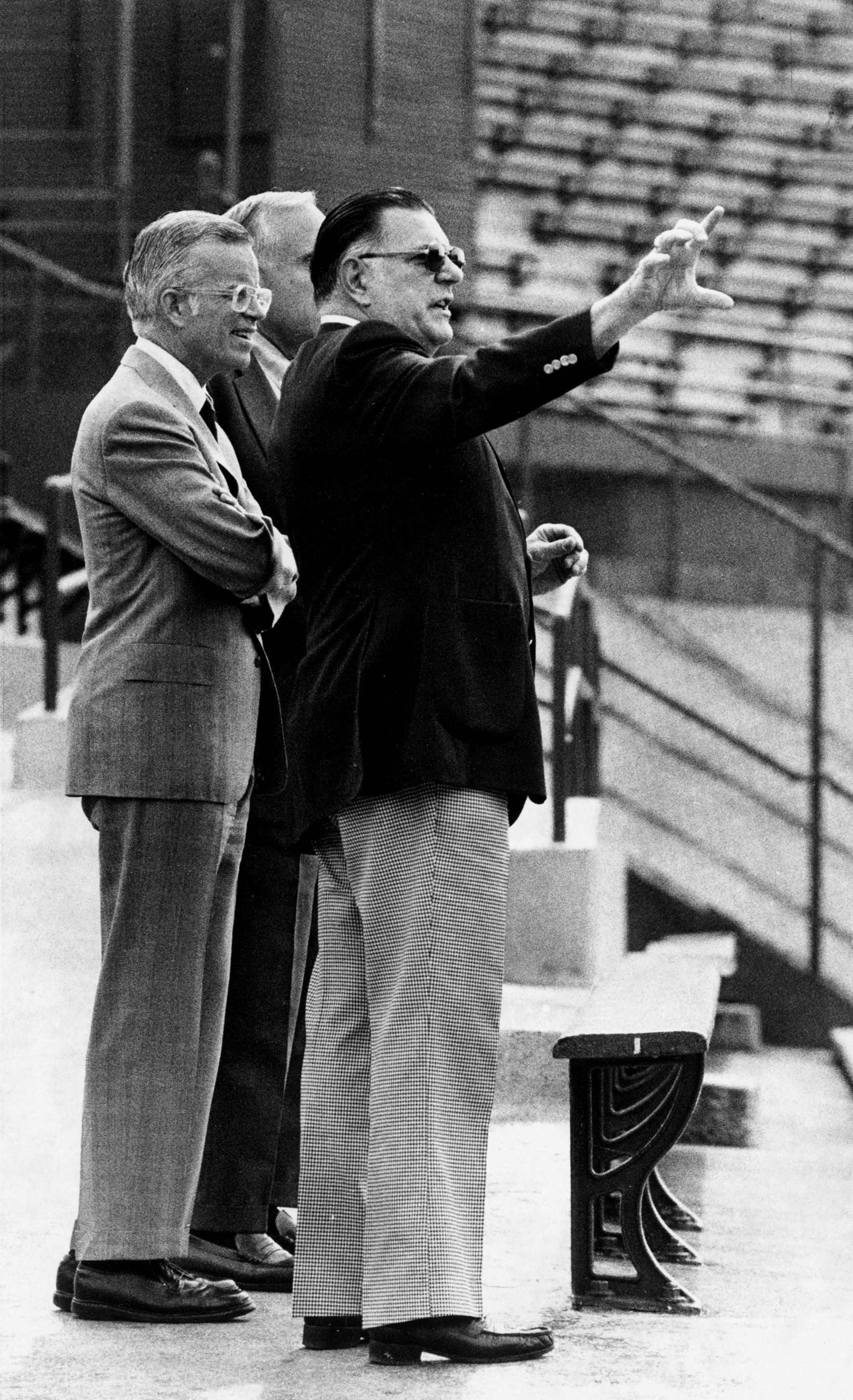
Though the Wrigley family had pledged not to install lights at the field, the team’s new owner did not make the same promise.
March 10, 1982: ‘We have to play night games to be able to compete’
Cubs general manager Dallas Green tells reporters lights will have to be installed at Wrigley Field, “or we’ll have to think about playing in another ballpark.”
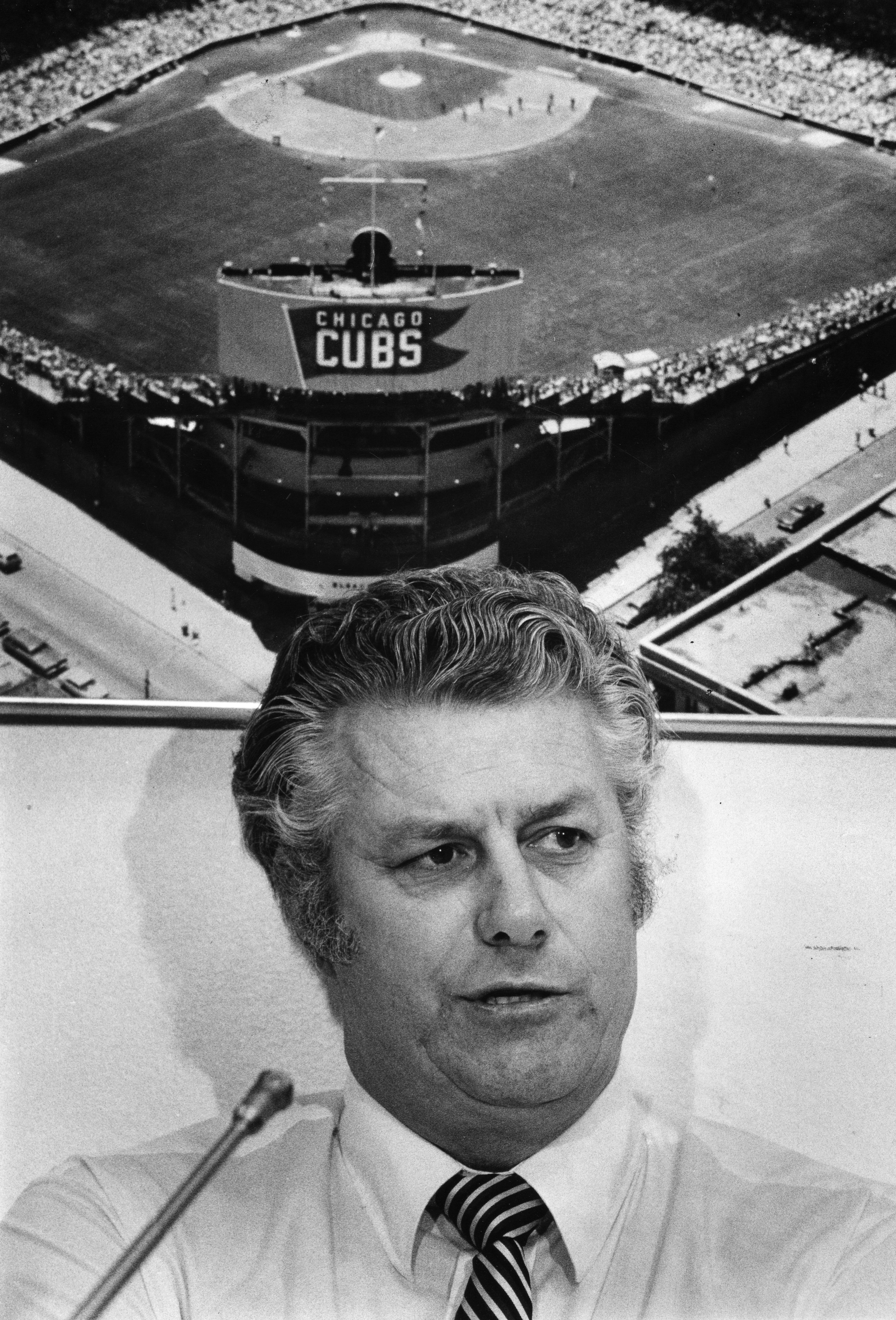
Though Green quickly follows that up by saying lights “are not a priority at this time,” his words prompt protests from Citizens United for Baseball in Sunshine (CUBS) and other Wrigleyville neighbors opposed to night games.
Green resigned as general manager and team president in 1987, when the Cubs finished last in the National League East and accused the team of quitting.
Aug. 23, 1982: Governor leaves ballpark in the dark
Gov. James R. Thompson signs into law legislation that bans all but daytime games.
“I believe that night-time baseball in Wrigley Field would impose an undue hardship on nearly 60,000 residents who live within a four-block area of the stadium,” he said in a statement.
The new law bans noise pollution — but specifically targets sporting events in Chicago that generate noise levels above 45 decibels after 10 p.m. Soldier Field and Comiskey Park, however, are exempted under a “grandfather clause,” meaning that stadiums where night games were played before July 1, 1982, are not affected.
July 27, 1983: ‘Lakeview 42-Tribune Company 2’
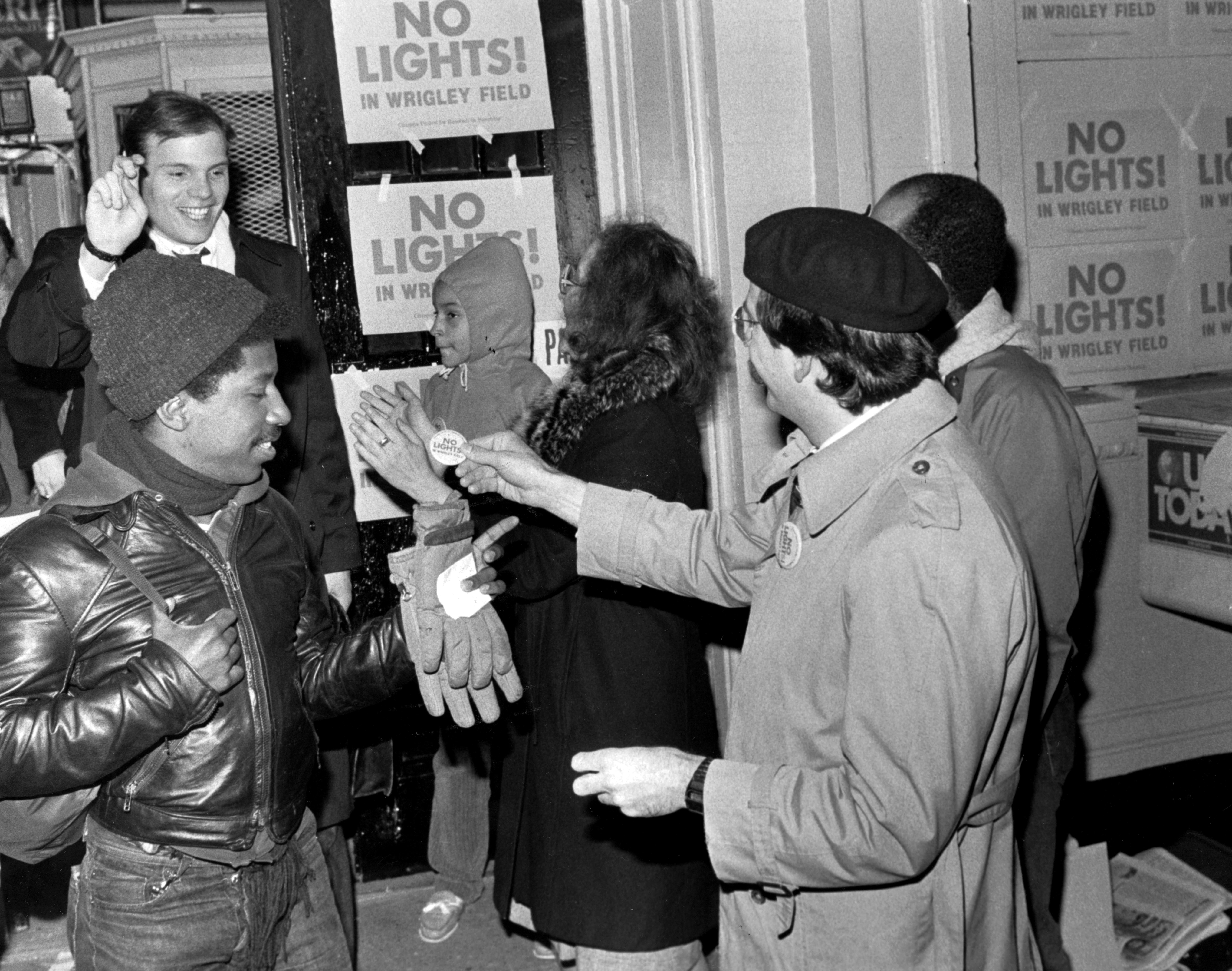
After rejecting arguments that a permanent ban would be illegal, aldermen vote 42-2 to pass an ordinance — which does not name Wrigley Field or the Tribune-owned Cubs — making it illegal to conduct any sporting event between 8 p.m. and 8 a.m. in a stadium that “contains more than 15,000 seats where any such seats are located within 500 feet of 100 or more dwelling units.”
It followed a 1982 state law banning crowd noise after 10 p.m.
Feb. 25, 1988: City Council passes ordinance giving Cubs lights
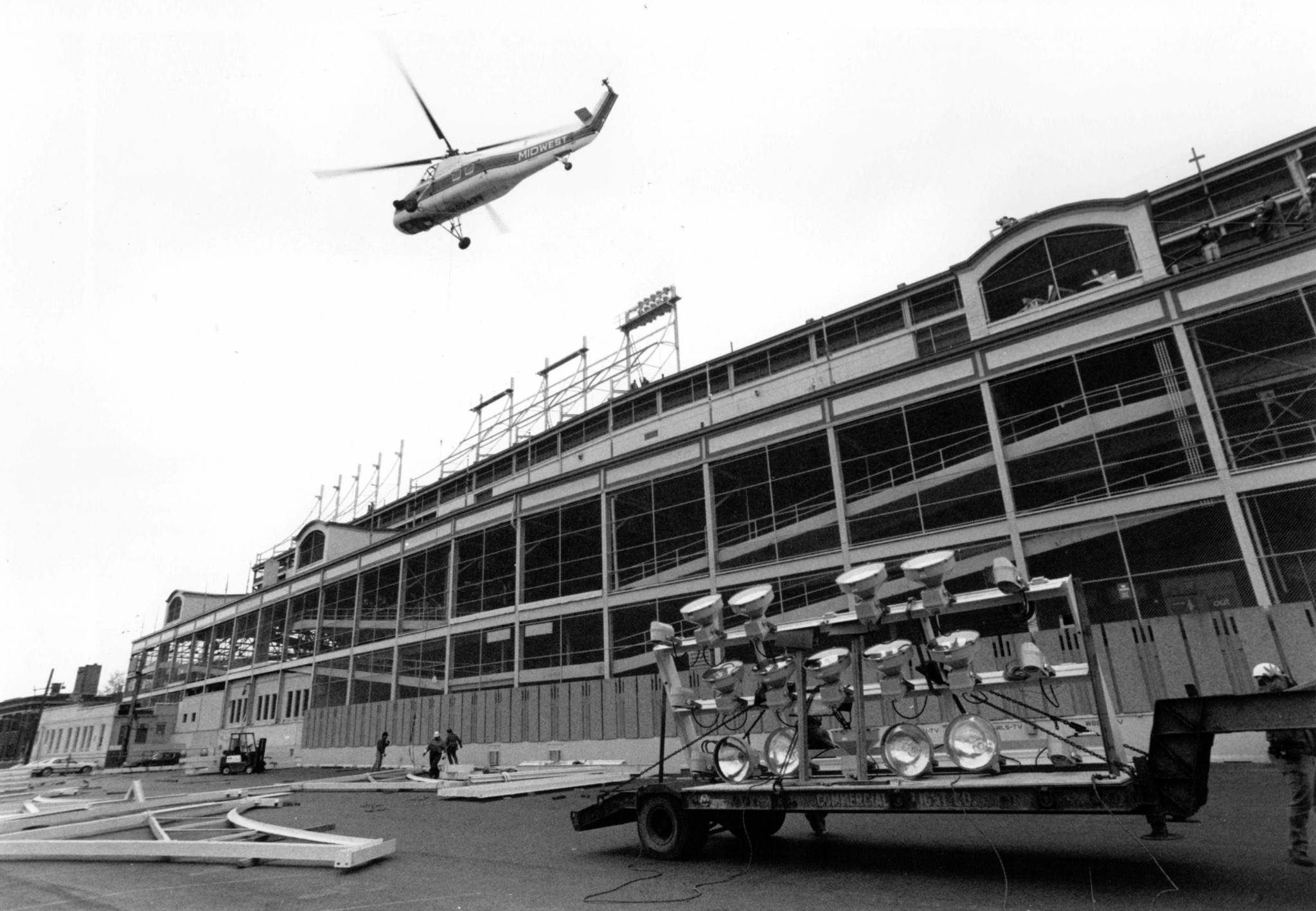
Eight night games are approved for the upcoming season in a 29-19 vote that was supported by Mayor Eugene Sawyer. The measure, which passed three months after late Mayor Harold Washington endorsed a “middle course” plan for 18 night games, also meant Wrigley Field could host the 1990 All-Star Game.
The Cubs commit the following month to play at Wrigley Field until at least 2002. And citizens group CUBS threatens to sue: “Is there any other property owner in the city that has a 15-year clause allowing them to cause a nuisance?” the group’s president Paul Kendall asked during a news conference.
June 20, 1988: ‘A good day for a night game’
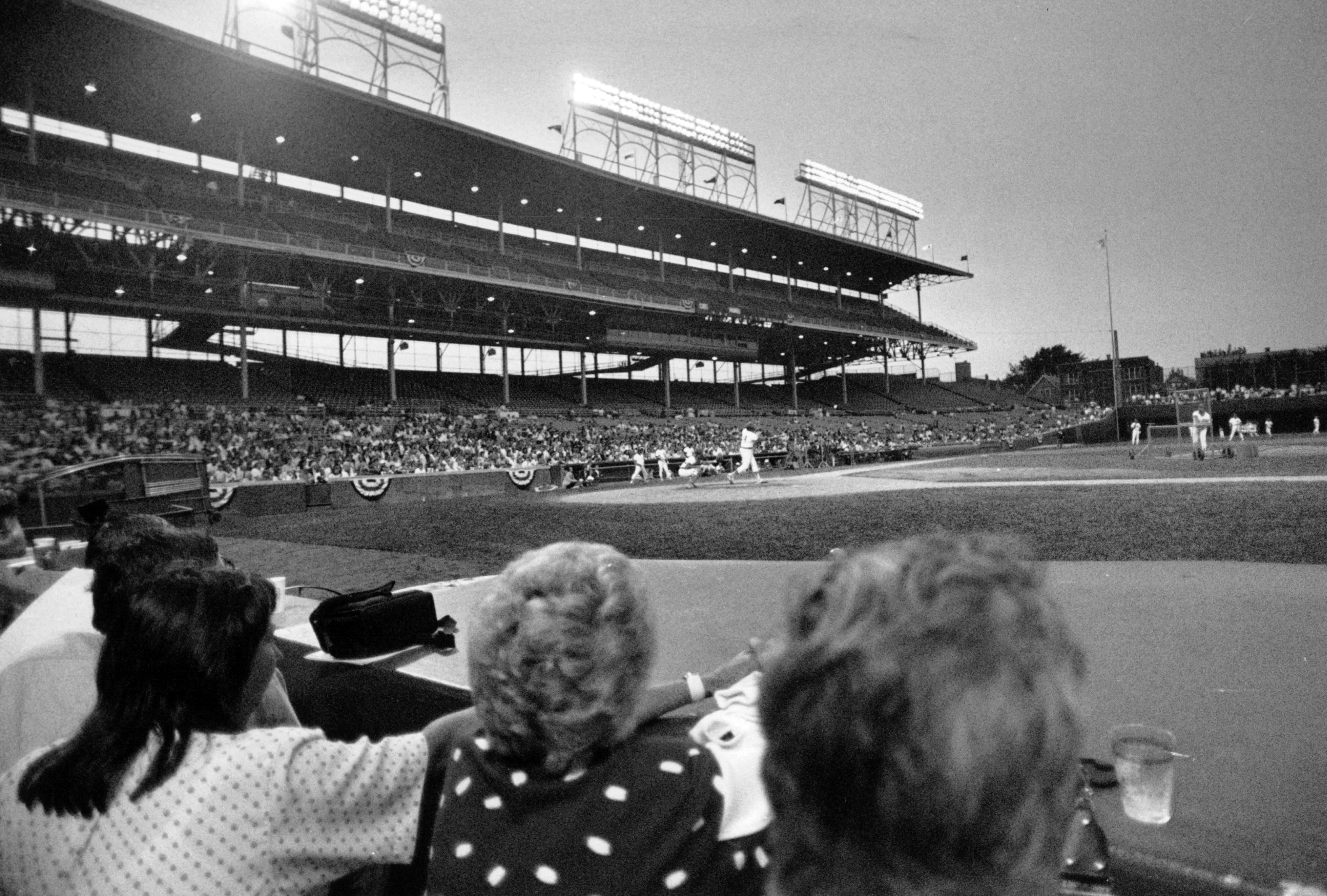
Cubs announce eight games that will be played in the evening — two starting at 6:35 p.m. and five starting at 7:05 p.m.
First up: Aug. 8.
Story from Aug. 4, 1988: Harry Grossman — Cubs’ oldest season-ticket holder — glad to light way
Story from April 16, 1991: Harry Grossman, 94; turned on the lights at Wrigley Field
Aug. 8, 1988: Lights go on, then game called off
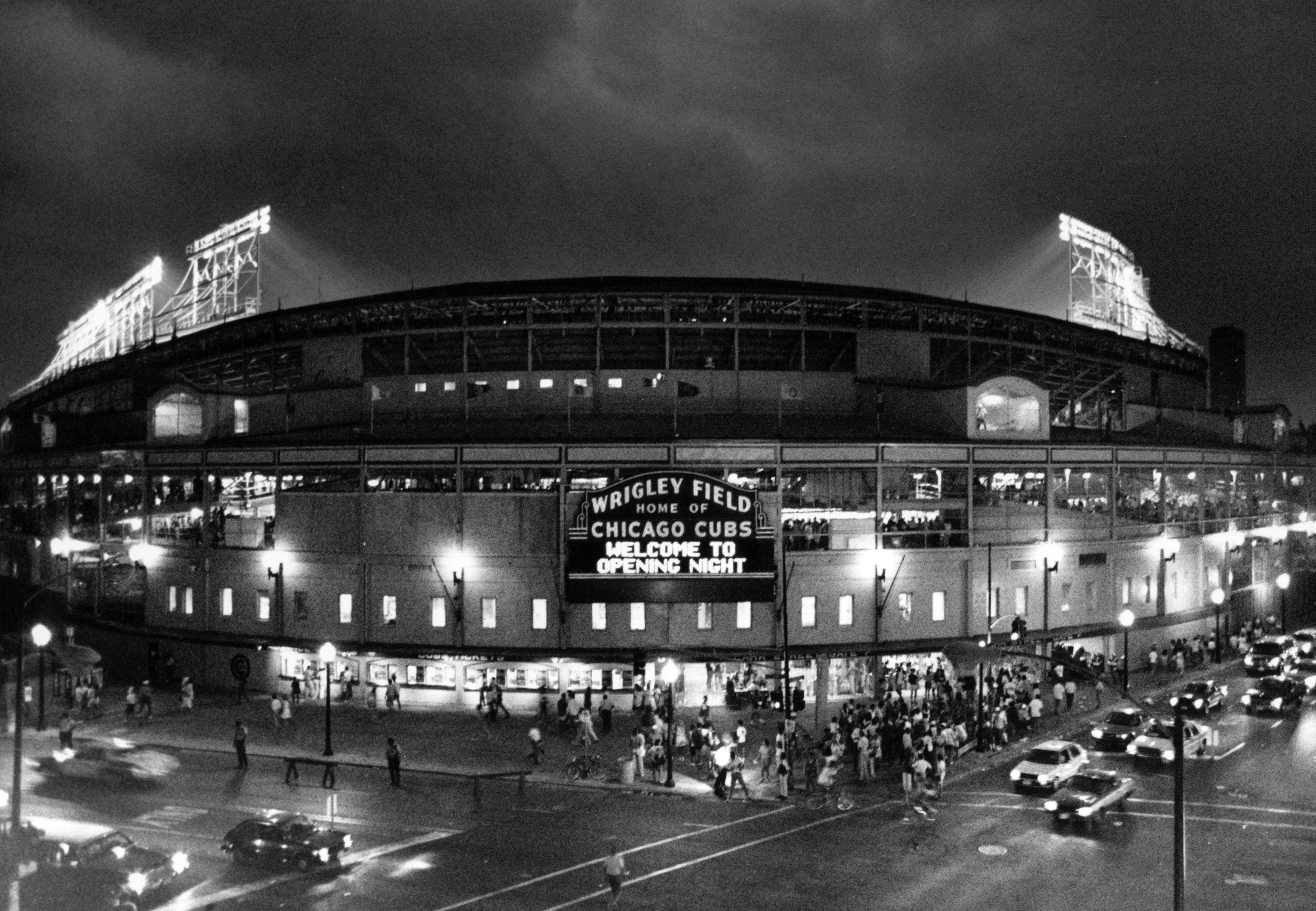
The first game with lights drew far more attention than normally accorded a Monday matchup between fourth- and fifth-place teams. Dignitaries in the sellout crowd included Mayor Eugene Sawyer, Illinois Gov. James R. Thompson, baseball commissioner Peter Ueberroth and National League President A. Bartlett Giamatti. A resident-only parking ordinance also took effect around the ballpark.
Starting pitcher Rick Sutcliffe was nearly blinded by the thousands of flashbulbs that went off as he delivered the first pitch. Perhaps that was why Philadelphia Phillies outfielder Phil Bradley deposited Sutcliffe’s fourth pitch into the bleachers. Then, with the Cubs leading 3-1 in the fourth inning, the rains came. Not a light drizzle, but a downpour. After a two-hour rain delay, the game was called, obliterating it from the record books. “This proves that the Cubs are cursed,” said one fan, as she ran from the ballpark. The Tribune editorialized, “Someone up there seems to take day baseball seriously.”

In the first night game in Wrigley Field history that actually counted, the Cubs hit the New York Mets with four runs in the seventh inning, then held on for a 6-4 victory before 36,399 very noisy people.
“It might have been louder last night,” said Mark Grace, who drove in one of the runs in the decisive seventh. “But that’s the loudest for a complete game that I’ve ever been associated with.”
Paul Sullivan: The night that changed Cubs baseball forever
Want more vintage Chicago?
Become a Tribune subscriber: It’s just $12 for a 1-year digital subscription
Follow us on Instagram: @vintagetribune
And catch me Monday mornings on WLS-AM’s “The Steve Cochran Show” for a look at “This week in Chicago history.”
Thanks for reading!
Join our Chicagoland history Facebook group and follow us on Instagram for more from Chicago’s past.
Have an idea for Vintage Chicago Tribune? Share it with Ron Grossman and Marianne Mather at rgrossman@chicagotribune.com and mmather@chicagotribune.com.