
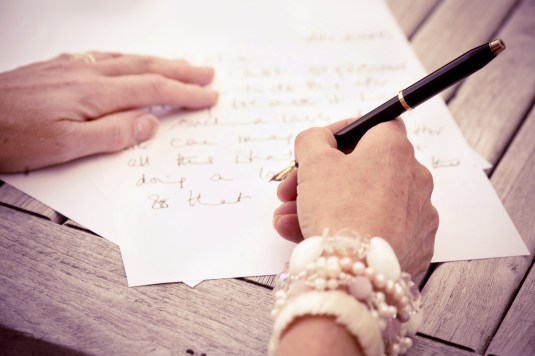

In the past month, I’ve returned to a practice and a habit that the human community, until recently, had shared for hundreds of years: writing letters. I’ve since written more than a dozen letters to friends and family, each at least two single-spaced typed pages. I have no expectations that anyone will or should respond. These are messages in a bottle, my small effort to stand against the digital degradation of human communication and human bonds.
People have corresponded with each other using letters since at least the 13th century. The first national postal systems for personal correspondence emerged in the 15th and 16th centuries in Europe. We can trace the origins of the postal system in the United States to the establishment of the first post office at a Boston tavern in 1639. Benjamin Franklin — himself a prolific letter writer — served for nearly 40 years as the postmaster for Philadelphia and then for the Colonies and the new nation.
This is the world that I grew up in. I’ve sent and received thousands of letters — just not in the past 20 years. My father died when I was 34, but he sent me nearly 1,000 letters, maybe more, from the time I started going away to summer camp as a teenager — cranking them out on thin yellow paper with his old 1950s Underwood manual typewriter.
Writing and receiving letters was always a special experience for me. There was magic in knowing one could thread a relationship through these simple packets that travel by land and air to their destination. Any time I reread a letter I’ve received, like novelist Marcel Proust, a flood of memories wells up in me.
I don’t want to romanticize what it means to revisit the past in this way. Sometimes, these letters provoke painful memories. My father’s letters certainly did — I threw most of them away in my 40s, a decision I regret. Yet letters have always offered us tangible soundings of our depths as social creatures. In our digital moment, we can inhabit only the shallows.
Indeed, in the attention-starved digital hellhole we now dwell in, few people send and receive letters anymore. We don’t correspond in any classic sense. A 2021 CBS News poll found that a little less than one-third of Americans had written a personal letter within the previous 12 months. One-third of people said they hadn’t sent a letter in more than five years, while 15% of adults said they have never sent a letter in their lives.
It’s therefore weird now to remember that publishers used to routinely collect and publish the letters or correspondence of famous people. I greatly enjoyed reading these books. And still do. I’ve recently been reading Charles Darwin’s sprawling correspondence, which spans nine volumes and is notable as a window into the pellucid clarity of his mind. I’m also reading the collected letters of legendary spy novelist, John le Carré, a gifted artist who scattered amusing sketches throughout his correspondence to illustrate his words. Reading their letters is like living with and personally knowing these famous or important people.
When I was a teenager, I read the published letters of E.B. White, author of “Charlotte’s Web” and “Stuart Little.” White lived on the coast of Maine across the water from the cabin my parents built in the 1970s. It made sense to my teenage mind that White lived nearby. I had read his letters, and his books, of course. I therefore felt as if I personally knew him.
So I wrote White a letter, making vague allusions to these fake connections and implying that he would have been a good grandfather. And he actually wrote me back, telling me graciously and apologetically that he was sorry he could not be my grandfather. My point is that this sort of thing will probably never happen again because no one going forward will likely have letters for anyone to preserve or collect.
Canadian philosopher Marshall McLuhan laid the foundations for what we today call media theory. When television became prominent in people’s homes during the 1950s, McLuhan famously wrote that the “medium is the message” — which only means that context matters enormously in how societies shape and communicate messages. While McLuhan did not live to see the advent of the digital era, his conclusions about the medium being the message obviously apply with even more force to digital media.
Email, texting, direct messaging and whatever other stuff people do these days to connect and communicate with other people can only undermine us. We’re not wired in any evolutionary sense to contain and process the emotions activated by these electronic messages that aren’t mediated by the physical presence of the people who sent them.
There is another value to paper letters, of course. Which is that the time it takes to send and receive letters honors the space we need for meaningful communication. It rewards patience. The rich pleasure in receiving a letter partly emerges in the waiting. And then of course, there is the materiality of the act of receiving and reading a letter — the anticipation one feels at seeing the envelope, the act of opening it, and the awareness of one’s surroundings, feelings and own physicality while reading it.
I recently saw an article in Wired magazine about how, with the disintegration of Twitter, Instagram and Facebook into barren, toxic wastelands, millennials are beginning to return to more tangible, physical ways of connecting with each other. Which can only be for the better.
Let them rediscover the joys of writing, mailing and receiving letters!
Peter H. Schwartz has a doctorate in political philosophy from the University of California at Berkeley and writes at the broad intersection of philosophy, politics, history and religion.
Submit a letter, of no more than 400 words, to the editor here or email letters@chicagotribune.com.


