
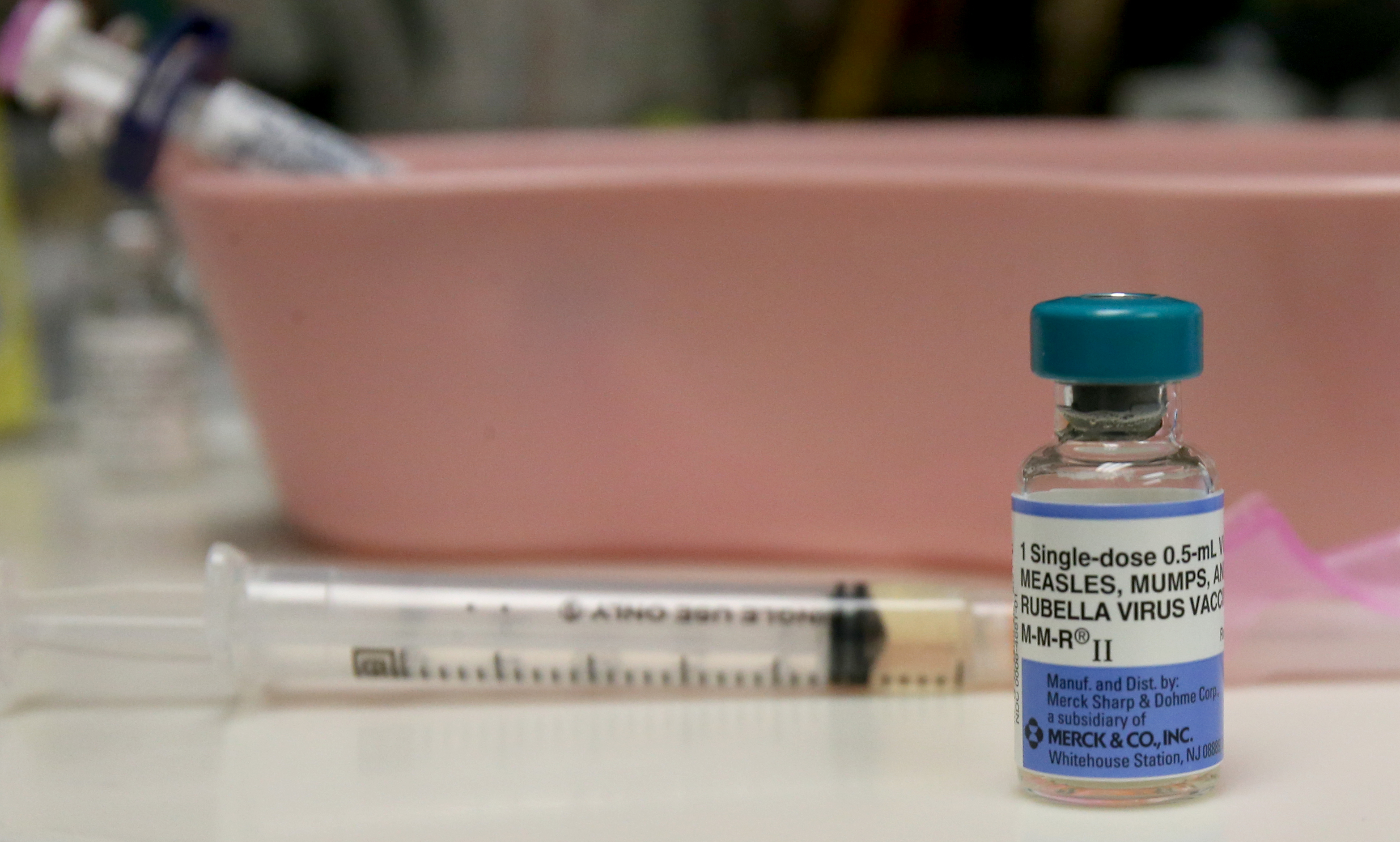

With the Illinois Department of Public Health reporting the state’s first case of measles in 2025, one Lake County school district may be at unusually high risk of an outbreak.
The IDPH’s recently launched measles outbreak simulator dashboard paints a potentially grim picture for Zion Elementary District 6, with measles vaccination rates at several elementary and middle schools there having plummeted in recent years. One elementary school sits at 41% according to the most recent data, a 55-point drop from two years ago.
Representatives with the Lake County Public Health Department, District 6 and IDPH have emphasized that the data represents a “point-in-time” snapshot of vaccination rates, and that they were working to verify the figures and address the shortfall.
According to the IDPH dashboard, the school district overall has a 72% protection rate, the lowest in Lake County, and well below the herd immunity level for measles.
While LCPHD said there’s been no confirmed case of measles in the county since last year, the Centers for Disease Control website indicates 30 states have already reported cases of measles, with almost 900 cases and three confirmed deaths across the country.
Last week, the IDPH announced its first confirmed measles case of 2025 in an adult patient in southern Illinois.
Dr. Jhaveri Ravi is a professor of pediatrics at Northwestern University Feinberg School of Medicine, and the division head of pediatric infectious disease at the Ann & Robert H. Lurie Children’s Hospital of Chicago.
He said that while the timing of the data collection could affect the numbers seen in the dashboard since the measles vaccine requires two doses — with the second dose taken several weeks after the first — the overall decline is not a surprise.
In general, Ravi said officials are seeing an increase in patients who are hesitant about getting vaccines, and declines in overall rates of vaccination since the pandemic.
Such low vaccination rates could mean the communities are well below the herd immunity threshold for measles. According to Ravi, herd immunity is the concept that if enough of a population is vaccinated, the protection of the broader community can help prevent infection of individuals who haven’t or can’t be vaccinated.
It’s a number that varies from pathogen to pathogen, but for the “extremely contagious” measles, it needs to be very high, around 95%, he said.
“It’s probably one of the most contagious agents we deal with,” Ravi said. “Measles tends to find those who are vulnerable.”
The sudden drop District 6 has reportedly seen in a few short years matches, “what people have described nationally,” he said. Post-pandemic, people began to “hesitate” and “question the value” of vaccines. He blamed a flood of false information being thrown at the public, leaving people “overwhelmed” and “paralyzed.”
Vaccines also suffer from a curse of success. Vaccines like that for measles have done “such a good job” that people have forgotten the importance of getting vaccinated, Ravi said. The outbreaks are an unfortunate reminder of that importance, he added, as well as a warning about where people are getting their information.
There are “parties that are out there pushing inaccurate information” about vaccines with no evidence, he warned, making recommendations, “not based on hard science.”
“I would really strongly encourage having a conversation with your doctor, and don’t look to TikTok and Instagram and other sites for your vaccine information,” Ravi said.
Addressing shortfalls
East Elementary School has the lowest reported vaccination rate in the county at 41%. However, Beulah Park Elementary sits at 56%, and Zion Central Middle School is just under 70%. All three had vaccination rates in the mid to upper 90s several years before.
A LCPHD representative said it was “working closely” with K-12 school districts whose measles vaccination rates are lower than expected, providing information and resources, and monitoring vaccination rates.
“While we are always striving for the highest vaccination rate possible, the data currently displayed is from earlier in the school year,” the representative said. “Our vaccination program works proactively to encourage, educate and inform schools, parents and residents across the county on the importance of vaccination.”
The IDPH also said it is working with the ISBE and local health departments to reach out to schools with the lowest vaccination rates and low compliance rates to assess and provide assistance.
“Our highest priority is to eliminate barriers to vaccination, and ensure as many Illinoisans as possible are protected from this highly contagious disease,” a representative said.
In a statement, District 6 said it, “reaffirms its commitment to the health and well-being of its students and families through proactive support services, accurate health reporting and strong partnerships with public health agencies.”
“Supporting the wellness of our school community is a core priority in all we do,” said Superintendent Julious Lawson. “We are dedicated to providing the resources and support our families need to keep children healthy, safe, and ready to learn.”
That includes issuing “immunization update letters” to families, maintaining “strong partnerships” with area clinics and immunization providers, and providing assistance and resources to families with the vaccination process.
Immunization requirements and exemption procedures are posted on the district website, clearly outlined in the District Handbook and “embedded” into the district’s yearly registration process.
“Our actions are rooted in our long-standing dedication to student wellness,” Lawson said. “We remain committed to working with families and community health providers to create safe, supportive environments where every student can thrive.”
‘It makes me sad’
Living in a country that had essentially eliminated measles a quarter-century ago, only to turn on the very tool that had brought that success, is upsetting for Ravi as an infectious disease expert and someone, he said, “who cares deeply about public health and prevention.”
“It makes me sad,” he said. “There’s a reason why we initiated a measles vaccination program nationally.”
Measles infects hundreds of thousands of children each year around the world, and kills thousands, he said. The complications can also leave patients vulnerable to other infections.
In the U.S. before the vaccine, children typically got measles because they congregated in large numbers at school. While people who have had measles gain immunity, there can be risks and deadly consequences.
“People tend to say, ‘measles was a rite of passage,’ Ravi said. “I think for maybe the lucky, that was the case. Think about the fact that there’s a price that many other children and families pay.”
The recent deaths of several young children would hopefully be a “wake-up call” to those who question the value of vaccines, he said.
For the vast majority of people, if they’ve had two doses of the measles vaccine, they’ll be protected from measles, he said. The people getting infected have not received the vaccine or are behind on their doses. However, those with conditions that weaken their immune system are also at risk.
Illinois State Superintendent of Education Tony Sanders called vaccinations the “most effective tools” available for protecting children from diseases and “keep them learning in school.”
“Ongoing deadly measles outbreaks in other parts of the country serve as a call to action for all of us to protect our children, schools, and communities with safe, proven, and evidence-based immunizations,” Sanders said. “By understanding where vaccination gaps exist, we can work together to protect every student’s life and opportunity to learn without preventable health disruptions.”