If you’ve strolled through your neighborhood supermarket lately, you’d have noticed prices are rising in some sectors. Expect that trajectory to continue in the coming months.
Shoppers are finding themselves squeezed between inflation, taxes and the rising and falling tidal waves of tariffs imposed by the administration of President Donald Trump. Many consumers are finding it hard to balance their food budgets.
Inflation-weary shoppers are spending less, economists tell us. Those lucky enough to have backyard gardens currently are reaping harvests of fresh vegetables, dropping their grocery costs somewhat.
But those savings soon will be offset by officials in communities across Lake County replacing the state grocery tax with their own local 1% levies at checkout. Like other towns, Waukegan officials are debating to locally extend the grocery tax set to expire statewide at the end of the year.
According to the U.S. Labor Department’s Bureau of Labor Statistics, the average price of food rose by 2.9% in the 12 months ending in July, after posting an annual increase of 3% in June, according to the latest economic data as of Aug. 12. Granted, the inflation rate for food is quite lower than August 2022 during the administration of President Joe Biden when it spiked at 11.4%, the highest mark since the stagflation days of 1979.
Meat, fish, eggs (still priced at $4.99 a dozen the other day) and poultry increased the most, by 5.2% in the 12 months through July 2025. Those are some of the foodstuffs the government agency surveys monthly to determine the national inflation rate. Other products include cereal, bakery products, dairy, beverages and various fruits and vegetables.
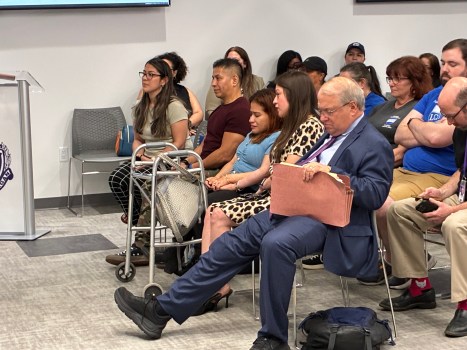
Waukegan alders are scheduled to vote on replacing the grocery tax at their City Council session set for Sept. 15. Expect them to follow the lead of other area municipalities such as North Chicago, Lake Forest, Grayslake, Highwood and Park City, among others. So far, some 15 county towns have approved the local tax.
Statewide, more than 200 cities and villages across Illinois have decided to reimpose the grocery tax, with officials all citing the need to replace lost revenue. The statewide tax will disappear on Jan. 1, 2026, but Pritzker gave local communities a “window of opportunity” with the option to enact their own grocery taxes.
Officials have to adopt an ordinance, sending a certified copy of the action to the Illinois Department of Revenue by Oct. 1. Canceling the state grocery tax was a short-lived “tax break” Gov. JB Pritzker offered tax-burdened Illinoisans in his annual budget message and approved by the legislature.
Food and drugs were taxed infrequently in Illinois until 1991 when the statewide grocery tax went into effect and the Revenue Department began collecting the checkout money. The state taxed groceries at 1.75%, sending 1% back to cities and villages and .75% to the Regional Transportation Authority.
Waukegan officials contend losing the grocery tax will cost the city about $2 million a year, according to Steve Sadin’s front-page story in the Aug. 21 News-Sun. That’s a decent chunk of change in the city’s current $292 million budget.
That $2 million surely helps fund public safety, road and public works projects, and community programs. Where the city would make up the difference in the funding is uncertain.
What is certain is that consumers have gotten used to the grocery tax. There hasn’t been much griping about it. Continuing it wouldn’t adversely impact residents by that much, compared to increasing, say, their property taxes.
In Gurnee, trustees took a different tack when it came to the grocery tax. They voted unanimously in June to increase the village’s home-rule sales tax by 0.5%. The grocery tax brought in upward of $2.5 million annually. Adding slightly to the sales-tax amount, village shoppers get a minimal break at supermarket checkout.
While the known amount of the grocery tax may help consumers balance their food budget, still up in the air is the impact Trump’s global tariffs will have on the economy. The administration’s taxes on trade bound for the U.S. took a hit last week when a federal appeals court ruled overwhelmingly that they are illegal. The judges argued that only Congress has the authority to apply tariffs to goods entering the country.
Economists contend the tariffs, if they remain following court challenges, will only increase the nation’s inflationary gauge. If that’s the case, plan your menus accordingly.
Charles Selle is a former News-Sun reporter, political editor and editor.
sellenews@gmail.com
X: @sellenews