

Lake County continues to make up for past injustices to the Native Americans who once roamed the area’s prairies and woodlands. Albeit small steps at a time.
The latest example is the new Mshkodé Forest Preserve in Winthrop Harbor. Mshkodé, forest district officials say, is a Potawatomi word meaning “prairie.” The tribe made its home across Lake County before the arrival of white Europeans.
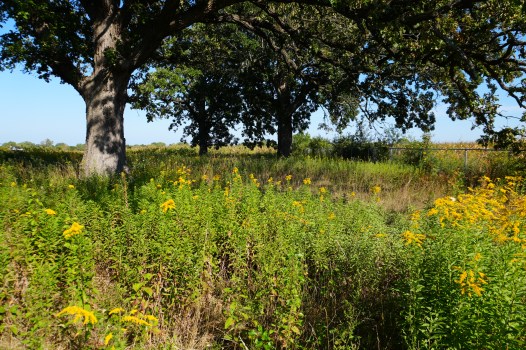
The 120-acre site along Lewis Avenue between 5th and 9th streets borders the Robert McClory Bike Path and features open space, wetlands and scenic views. The two sites cobbled together for the preserve are now part of the more than 31,700 acres of land under county stewardship, some 10% of all acreage in Lake County.
County taxpayers last year paid $4.5 million for the property, according to a front-page News-Sun story earlier this month by Yadira Sanchez Olson. Those same taxpayers didn’t get a say in naming the new preserve, and some may wish it were a name easier to pronounce (mish-coe-deh) and spell.
Perhaps like Mettawa, the paper village named for Potawatomi Chief Mettaywah, who lived in the area along the Des Plaines River near present-day Vernon Hills and Libertyville. Mettaywah (aka Me-Tai-Way) was one of the signees in 1833 of the Treaty of Chicago following the Black Hawk War of 1832.
The treaty ended up displacing Potawatomi, Chippewa, Kickapoo and Odawa tribes. Historians say the pact, part of the Indian Removal Act, forced the tribes to give up an estimated 5 million acres in Illinois, Michigan, Minnesota and Wisconsin to the federal government in return for pledges of cash payments and tracts of land west of the Mississippi River, chiefly in Kansas.
Or the new preserve also could have been simpler, like Manitou, the name designated in 2022 for the former Squaw Creek in Grant Township. The three members of the old Squaw Creek Drainage District petitioned the U.S. Department of the Interior to replace the offensive “squaw” — historically a slur for Native American women — with Manitou. The creek’s old name was in county records dating to the 1840s.
Officials said “manitou” is an object of reverence or supernatural force in Algonquin lore. The U.S. Board on Geographic Names says manitou refers to the spirit of the stream and the lifeblood of our region’s Indigenous people.
Drainage district officials consulted with a member of the Bad River Band Chippewa Tribe when opting for the name Manitou. The stream flows north 17 miles from its headwaters just south of Ray Lake Forest Preserve, near Wauconda, through Long Lake and then into Fox Lake.
In the case of Mshkodé, forest district officials said they talked with a tribal council member of the Prairie Band Potawatomi Nation. They note the forest district continues to work directly with Native peoples to ensure Indigenous histories and perspectives are presented accurately.
When naming a new preserve, Forest Preserves’ staff recommends names that reflect the land’s history, features, or cultural significance to the forest board. Commissioners unanimously approved the new preserve’s name in early February.
While the county once was home to sizable numbers of Native Americans, 7,112 Indigenous people live here, according to the 2020 U.S. Census, a 116% increase since the 2010 Census. Those residents might also like to see the name of Indian Creek, another rill which traverses the county, given a new designation.
The change would need to be made with the federal Geographic Names Information System, the nation’s official geographic names repository. Anybody for First Nation Creek or Mettawa Creek?
The county could seek to change Indian Creek to something more palatable to 21st-century tastes, yet officials might want to nudge trustees in the tiny village of Indian Creek to consider a different name. East Barrington, anyone? West Lincolnshire?
Early settlers of Lake County no doubt wanted to pay tribute or honor the Native Americans whose places and land they took after the federal government opened the prairie territory to European emigrants. Waukegan (little fort) and Wauconda (spirit water) come to mind, taking their names from Native American language.
As we’ve erased some obviously racist mascots from our sporting lexicon over the years, the nation is celebrating its 250th anniversary this year. Change comes slowly to institutions, especially when we attempt to rise to the ideals enshrined in the Declaration of Independence in 1776.
Eventually, we’ll get it right.
Charles Selle is a former News-Sun reporter, political editor and editor. sellenews@gmail.com. X @sellenews.


