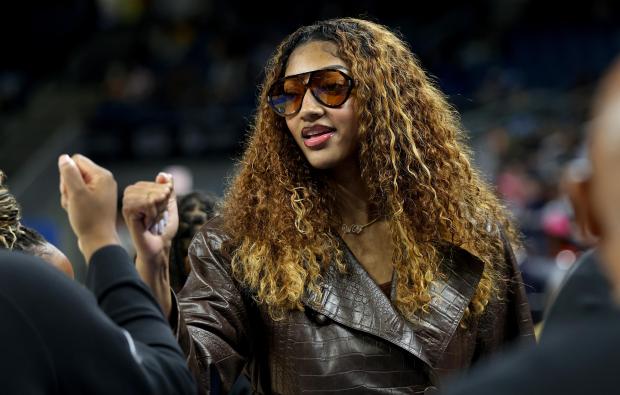
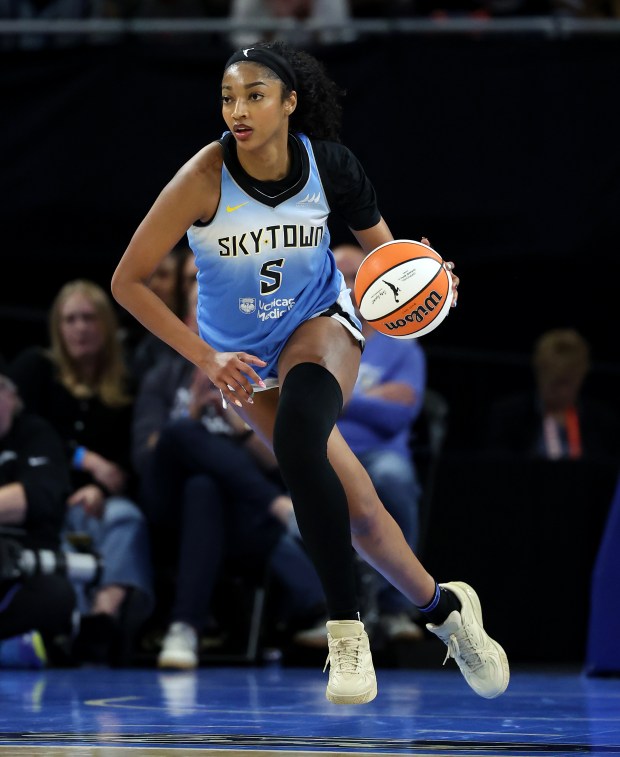
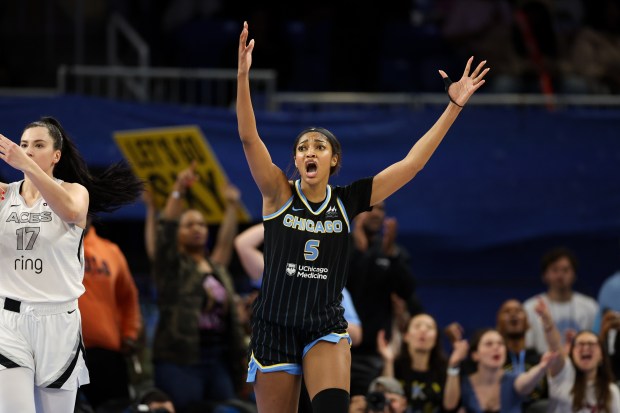
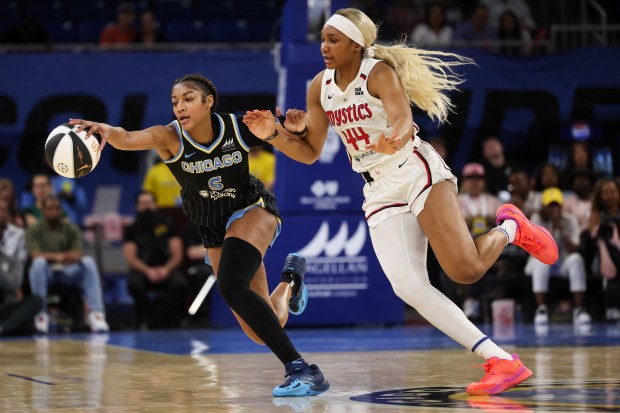

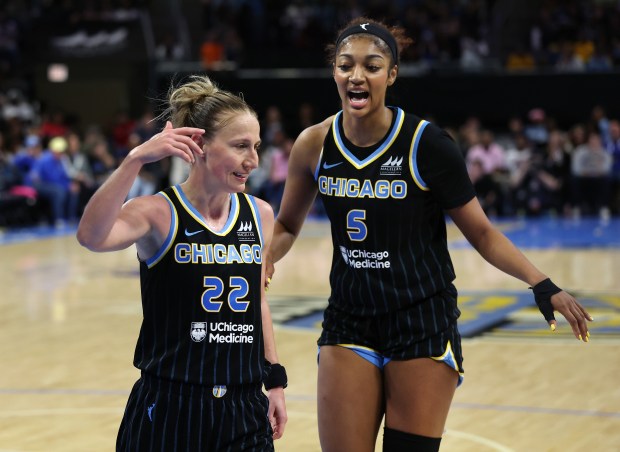
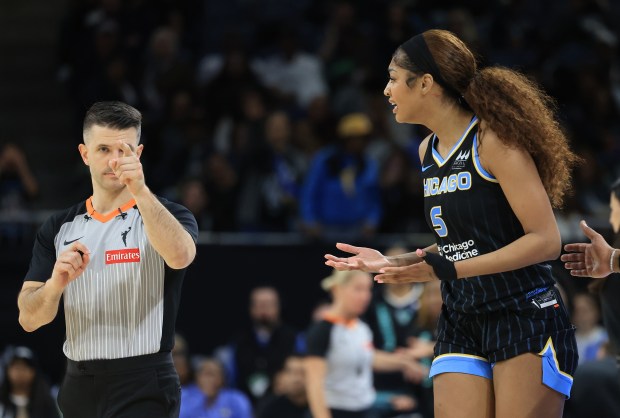
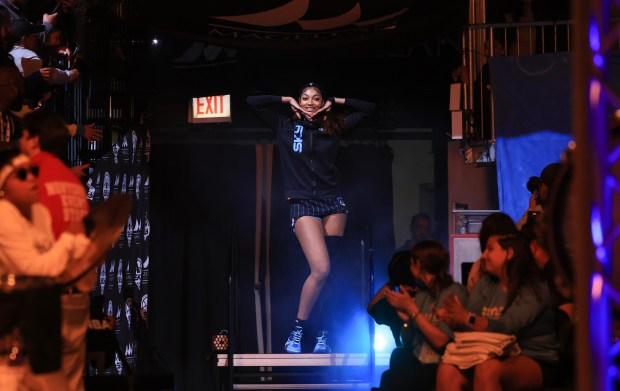
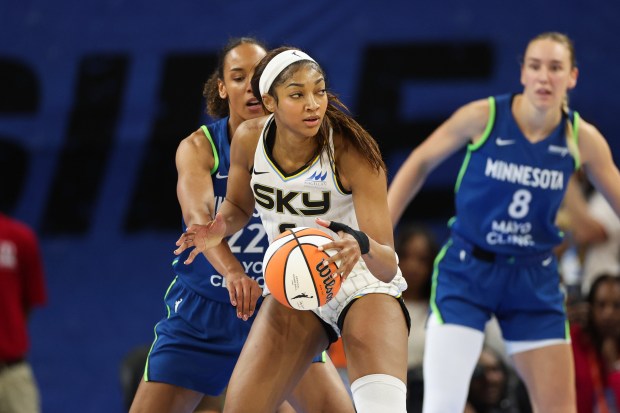
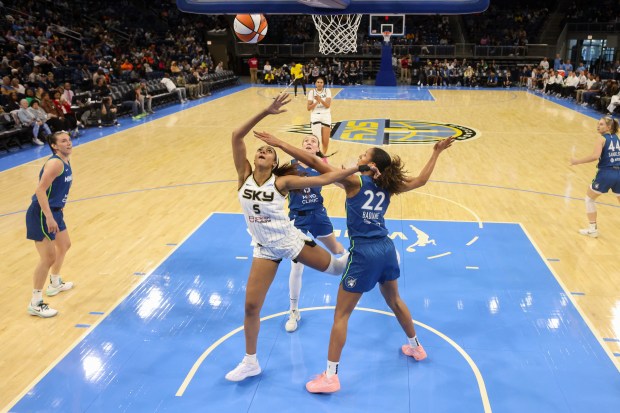
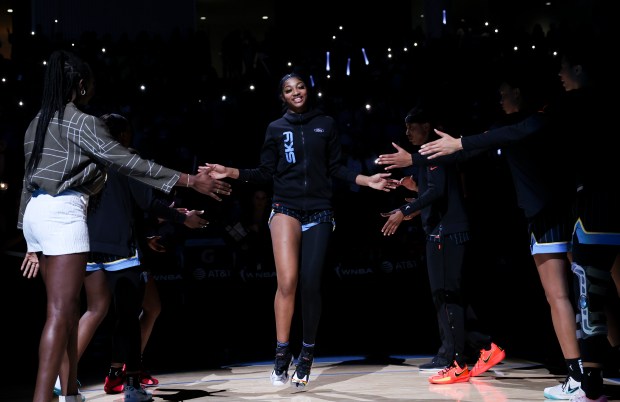
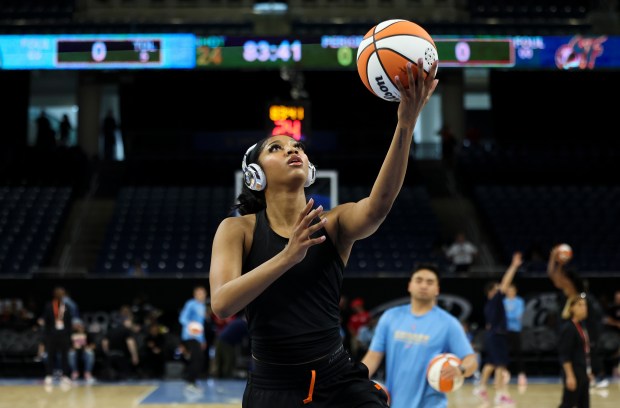
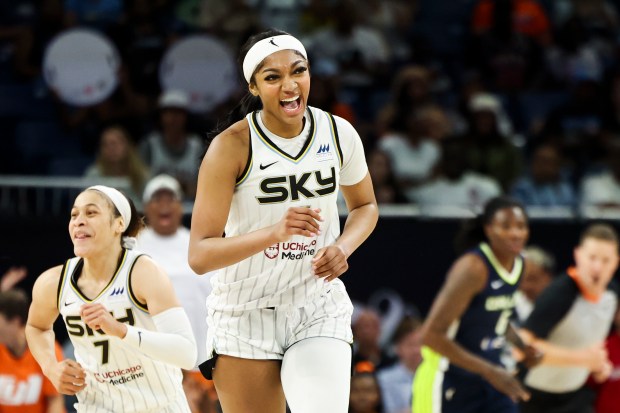

The Chicago Sky can’t continue down this road.
In trading Angel Reese on Monday, the franchise stumbled upon a crossroad. The decisions made in the coming weeks and months will define this team for decades. Yet it’s unclear if principal owner Michael Alter is even aware he’s standing at the intersection of two diverging paths.
It would be easier to say Reese never was going to fit in Chicago. That would let everyone off the hook, right? If this match was doomed from the beginning, then it wasn’t anyone’s fault. But that’s not the truth. This should have worked. Both sides should have tried harder. Instead, the Sky are left holding the bag after yet another squandered opportunity.
Reese’s departure isn’t simply a failure of the front office. Every misstep the Sky make is a direct reflection of the ineptitude of the team’s ownership and management at the highest level — specifically, Alter and operating chair Nadia Rawlinson.
The Sky worked with Reese’s camp, per a source, to find a landing spot that suited the forward and preserve an amicable relationship in the future. This ultimately went against the team’s best interests — by trading Reese to the team that led the Eastern Conference last season, the Sky all but guaranteed the first-round picks they received will fall relatively low in the draft order — but it felt necessary for an organization still trying to improve its reputation with players around the WNBA.
Bottom line: Reese wanted out. The Sky got a couple of first-rounders in return. It’s an undersell, one in a long list of similarly lopsided deals that general manager Jeff Pagliocca has struck in his short tenure. But it’s not about the deal. It’s the fact the Sky allowed a relationship with a player to degrade so quickly that they were forced to take a lowball offer simply to offload her contract and start anew.

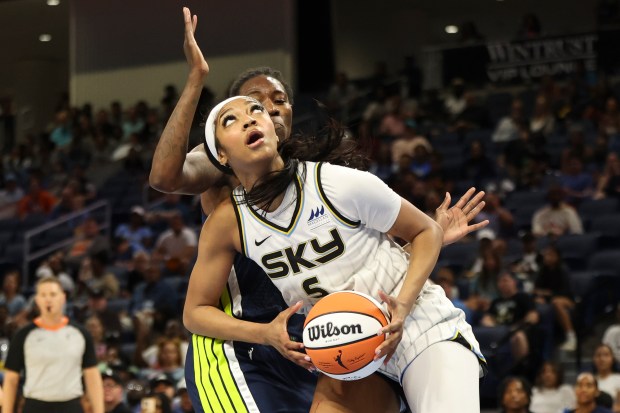
This isn’t entirely about Reese as a player. She was raw when she entered the league, a gifted defender and rebounder who struggled with her shot and overall offensive production. Two years later, Reese is still underdeveloped, in large part because of a lack of structure and support provided by the Sky. Even with the appropriate system in place, it’s unproven whether Reese would have developed into a well-rounded centerpiece — something she now will try to accomplish in Atlanta.
For the Sky, however, this rapid divorce with Reese reflects deeper flaws in how the front office and ownership manage their top players.
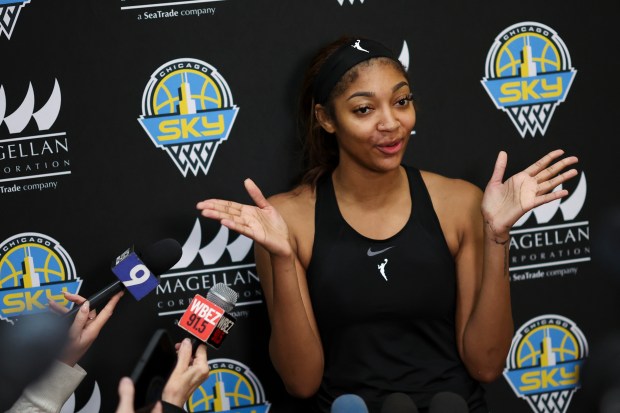
Drama dominated Reese’s final weeks in a Sky jersey. She detailed a laundry list of frustrations to the Tribune in a September interview, prompting indignation from her teammates, coaches and, most important, ownership.
Reese’s willingness to openly criticize Sky ownership reflected a change from her first 18 months in Chicago, during which she defended the team’s resources and promoted improved investment, such as the new training facility in Bedford Park. Reese’s remarks also struck a fissure in her relationship with ownership and the front office that, per a league source, never successfully healed.
One key point of contention was between Reese and veteran guard Courtney Vandersloot, whom Reese said the Sky could not “rely on” because of her age and recent ACL injury. Reese and Vandersloot did not speak in the days following. Per a source, that cold war continued through the offseason.
That reflects an unserious passivity that permeates every level of the Sky organization. At any point, an executive or coach could have forced the players into a room to hash out their disagreements and find common ground. Perhaps both players would have remained stalwart in their stances. The Sky never will know — because they never did the work to repair the relationship between two players ostensibly central to their plans, in 2026 and beyond.
Reese contributed to the strained relationship with ownership in her own way. By airing out teammates while also venting reasonable frustrations with the organization, she undermined a yearlong effort by Pagliocca and the front office to show soon-to-be free agents that the Sky were changing for the better (a campaign that seemed to be making slight headway).

But Reese also had earned grace, especially during a second season of playing on a poorly constructed roster. Instead, Rawlinson and Alter waited nearly three days before suspending Reese for a half-game — a decision that came directly from ownership, not Pagliocca or coach Tyler Marsh. When the situation called for finesse, the Sky’s leadership reached for a sledgehammer. The fallout can’t come as a surprise in this context.
Only two options remain. Alter can commit to the level of deep, widespread, constant investment necessary to elevate the Sky to a premier competitor in this league. Or he can sell.
The latter option is more realistic. Alter never has shown he has the wherewithal or wisdom to run this franchise successfully. The team’s sole championship was the culmination of a million inimitable factors: Candace Parker wanting to come home, Kahleah Copper ascending to stardom, the unpredictability of the prior single-game playoff rounds. The rest of his tenure has been defined by lost seasons, lost players and lost opportunities.
The Sky are known as a cheap franchise because Alter is a cheap owner. This season will be the first in which players don’t share locker-room space with anyone who can afford the $49 monthly membership at Sachs Recreation Center in Deerfield. The Sky were the last team in the league to separate the head coach and general manager positions. They still employ one person, Ann Crosby, as both a strength and conditioning coach and the vice president of basketball operations.
Being cheap — or broke — means the money an owner does spend always falls flat. Rawlinson has struggled mightily since Alter handed her the reins, most publicly with the bungled hiring and firing of former coach and Hall of Fame player Teresa Weatherspoon. Pagliocca has mostly struck out in a series of high-risk, high-reward gambles.
The shallowness of Alter’s pockets will become more painfully exposed by the new collective bargaining agreement, which will exacerbate the spending required simply to field a roster. And it doesn’t matter how many minority owners Alter plops into the team’s investor pool to raise capital — if the majority owner can’t afford to be competitive, the team has lost before it even began.
This didn’t need to be this way. Alter bought the Sky in 2005 because he believed in women’s basketball. He poured years and time and money and effort to keep this team in Chicago. His commitment to the team is driven by love, but he has clung to his position long enough to sour his relationship with the franchise and its fan base.
Now the Sky have reached a crossroad. This final choice belongs to Alter alone — but it must be made.