




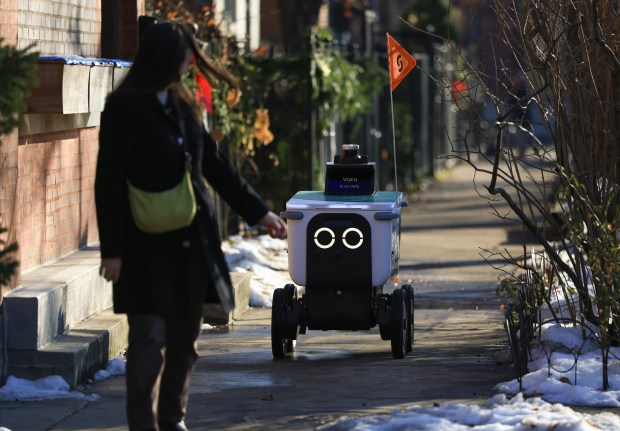

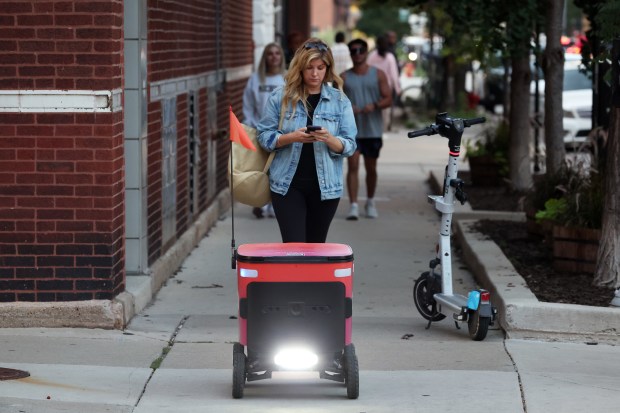
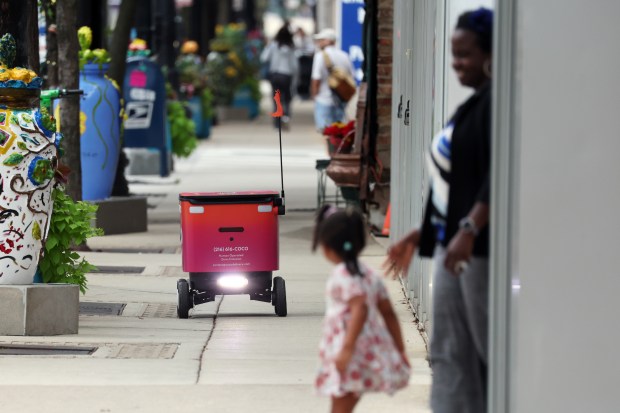
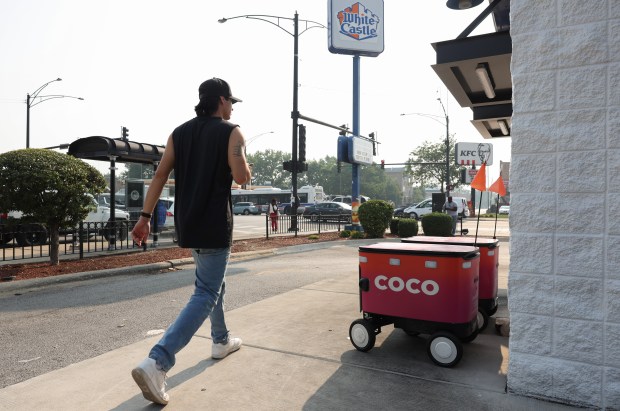

To bot, or not to bot? That is the question raging in some neighborhoods these days. It’s the great Chicago robot debate.
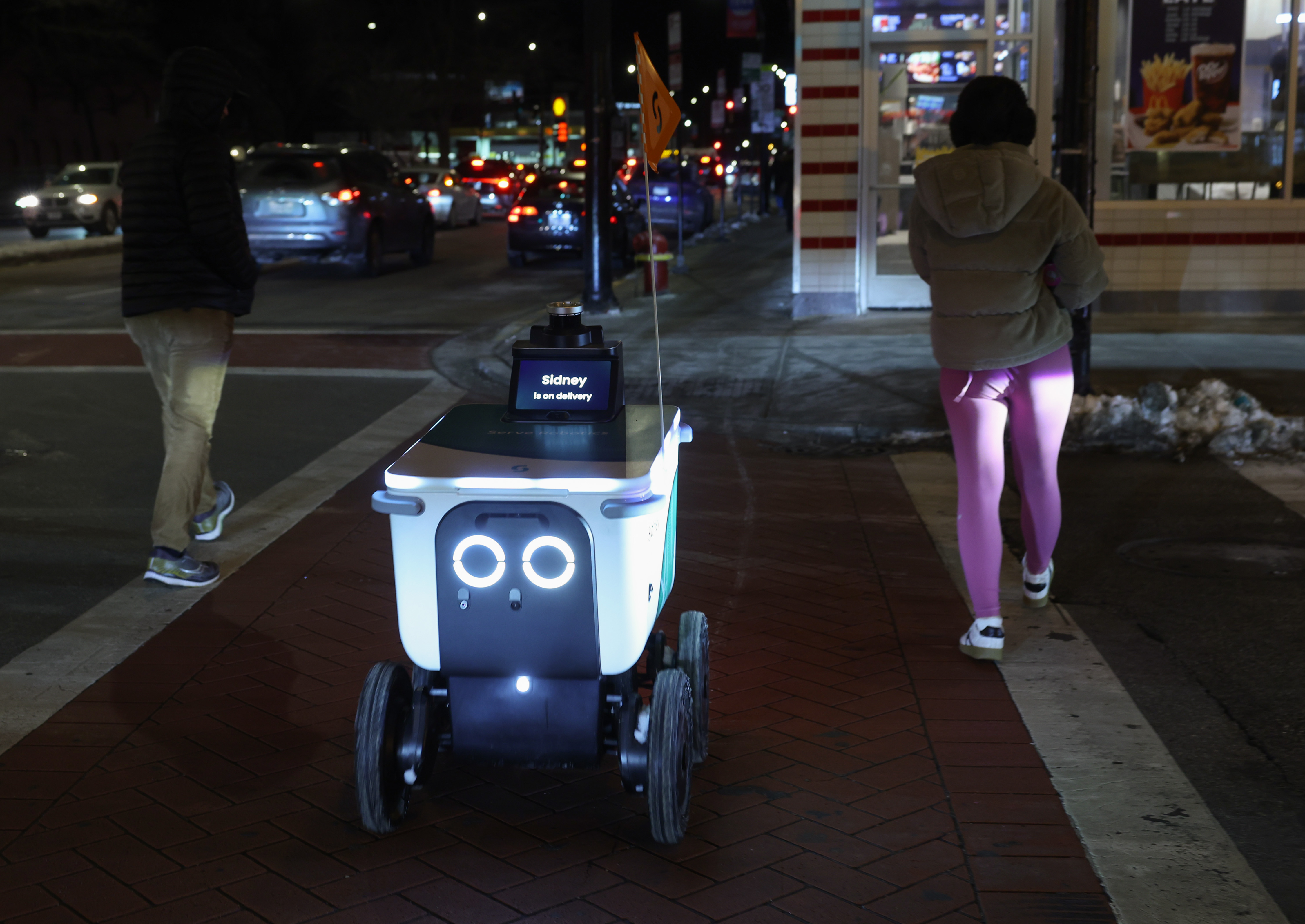
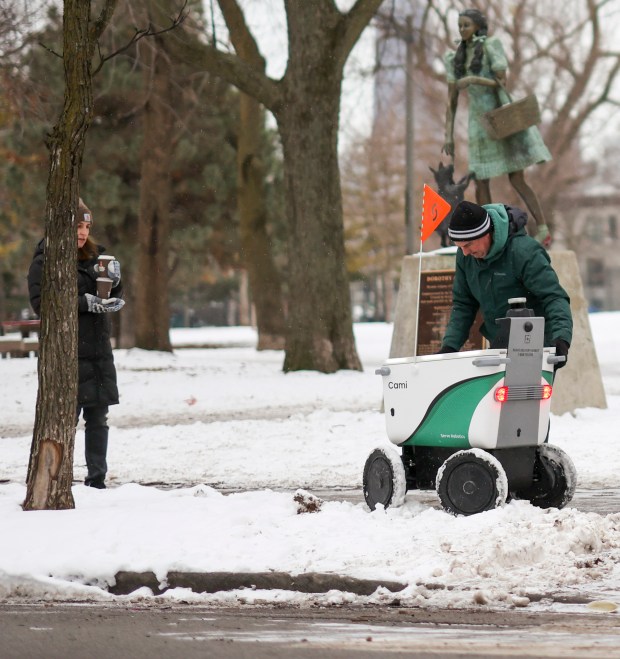
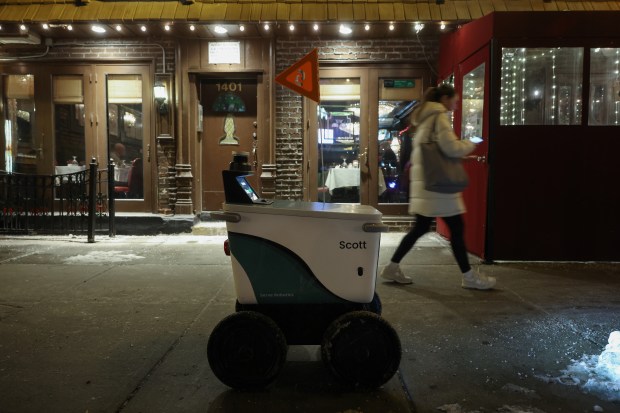
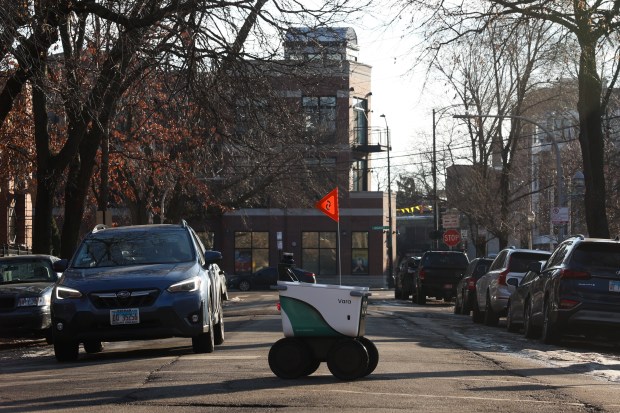
Activists are riled up over the food delivery robots traversing the city, operated by the delivery companies Coco and Serve Robotics.
You might think we would have more pressing problems to ponder these days. There is a war on, for instance. But forget Iran. Some people want to go to war with robots.
Serve Robotics, which works with Uber Eats and other food delivery companies, kicked off its robot service in Chicago last September. It “rolled out in partnership with more than 100 restaurants in 14 Chicago neighborhoods, including East Garfield Park, Logan Square and Belmont Cragin,” Block Club Chicago reported in December.
The robots, authorized to pick up and disburse food orders to consumers under a city-approved pilot program, have drawn ire, “leading to one Lincoln Park neighbor launching an online petition calling on the city to pause the robot delivery program until more data is shared and a public hearing is held,” according to the news site last month.
“Chicago sidewalks are for people, not delivery robots,” the petition’s sponsors say. They are monitoring complaints and news coverage of the robots. The petition has garnered more than 4,000 signatures, according to the latest update on campaign’s website.
They are griping that the machines are crowding sidewalls, getting stuck in the snow and colliding with bicyclists. Last month, two wayward machines crashed into bus shelters on the North Side.
What’s the fuss?
Why are people messing with those cute little robots? With their sweet little names like Velma and Sade. They roll along, maneuvering the city’s sidewalks to deliver all manner of goodies, from pad Thai and chocolate chip cookies to classic Chicago hot dogs.
Alas, I would love to try them out for a shipment of my favorite dragon roll and spicy Tom Yum, but they can’t access my high-rise.
I’ve watched the bots tool along North Clark Street, Broadway and Halsted Street, charming me with their round, blinking “eyes.” I’m tempted to pat their boxy heads as they scoot by.
These robots join services such as Uber and Lyft, helping us through mundane, everyday tasks and burdens to an easier life.
They symbolize the victories of technology, combining chunky hardware, future-leaning software and human ingenuity.
The bots have gone national and are having fun in the sun. On a recent visit to Miami Beach, I watched them motor to and fro, toting food orders to spring breakers from the ocean to the bay.
My friend Mike Smith tells the story of waiting for the light to change at a busy intersection. “One of the four-wheel food robots was there, waiting to cross Alton (Street). The robot said something like, ‘Will you press the walk button for me?’ I said, ‘Yes.’ I don’t think it responded, but it crossed Alton when the light changed.”
Safety first. But that isn’t always the case.
In two separate incidents last month, delivery robots crashed into CTA bus shelters in Old Town and West Town, leaving shattered glass behind.
Serve Robotics issued a statement about the West Town collision: “We’re aware of the incident involving one of our robots in Chicago. No injuries were reported, our team responded quickly to clean up, and we’re reviewing what happened.”

In a statement, Carl Hansen, Coco’s head of safety and government relations, said of the Old Town crash: “Across more than 1 million miles of deliveries, this is the first time one of our robots has collided with a structure like this. Our robots operate at a top speed of about 5 miles per hour, and safety is a top priority in how we design and monitor our systems.
“Our team responded immediately, retrieved the robot, and are actively clearing the area. We’re grateful no one was hurt. We’ve reached out to the company that owns the shelter and are taking full responsibility for the cost of repair.”
There are always naysayers to the new and improved. Where are the critics when bicycle delivery guys are sweeping in and out of multiple lanes of heavy traffic? What about the raggedy scooters and stolen Divvy bikes strewn along our sidewalks, abandoned at bus stops and on lawns, waiting for us to trip on them?
Why aren’t activists complaining about reckless bicyclists who run us off the sidewalks?
Yes, city officials must closely monitor and regulate tech companies with a keen eye toward safety, but let’s not throw the bots out with the bathwater.
Laura Washington is a political commentator and longtime Chicago journalist. Her columns appear in the Tribune each Wednesday. Write to her at LauraLauraWashington@gmail.com.
Submit a letter, of no more than 400 words, to the editor here or email letters@chicagotribune.com.


