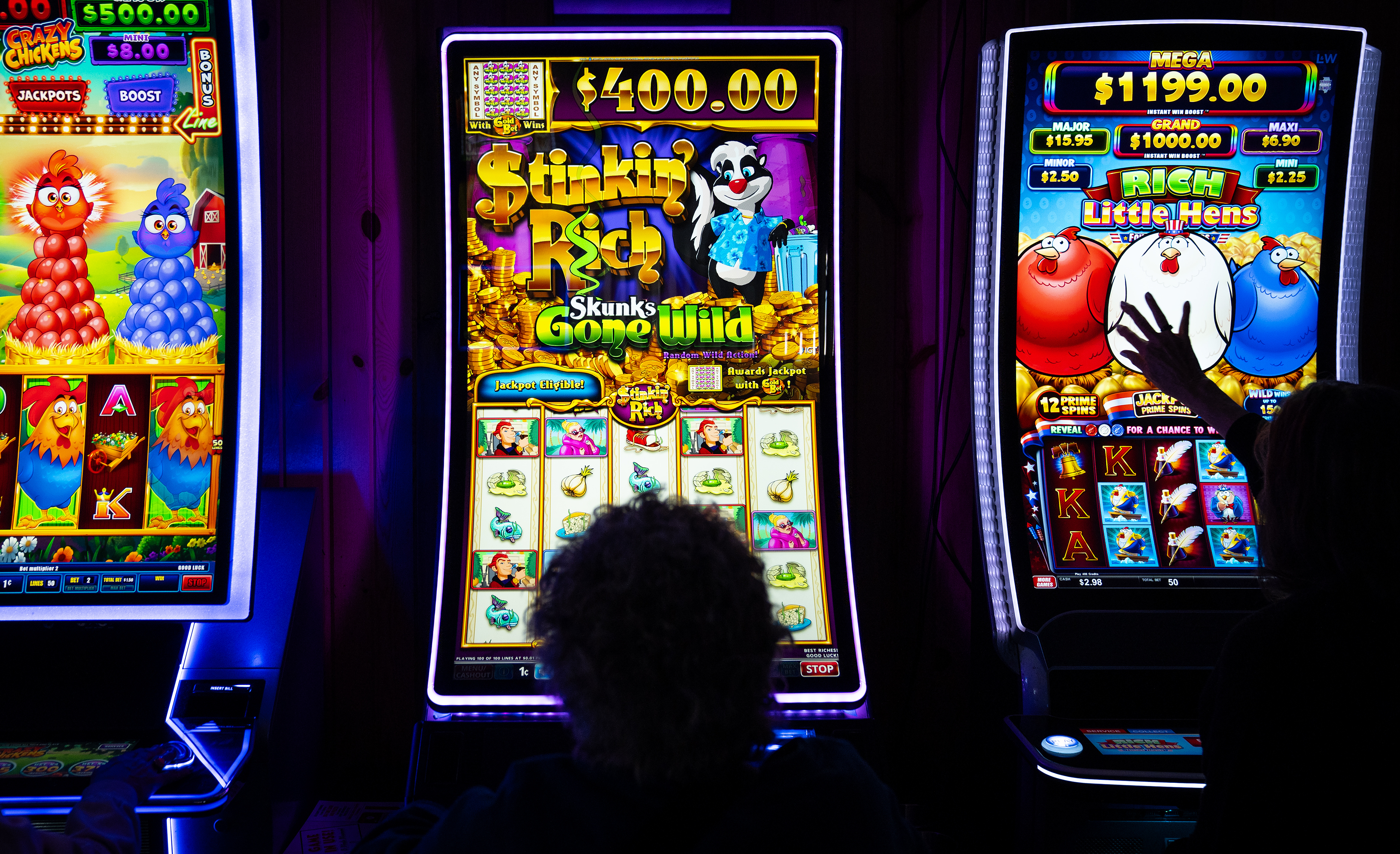

Aldermen advanced a plan Monday to let businesses more quickly secure conditional permit approval from city regulators for video gambling terminals, the latest engagement in the fight over the controversial machines.
For the gambling terminals legalized in December, the decision marks a critical step toward their arrival by the hundreds in bars, restaurants and other establishments across Chicago neighborhoods.
By speeding up the city’s permitting process, aldermen hope to jump-start operations delayed by the state’s slow-moving approval system — and allow the city to start earning fees and tax revenue.
“We know the state is going to take a decent amount of time, but at least we can have the approvals here,” Ald. Bennett Lawson, 44th, told his colleagues on the City Council’s License and Consumer Protection Committee.
While applicants would need to wait for final state approval to begin operating, the city would in the meantime keep the $500 local application fee, part of the $6.8 million aldermen counted on when they added video gambling legalization into the city’s 2026 budget and passed it against Mayor Brandon Johnson’s will.
Despite a largely uncontested voice vote Monday, the ordinance set to face a final vote by the full council Wednesday marks a major turning point in a heated, high-powered debate over the terminals.
City Hall leaders opposed to the terminals have continued to fight against them even after they were approved with the budget. For his part, Johnson, an opponent of the terminals, did not alert the state of the city’s legalization decision for months, a move council critics blasted as a stall tactic.
The stakes were evident as lobbyists who support and oppose the gambling terminals filled the City Hall meeting room where aldermen debated.
The new terminals would lead to crime in neighborhoods where they operate and jeopardize a $4 million annual payment Bally’s makes to the city, argued Elizabeth Suever, vice president of government relations for Bally’s, the operator of Chicago’s lone casino.
“It will create substantial job losses at the casino, and despite many false claims in this body to the contrary, will cause significant revenue loss for the city,” she added during the meeting’s public comment portion.
Suever estimated the legalization of the terminals could lead to a yearly tax loss of $260 million, including $70 million that would go to the city. Casino revenues are taxed at a higher rate than video gambling terminal revenues.
But the criticism of the gambling terminals was “spectacular hogwash,” argued Pat Doerr, director of the Hospitality Business Association of Chicago. He told aldermen that the estimates from Bally’s about how much money their casino would net the city should not be trusted because they have been “wrong every year, and by a lot.”
Doerr said the conditional approval debated Monday would follow past city efforts to speed up permitting while the Illinois Gaming Board reports an application backlog sure to take months to sort through.
“We will see more applications, more application fees, more revenue for the city,” he said. “It will open up a new opportunity for hundreds of city bars and restaurants that we have lost over the years to suburban competition with these legal, taxed, state-licensed machines.”
There are currently 222 pending video gambling terminal applications to the state from Chicago, according to Ivan Capifali, commissioner of the city’s Department of Business Affairs and Consumer Protection. Capifali shared concerns with aldermen about the “operational burdens” legalization will put on his department, tasked with overseeing the terminals.
“[The department] was not engaged during the creation of this ordinance, despite being directly responsible for its implementation,” he said. “This has required this department to build a new regulatory framework without the benefit of advanced planning.”

Ald. David Moore tried to heed Capifali’s warning and slow the council down by forcing aldermen to consider voting on the ordinance another day.
“There are so many unanswered questions,” he said. “I don’t know if there’s a hurry.”
Moore’s effort to delay failed in an 11-3 vote.
Lawson addressed head-on the elephant in the room: the ongoing effort to strike down the legalization. “The ship has sailed,” he told his colleagues.
“We’ve passed (video gambling terminals), right? It’s in the budget,” he said. “We need to start to get some revenue from it as soon as possible or we are going to have more budget problems than we already have.”