Seedo’s Levantine Bakery makes Palestinian, French and American-influenced pastries bold yet familiar, plus a cheeky manakeesh-inspired “sandweesh” with roots in the Middle East and Chicago’s South Side.
“I pull from different parts of the Levantine world,” said founder Mutaz Abdullah, specifying Lebanon, Syria and Jordan. “And a lot from Palestine, because that’s where my grandfather was from.”
Seedo means grandfather or, more endearingly, grandpa, in the Palestinian Arabic dialect. His maternal grandfather, Juma Rashed, also owned bakeries in his home country, and later in Jordan when he was displaced by the 1948 Palestine war.
The bakery debuted with a stall at Sterling Food Hall in 2025 and opened a cafe near Madison and Wells in January, establishing two locations in the Loop within a year. Abdullah also co-founded Hot Chi, the Chicago-style Nashville fried chicken mini-chain, with his brother. They grew up in their father’s restaurant, the beloved Cedars of Lebanon in Hyde Park, now known simply as Cedars.
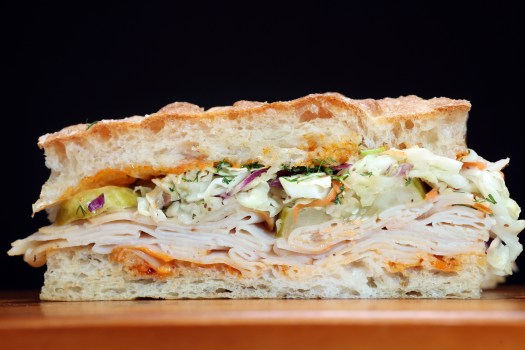
Seedo’s turkey sandweesh has become a surprising bestseller — or at least a surprise to me. Their other sandwiches looked far more interesting, filled with pastrami or harissa-roasted vegetables. All are a play on manakeesh, the Levantine flatbread.
But the sandweeshes begin with a golden and glorious taboon bread — or rather Abdullah’s fantastic interpretation, which is similar to focaccia.

“We bake fresh taboon bread every morning,” he said. Traditionally, it’s thinner and sometimes compared to pita. “My grandfather made it in a stone oven. Then what my mom used to do when we were children was baste it with olive oil and add za’atar or cheese.”
That classic childhood flatbread was so delicious, but Abdullah wanted more height to slice it in half. So he created a hybrid recipe, developing more structure in the dough, and baking at a higher temperature for a bit longer.
“Basically, it’s a simple olive oil bread,” said Abdullah.
But I can assure you that it’s so much more.
His taboon-inspired bread is thick yet light. When toasted, as the sandweeshes are served, it crackles and chews with the lingering memory of its legacy.
As the foundation of the terrific turkey sandweesh, an impressive slab is indeed sliced, then spread with a delicately spicy sesame chile crunch harissa mayo, before receiving layers of tender smoked turkey and tangy crisp slaw dressed with intentionally imported olive oil.
“We source our olive oils from Palestine and Lebanon,” Abdullah said. And sometimes from Spain, because it’s readily available. “With all the war and everything going on in the Middle East, it’s sometimes very difficult.”
Otherwise, they buy from local farmers markets in season, he said, and most of their ingredients are organic and pasture-raised. Plus, all the meats are halal.
The za’atar and labneh croissant, possibly my favorite, transforms a nice buttery pastry into a dramatically dark yet searingly brilliant statement. Covered in what they describe as “too much za’atar” and embracing a thick cloud of strained yogurt, it’s striking and precious.

Not only do they also source za’atar ingredients from Palestine and Lebanon, or sometimes Syria and Jordan, but the restaurateur brings them back himself.
“Palestinian is my preference,” Abdullah said. “The wild thyme is just a little bit stronger, so the flavor profile is a little bit more kind of punch you in your face.”
They blend the dried herb until it’s finer, then add toasted sesame seeds, freshly ground sumac, sea salt and a touch of olive oil before mixing by hand. It’s wild to me how much za’atar they use.
“My dad was heavy-handed with everything, and I would always say, ‘That’s too much!’” he said about his late father, Sudki Abdullah. “And he would go, ‘You’ll understand one day.’”
Seedo’s manakeesh, with that exquisite crackling and chewy crust, features daily changing toppings, ready for lunch at 11:30 a.m. Olive oil and za’atar are a nostalgic ode to family matriarch Basima Abdullah. Pepperoni rivals any Sicilian-style pizza slice around the city. And garlic and cheese deliver powerful flavor with sweetly roasted cloves.
The Magic Halawa bar, a magical Middle Eastern variation of the so-called seven-layer dessert bar, spices a graham cracker crust with cinnamon before adding Callebaut chocolate chips, coconut condensed milk, toasted walnuts and a house-made tahini nougat with the texture of toasted marshmallow.

A caramel tahina brownie, perfectly cakey and fudgy as it should be, is made with more Callebaut chocolate, plus butter that’s browned with added milk powder for an even nuttier flavor.
A chocolate chip cookie, remarkably thick yet crispy-edged, has rightfully become a fan favorite with the students from the school next to Sterling.

The Seedo’s salad, meanwhile, sells triple comparatively at Madison. Loaded with greens, dates and goat cheese, the vinaigrette dressing with honey and white balsamic (or more correctly, condimento bianco) is a touch sweet and could benefit from some acidity for balance.
My egg sandweesh with baked egg, cheddar cheese and that signature harissa chile crunch aioli, was unfortunately not toasted as it should have been, but still tasty.
Mama’s lentil soup, blended smooth and velvety, was relatively unlovely and bland compared with the rest of the vibrant menu, but paired well with the za’atar labneh croissant and its many precious crumbs.
The pistachio croissant, a smart take on an almond croissant, made with house-made pistachio frangipane, has been a breakfast bestseller from the earliest days, but I wish the promised orange blossom syrup was more evident, though I understand it can be a polarizing flavor.
A pretty pink hibiscus-glazed lemon labne olive oil cake had no hint of the rose petal that I love.
The basbousa coffee cake, a popular streusel-topped take on a classic syrup-soaked semolina dessert, lost its original inspiration in the transition.

What did transition well was the airy Seedo’s cafe space at Madison. Abdullah also owned the former business, Mezza Grill. You’ll find the entrance around the corner on Wells Street. The “L” tracks overhead cast shadows and clatter, for me a romanticized soundtrack of the city.
What you won’t find is a public restroom at the Madison Street location. The city of Chicago does not require restaurants to have public restrooms unless they serve liquor, were rehabbed or newly constructed after Feb. 5, 2016 — and even then, there are exceptions. There are public restrooms in the Sterling Food Hall.
The staff at Seedo’s was wonderful. At Sterling, Flor prepared my ridiculously big order so carefully. And when I asked for a drink recommendation, Ayesha suggested her favorite, a hibiscus and mint lemonade mix. Red, tart and refreshingly herbal, it captured a Mediterranean holiday in a cup.At Madison, the only location with coffee, Nicholas recommended a chocolate cardamom latte with whole milk when I asked about the latte art on their Instagram. He said he would try, and then casually created a Pegasus in my cup. I can’t say that I could distinguish all the lovely coffee flavors, but it was delightful.
Seedo’s Levantine Bakery
125 S. Clark St. (Sterling Food Hall); 181 W. Madison St., (entrance on Wells Street)
708-769-5500
Open: Sterling Food Hall, weekdays, 8 a.m. to 3 p.m. (closed weekends); Madison Street, weekdays 7:30 a.m. to 5 p.m., Saturday 9 a.m. to 3 p.m (closed Sunday)
Prices: $13 (turkey sandweesh), $6.25 (za’atar and labneh croissant), $5 (caramel tahina brownie), $4.50 (Magic halawa bar), $6.50 (chocolate cardamom latte), $4.95 (hibiscus lemonade mix)
Sound: OK (Sterling) 63 to 65 dB; (Madison) 57 to 59 dB
Accessibility: (Sterling) Wheelchair accessible with restrooms on same level; (Madison) Wheelchair accessible, but no public restroom
Tribune rating: Very good to excellent, two and a half stars
Ratings key: Four stars, outstanding; three stars, excellent; two stars, very good; one star, good; zero stars, unsatisfactory.
Meals are paid for by the Tribune.
Big screen or home stream, takeout or dine-in, Tribune writers are here to steer you toward your next great experience. Sign up for your free weekly Eat. Watch. Do. newsletter here.