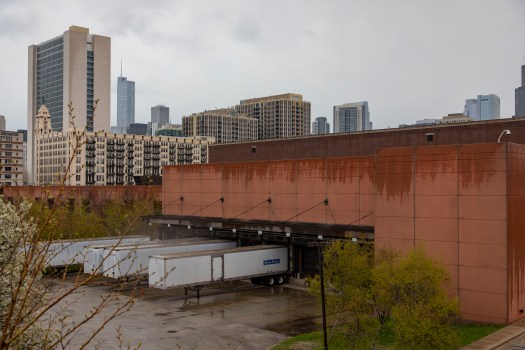

Work recently began on transforming an industrial building on Chicago Avenue (once part of this newspaper’s printing complex) into what will be Universal Horror Unleashed, a so-called immersive experience celebrated upon its announcement last year by Mayor Brandon Johnson and Gov. JB Pritzker.
The project is in line for more than $7 million in state tax credits and will employ about 400, including “entertainers called scareactors” and prosthetic artists, according to the city’s release last year touting the project.
Ordinarily, we’d be supportive. We enjoy a good, immersive scare every bit as much as the next editorial board.
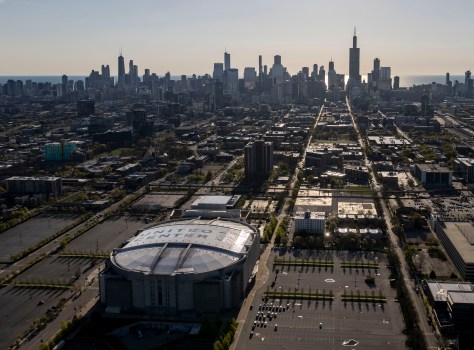
But here’s the thing. As politicians at the state and local level raise alarms on the area’s housing-supply crisis making homes and apartments unaffordable for a growing share of our residents, this tract, owned by the Onni Group since 2022 and located across from the Bally’s casino now under construction, was supposed to be the site of three apartment towers containing a total of 2,450 units, including 490 badly needed affordable apartments.
Onni Group’s 2023 application to rezone the 700 W. Chicago Ave. property for those apartments easily won Chicago Plan Commission approval but ground to a halt last year at the City Council’s Zoning Committee over unrelated objections from politically influential Service Employees International Union Local 1. SEIU wanted a “labor peace” agreement with Onni that would have paved the way to unionizing employees at all of Onni’s Chicago properties, which include high-end residential towers in Old Town and River North.

Onni objected to some of SEIU’s demands and repeatedly and correctly made the case that its discussions with SEIU shouldn’t factor into the council’s consideration of the 700 W. Chicago project.
To no avail.
Water Burnett, now retired from the council but then chairman of the Zoning Committee and alderman for the 27th Ward where Onni’s Chicago Avenue property is located, held up action at SEIU’s behest. Onni threatened to use a parliamentary maneuver to force a full council vote on the massive residential plan, but that vote never took place.
We can imagine why. There most likely weren’t enough votes on the council to buck SEIU.
And so, unwilling to cave to union brinkmanship and wanting some return on its investment in the property, Onni did the practical thing and negotiated the lease with Universal for the horror museum. We don’t know the term of the lease, but to qualify for the state tax credits, Universal Horror Unleashed must operate for at least 10 years. It’s reasonable to assume then that the lease runs at least that long.
Onni, an uncommonly patient developer that holds onto its residential properties for decades and famously never has sold any of the buildings it’s constructed throughout the U.S., still is seeking City Council approval for the $1.1 billion apartment project. But let’s say that zoning approval were provided tomorrow — it won’t happen, but let’s just imagine. Thanks to the lease, that residential project wouldn’t begin construction for at least a decade. What’s more, in terms of delivery of actual units, we would be talking about close to 20 years for completion because Onni plans to develop 700 W. Chicago in three phases, and it generally takes roughly three years to finish construction on a tower.

Such is the reality of how a metropolis once known as the city that works is functioning these days. Even in the face of what all our political leaders say is a housing crisis, the mayor and this city’s aldermen couldn’t summon the courage to suffer one union’s displeasure by green-lighting nearly 2,500 new housing units teed up for them in a single project.
Not to mention that the political fecklessness demonstrated here harms other trade unions, which represent the vast majority of the 600 construction workers Onni would have needed for its apartment towers. Those apartment buildings would have created another 150 permanent jobs once completed.
We wrote broadly yesterday about how the area’s lack of housing supply is inflating rents in Chicago as well as home values in both the city and suburbs. Consider: In all of 2025, Chicago issued permits for just 3,545 new apartment units, according to Bloomberg.
In that context, it’s downright jaw-dropping that the City Council would turn up its nose at one developer seeking to build 2,450 units at a single site for fear of getting crossways with an influential union.
In other words, with all due respect to the thrills, spills and chills Universal’s attraction will bring to Chicago, what the city really needs are those apartment buildings. Keep that in mind, Chicagoans, when your landlord raises your rent again next year while candidates for mayor and alderman ask for your vote on Feb. 23.
Submit a letter, of no more than 400 words, to the editor here or email letters@chicagotribune.com.