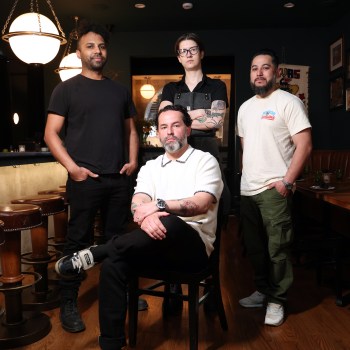
Cerdito Muerto, a Mexican American restaurant and cocktail bar in Pilsen, reincarnates a father’s pool hall, mother’s taquería and childhood home into an elegant and emotional destination in Chicago.
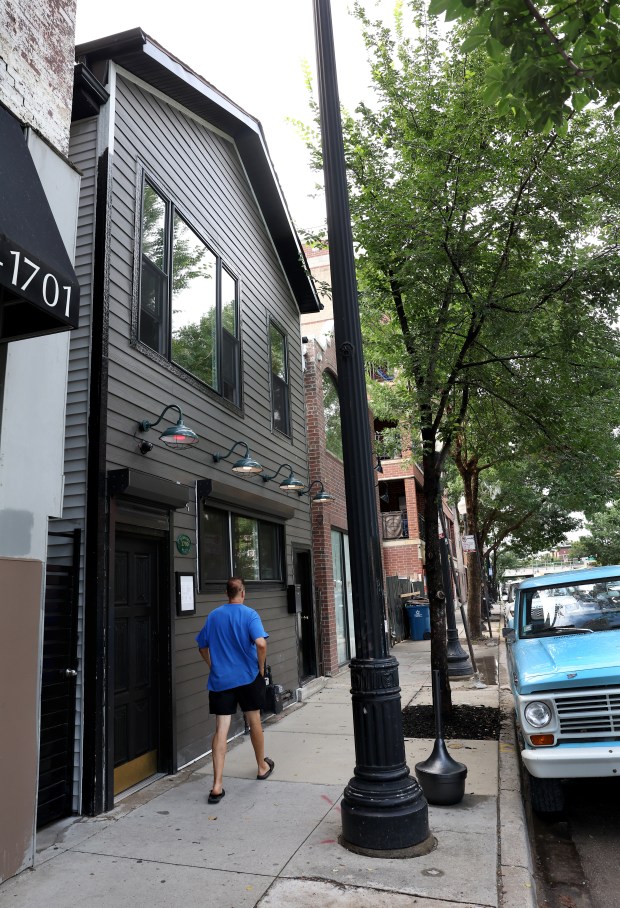
Emidio Oceguera, owner and founder of Cerdito Muerto, which translates to the Dead Piglet in Spanish, clearly conjured powerful spirit guides, evident in his painstaking transformation of a historic building that survived not only the Great Chicago Fire but also real estate development.
The namesake cerdito, or piglet, represents his parents and their predecessors, who were farmers and ranchers in Jalisco on the Pacific side of Mexico. And muerto nods to their culture, where death is not a morbid subject.
“It’s an opportunity to honor and appreciate our ancestors,” said Oceguera about Cerdito Muerto, which opened last June. “There’s a heaviness I carry, which I’m used to now, that just transcends me.”
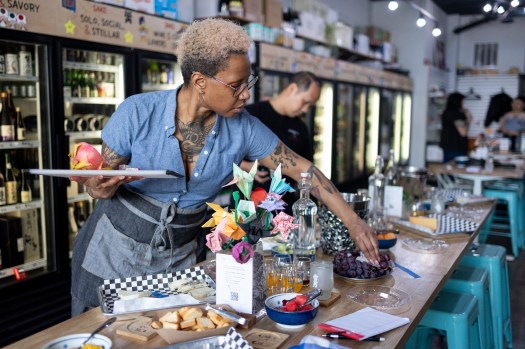
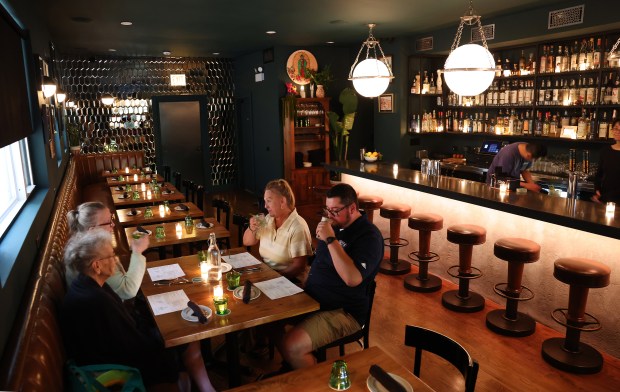
Yet the dark and moody diminutive space, designed with every detail carefully considered, feels airy and light, in no small part thanks to the thoughtful staff who bring life and a sense of place. Their heartfelt hospitality is a prelude to the deeply personal food and drinks to come.
Mamá Coco’s al pastor taco began with the pork recipe from Oceguera’s mother that’s more like slow-roasted cochinita pibil than vertically spit-grilled meat.
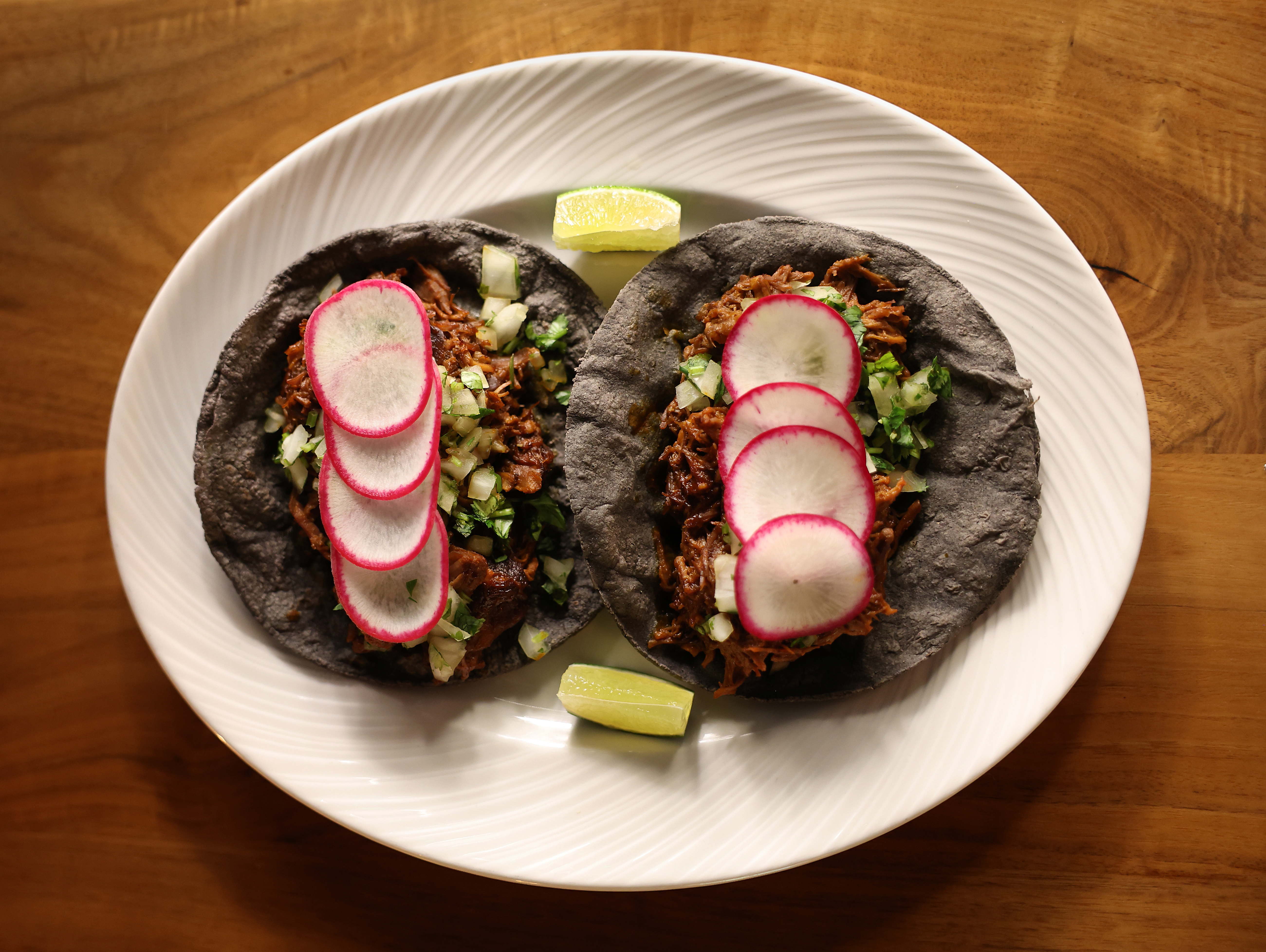
Chef Becky Carson, previously at the reimagined Ramova Grill and Apolonia, learned two taco recipes from Mamá Coco herself. But Carson now begins with pork tenderloin from Catalpa Grove Farm in Dwight, Illinois.
“It’s different from my mother, who used to buy pork butt, which is tougher, so she had to cook it longer,” said Oceguera. “What we changed with the recipe is just the quality of the meat.”
But they’ve changed more than that, including the tortillas, still fresh from El Popocatepetl Tortillería nearby, but now they choose blue corn tortillas.
The impressive ode to Consuelo Oceguera’s recipe comes loaded, intense and tender, each taco generously garnished with sharp white onion and fragrant feathery cilantro, plus a seriously spicy salsa verde on the side.The hamburguesa aplastada, however, a fantastically fatty smash burger with two patties of dry-aged Prime beef and chorizo, began with a backyard burger and boyhood promise.
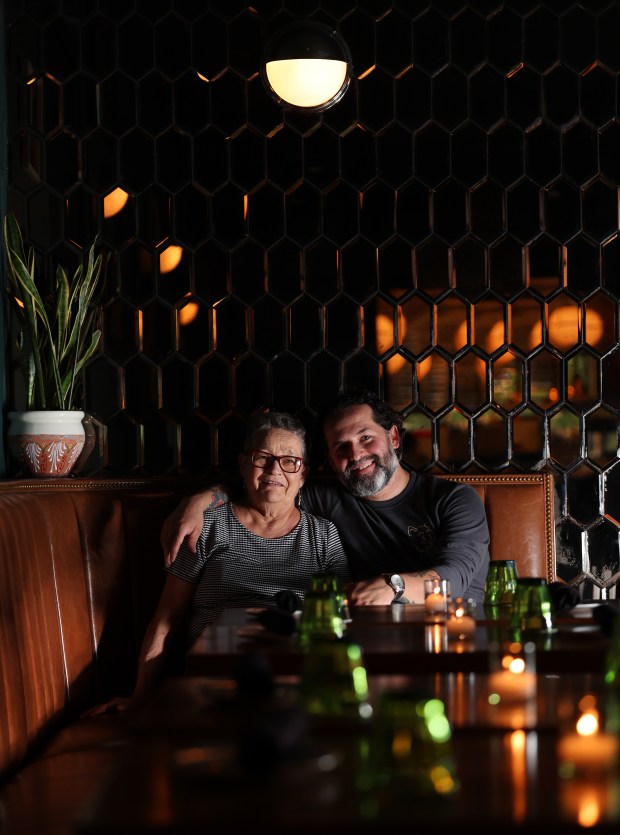
“I used to make it here when I was in college,” said Emidio Oceguera, who was born in Chicago and raised in their home upstairs.
His late father, Miguel Oceguera, emigrated from Mexico and rented a cot from a family friend in the basement downstairs in 1973. The elder Oceguera worked hard, moved out, got married and the couple bought the building from that same friend in 1983. The family patriarch opened a pool hall and added a tiny taquería for his wife, but died in his 50s in 2013.

“When I’d come home, my friends and I would get together in the backyard, and I’d grab chorizo and ground beef to make these burgers,” said his son.
The burger needed to go on a menu somewhere, said his friends.
“I was like, it’s gonna be here, once I redo this space,” said Emidio Oceguera, who knew even as a young boy that he would take over someday.
Carson’s interpretation of the backyard burger is smashed and seared yet sophisticated. It’s cut in half, revealing meaty layers and melting queso Chihuahua. House-made curtido with pickled jalapeño, carrot and cabbage cuts through the richness barely contained in an aggressively griddled potato bun.
Birría begins with a whole young goat that Oceguera picks up from Nea Agora Packing on Taylor Street, as his parents did. It becomes another lovely, laden taco. This one is infused with marrow and topped with radish, plus more onion, cilantro and salsa on those beautiful blue corn tortillas.
Al’s tinga tostada, possibly my favorite, comes from another family member. Oceguera’s sister, Alicia Martínez, shared her recipe for the pulled chicken dish. Carson smothers it over a crisp and shattering tortilla with tart pickled jalapeño, silky avocado crema and a blizzard of cotija cheese.

A quesadilla azul made with blue corn masa from El Popo, and more queso Chihuahua and cotija, seems to take longer to prepare than it should. That is, until the aroma of carefully caramelized cheese hits your table. The steak (USDA Prime outside skirt) or mushroom (a mix of cremini, shiitake and porcini) could be completely unnecessary.
The Mediterranean branzino with bright chimichurri, citrus slices and fresh oregano came with Carson to Cerdito Muerto. The chef serves her signature fish nearly whole with crackling skin and flaky flesh, but head off and skillfully deboned. You might want to note that branzino is on the Seafood Watch avoid list, which I forgot to check before eventually eating every impeccably cooked bit.

A huge steak seems like an especially surprising item for the miniscule Mexican American kitchen, but Oceguera worked at Chicago Cut Steakhouse, where he was general manager for a decade.
“I was just like, I need a steak on this goddamn menu,” he said. “I need a steak on the weekend to showcase to the 25-year-old version of myself who used to go out downtown to River North.”
A magnificent 14-ounce USDA Prime New York strip came rested and sliced from the kitchen, recently with a seeded molcajete-style salsa that changes weekly.
Perhaps not surprisingly, the steak was cooked precisely medium rare by default, but I wished the fat had rendered or crisped more.
Duck carnitas nachos featured six meticulously composed chips with pulled duck confit, velvety frijoles, a citrus salad and fresh mint, though I’m not convinced they were worth the excess effort.
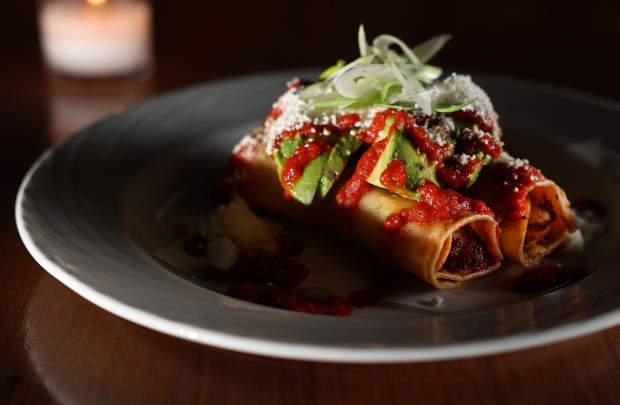
Potato flautas, a vegetarian dish with fresh avocado, cotija cheese and a guajillo chile salsa were also well executed, but unfortunately bland, with those mashed potatoes in the filling needing more salt.
A seasonal strawberry rhubarb crumble made with masa harina, toasted pepitas and whipped cream may have been my most anticipated dessert of the season as a Midwestern rhubarb fanatic, yet the distinctive tart flavor was somewhat dull compared to the rest of the compelling menu.
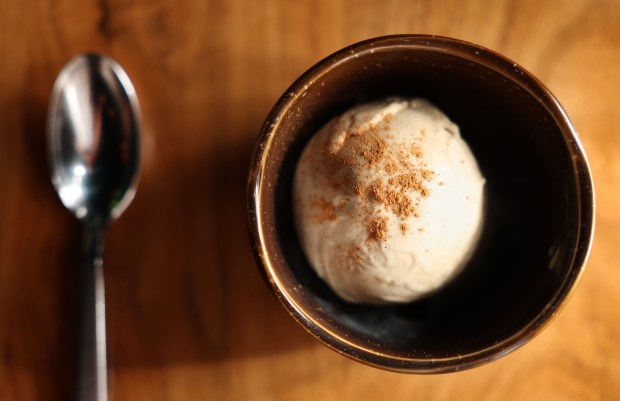
The café de olla ice cream though, made by Carter with coffee, cinnamon and piloncillo, or raw cane sugar, remarkably captured all the nuances of the classic hot spiced drink in a creamy cold scoop.

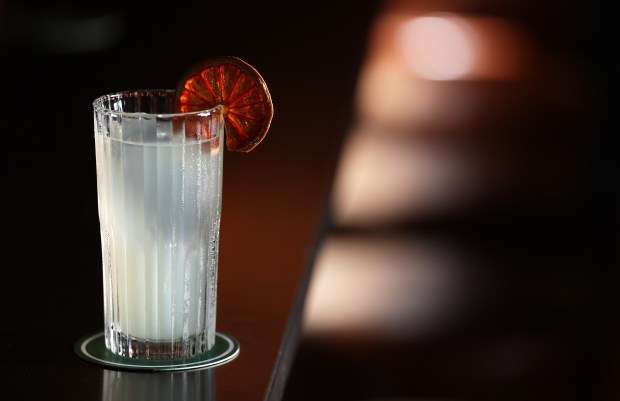
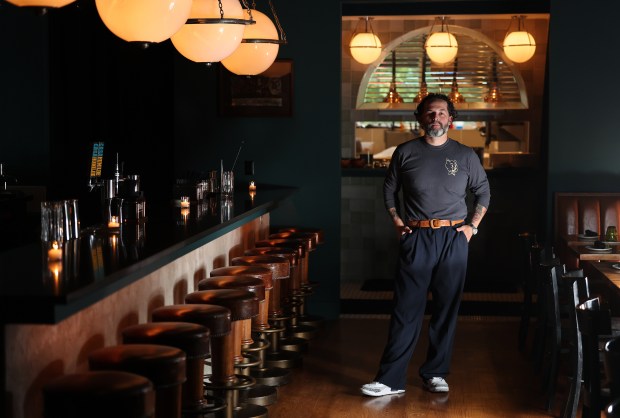
Speaking of drinks, when Cerdito Muerto opened, it was presented and perceived primarily as a speakeasy-style cocktail bar. And rightfully so with its mysterious exterior. A banquette runs along the left side of the main dining room, while the bar that Oceguera built himself lights up the right. His back bar holds an extraordinary collection of bottles. Yet it’s their house-made nonalcoholic Mexican Squirt-style soda pop that gives insight into their exquisite craft.
They juice fresh grapefruit and some lime, then clarify using a Spinzall, a coveted professional kitchen centrifuge.
“We add some salt, just a little bit of raw cane sugar and we let it sit,” said Oceguera. “Then we force carbonate it.”
They add carbon dioxide, then shake vigorously to get the carbonation in the juice.
“We just put it on draft,” he added. “Every single batch is a little different, and we talk about the intense labor behind it, the day and a half it takes to make, so you’re able to appreciate that more. You don’t have to commit to alcohol here.”
A weekly sin piquete, a “no-sting” nonalcoholic drink, recently with strawberry, was just as delightful and complex as the cocktails.
Guillermo’s paloma starts with that sensational Cerdito Squirt, plus your choice of tequila or mezcal. The cocktail is named for beverage consultant Guillermo Martínez. He bartends on Wednesdays while still serving as spirits director at Estero.

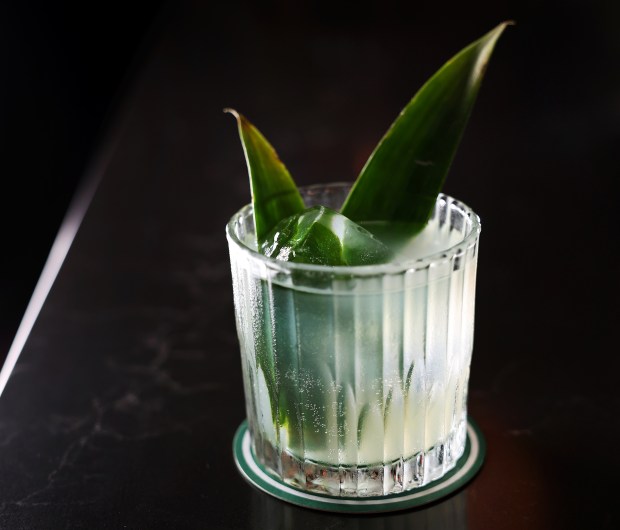
The piña colada güera, a stunning clarified cocktail with Palomo mezcal and Gran Dovejo blanco tequila, imparts the fond memories of many pineapple and coconut concoctions, but is refined to an intellectual exercise of the ubiquitous drink.
The process is long and excruciating, said Oceguera, but they’re just left with the essence of pineapple and coconut that’s carbonated a little for lightness on your tongue.
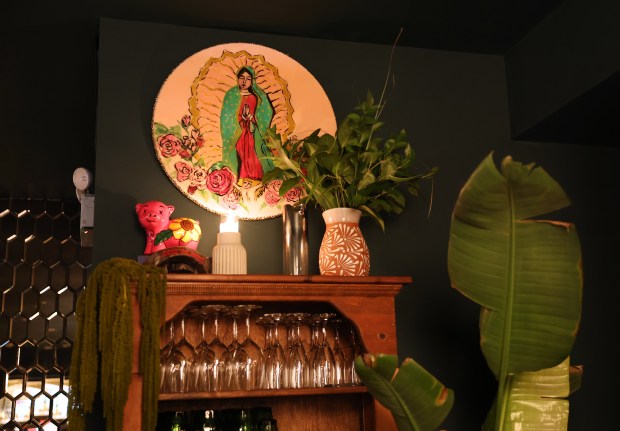
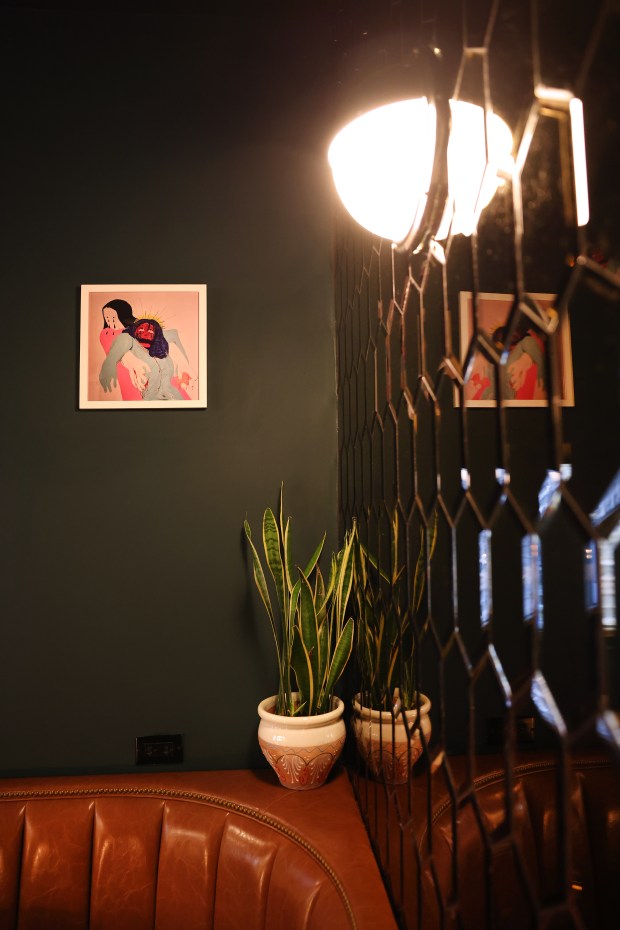
Lightness somehow plays throughout the space against a palette foretold by the black painted salvaged front door. Aida Napoles of AGN Design transformed the dramatic space with Cristina Gallo and Marty Sandberg of Via Chicago Architects + Diseñadores. Family photos, found items and pool cues from former lives line the entryway.
Bartender Elaine Ceballos made so many different drinks when I sat at the bar for dinner one night, shaking and pouring and chatting with ease. And server Addison Phillips paced my plates attentively at a table another night. Oceguera floated throughout the room that only seats 30.
“Service has got to be astronomically dialed in,” he said. “We want you to feel taken care of, because that’s the point.”
When I first spoke with him after they opened, he said Cerdito Meurto was like looking at a memory of what he always knew his former family home could be.
It feels like a glimpse of his vision for the future of the community, too.
“I’m not here for the margins,” said Oceguera. “I’m here for the legacy and sustainability in a neighborhood that’s very changed.”
Cerdito Muerto
1700 S. Halsted St.
312-933-9168
Open: From 5 p.m, Wednesday and Thursday until midnight; Friday and Saturday, until 2 a.m. (closed Sunday to Tuesday)
Prices: $6 (Mamá Coco’s al pastor taco), $7 (birría taco), $10 (Al’s tinga tostada), $38 (Mediterranean branzino), $20 (hamburguesa aplastada), $6 (café de olla ice cream), $15 (Guillermo’s Paloma cocktail), $16 (piña colada güera cocktail), $13 (sin piquete nonalcoholic drink)
Sound: OK (79 to 78 dB)
Accessibility: Wheelchair accessible with restrooms on same level
Tribune rating: Excellent to outstanding, three and one half stars
Ratings key: Four stars, outstanding; three stars, excellent; two stars, very good; one star, good; zero stars, unsatisfactory.
Meals are paid for by the Tribune.
Big screen or home stream, takeout or dine-in, Tribune writers are here to steer you toward your next great experience. Sign up for your free weekly Eat. Watch. Do. newsletter here.