
The SEC’s reign as the king of the first round of the NFL draft was toppled by the Big Ten.
But the conference that coined the mantra “It Just Means More” for its dominance of college football in the 2010s remained in the top spot for the entire draft after the SEC set a record for the number of players picked over the three days.
Thanks to recent national champions Indiana and Ohio State, the Big Ten led the way with 10 first-round picks, marking the first time the SEC didn’t have the most players taken in Round 1 since 2015. The SEC had only seven — down from a record 15 last year — and the lowest total for the conference since that 2015 season, when the ACC and Pac-12 led the way with nine first-rounders each and the SEC had seven.
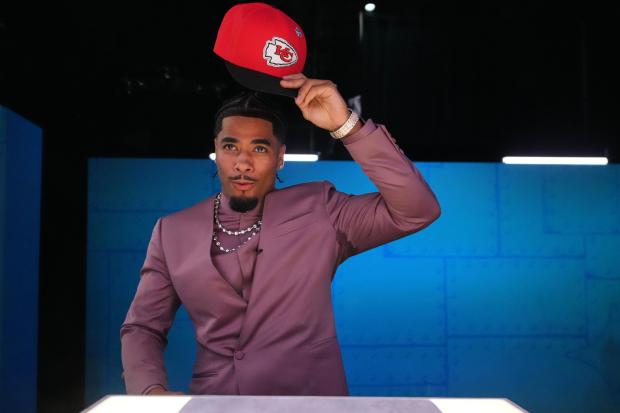
The first player drafted from an SEC school came when LSU cornerback Mansoor Delane went sixth to the Kansas City Chiefs, marking the first draft without a top-five SEC player since 2018, when Georgia linebacker Roquan Smith was the first taken at No. 8 by the Bears.
But the depth of the SEC shined on the final two days with the conference leading the way with 29 Day 2 picks in Rounds 2 and 3 and 51 more over the last four rounds on the final day of the draft. The 87 players in total were the most ever and easily beat the total of 67 from the Big Ten.
The SEC has had the most players picked for 20 straight drafts since the ACC took top honors in 2006. Florida won the national title the following season, starting a stretch in which the conference won 13 of 17 national championships.
That run of dominance ended when Michigan won it all in 2023, with fellow Big Ten members Ohio State and Indiana following that up with titles of their own.
The other two power conferences were far behind, with the Big 12 and ACC each having six first-rounders and 38 players picked in all.
The recent realignment that added more schools to all four power conferences, reduced restrictions on transfers and the advent of NIL payments all have combined to consolidate the talent at the biggest schools.
San Diego State cornerback Chris Johnson was the only player who didn’t finish his college career in the SEC, Big Ten, Big 12 or ACC or at Notre Dame who was taken in the first round, going 27th to the Miami Dolphins.
The next Group of Six player off the board was Toledo safety Emmanuel McNeil-Warren at No. 58 to the Cleveland Browns, and only one other was picked on the first two days with Georgia State wide receiver Ted Hurst going 84th to the Tampa Bay Buccaneers.
In all, just 14 players from the Group of Six were drafted, with the American and MAC leading the way with four each. There were 39 others who transferred from a Group of Six school to a Power Four conference, according to ESPN.
Seven players came from FBS independents, with Notre Dame having six and UConn one.
There were four players drafted from FCS schools and one who didn’t play college at all, with the Philadelphia Eagles taking Nigerian native Uar Bernard in the seventh round as part of the NFL’s International Pathway Program.
Record-low draft for running backs
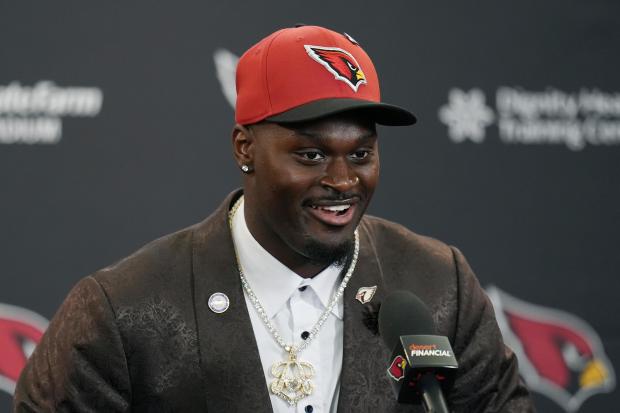
The first round provided some memorable milestones for running backs, with Jeremiyah Love becoming the first top-five back in eight years when the Arizona Cardinals took him third. His Notre Dame teammate Jadarian Price went with the final pick of the round to the Seattle Seahawks.
That marked the sixth time in the common draft era, starting in 1967, when two running backs from the same college were taken in the first round of the same draft. It last happened in 2008 with Arkansas’ Darren McFadden and Felix Jones.
Running backs were mostly an afterthought after that.
The next back off the board came near the end of the third round when the San Francisco 49ers took Indiana’s Kaelon Black 90th, marking the fewest running backs taken in the first three rounds of the common draft.
Only 10 more running backs went on the final day, with the 13 total the fewest taken in any draft.
Tight ends had a banner weekend with 22 picked, the most since 2015, according to Sportradar, as the league’s trend of more multi-tight-end formations put a premium on the position.
The trenches as usual were dominant with teams drafting 51 defensive linemen and 50 offensive linemen. There were 46 defensive backs, 36 wide receivers, 26 linebackers, 10 quarterbacks and three specialists picked.
Ohio State leads the way
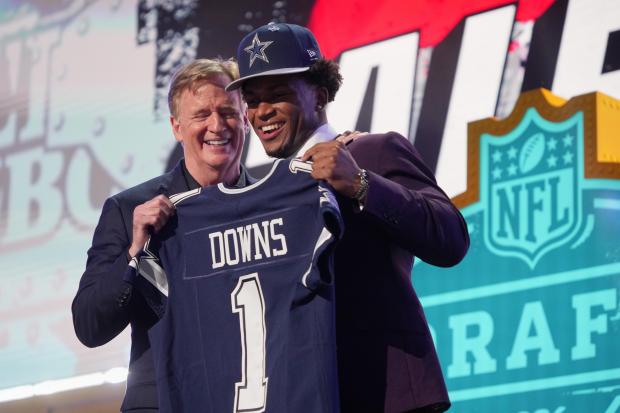
Ohio State had four players picked in the top 11: Carnell Tate, Arvell Reece, Sonny Styles and Caleb Downs. That’s the third-earliest a school has had four players picked.
The only schools to have four players picked quicker were Michigan State with four of the top eight in 1967 and Notre Dame with four of the top 10 in 1946.
‘It all started at Marist’ for local NFL draft prospects Carnell Tate, Jimmy Rolder and Pat Coogan
The Buckeyes didn’t slow down from there with seven more players drafted, giving them the most of any school this year with 11. Alabama and Texas A&M each had 10, followed by Clemson, Miami and Texas Tech with nine apiece.
This also marked the 88th straight draft that both Michigan and USC had a player picked, the longest streaks of any school. Notre Dame has missed only one year (1977) since 1938 of having a player picked in the regular draft but did have running back Al Hunter taken in the supplemental draft that year.
Wisconsin had its streak of at least one player picked each year since 1979 snapped.
Speeding up the draft
The NFL shortened the time between picks in the first round from 10 minutes to eight, cutting the total duration of the round to less than three hours.
The league said the first round took 2 hours, 53 minutes Thursday night, down 36 minutes from last year and 40 minutes less than the average of the previous five drafts.
The duration of the first round has been cut in half since Commissioner Roger Goodell’s first draft in 2007. Teams that year had 15 minutes to make their picks in the opening round, leading to a 6-hour, 8-minute round in 2007.


