
It’s common in national politics for both of our main political parties to conduct studies of what went wrong after they lose big in elections.
The Republicans did it after Mitt Romney lost to Barack Obama in 2012. And the Republican National Committee promptly released the so-called autopsy in March 2013 — just five months after the election — at the National Press Club.
Many of the recommendations in that report, including becoming more inclusive and reaching out to disaffected Hispanic and female voters, fell by the wayside when Donald Trump assumed complete control of the GOP beginning in 2016. But that’s not our focus here.
By releasing the autopsy, the GOP showed first that it was willing to publicly air and confront the reasons behind its defeat and second that it welcomed engaging proactively in a necessary internal debate over the future direction of the party.
The Democratic National Committee ordered up a similar autopsy after Trump convincingly won back the presidency in 2024, shocking appalled Democrats in the process.
Eighteen months later, that report has yet to see the light of day.
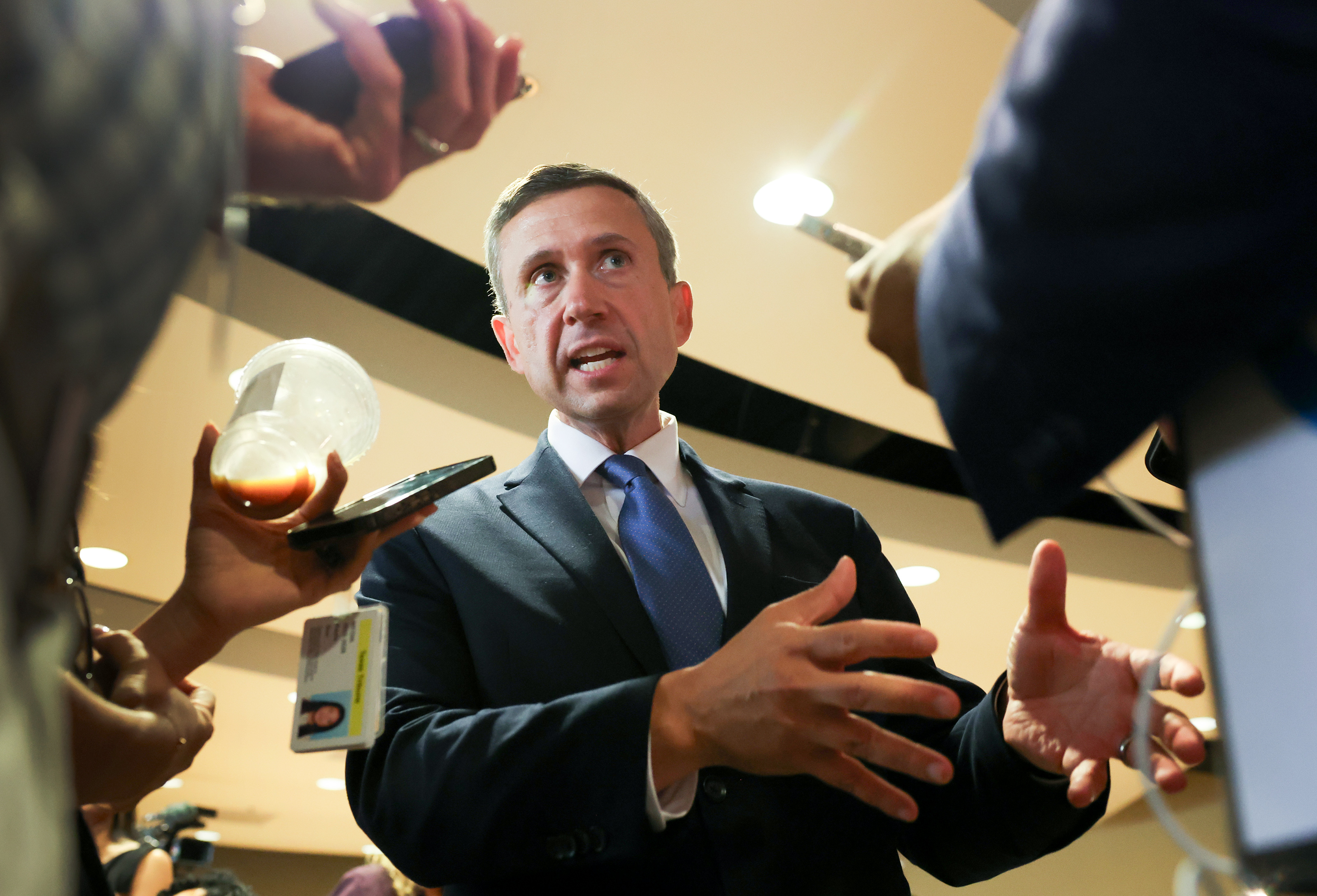
DNC Chair Ken Martin’s refusal to release it now has become a flashpoint within the party. A recent interview Martin gave to Jon Favreau, a former Obama administration staffer and co-host of the “Pod Save America” podcast, helped a simmering debate boil over.
“Why did you spend the money (to do) the report in the first place if you weren’t going to release the full results of it?” Favreau pressured Martin.
Well, yes. Why indeed?
Martin’s response was that “relitigating” what went wrong in 2024 won’t help win the midterms in 2026. What was important, Martin said, was to respond to the lessons learned from that debacle.
What were those lessons? He didn’t say, at least in the interview with Favreau. “Everything mattered,” he said, clearing up absolutely nothing.
Numerous Democratic politicians disagree with Martin and think the postmortem should be made public, including none other than 2024 loser Kamala Harris, who’s eyeing another run in 2028. There’s reporting that Martin’s hold on the job is tenuous.
As well it should be.
The issue isn’t what’s in the report. We would be surprised if there were anything particularly illuminating. Democrats’ shortcomings in 2024 weren’t hard to discern. From Joe Biden’s disastrous decision to run for reelection to a host of far-left positions Harris and others took back in 2020 during the primary election that Biden ultimately won, the party had removed itself from contention for too large a swath of Americans — and not just those in Trump’s MAGA movement.
Optics are the real problem with Martin’s intransigence. People are bound to ask: What is Martin hiding? What’s in the report that must be kept from view?
But beyond the obvious political fumble, the bigger issue is what Martin’s secrecy says about the Democratic Party’s willingness, or lack thereof, to figure out how to appeal to Americans outside its urban and college-town strongholds. As they say in the world of therapy, the first step toward fixing a problem is admitting you have one.
Whether intentional or not, what the tedious cloak-and-dagger saga says to those who aren’t political junkies is that the Dems don’t think they have much of an issue. Nothing, at least, that “better messaging” or “talking to manosphere podcast hosts” won’t fix.
Those who do follow politics closely, of course, are aware that many Democratic Party leaders believe the party needs to adjust its policies, not just its messaging. On social media, the intra-party debate is raging over whether the party needs to move further left, particularly on matters of taxing the rich, or whether it must appeal more to centrists, particularly on social issues successfully weaponized by Republicans to depict Dems as out of touch with mainstream values.
That is an unavoidable internal battle the Democratic Party would do well to conduct in the open.
American voters in the middle — you know, the sorts of people who determine the outcome of national elections — in our view won’t be put off by witnessing a messy debate. And, really, what is there to lose? Public polling consistently has shown the party’s favorability to be in the mid-30s.
Martin apparently thinks that airing such disagreements in the open will harm the party’s midterms prospects. But voters’ choices in November will be overwhelmingly driven by their feelings about Trump, whose own approval ratings are as low as the Democratic Party’s as a brand. Whether or not the 2024 autopsy is made public, those who want more checks on Trump’s power will vote for Democrats because that’s their only practical choice.
We will lay out our views soon on the challenges that lay before the Republicans.
As for the Democrats, we believe the party needs to forge a new identity to better compete in 2028. The current brand is perceived as feckless. And, the party would do well to realize the next presidential election isn’t that long from now, at least in political terms.
So release the autopsy, already.
Submit a letter, of no more than 400 words, to the editor here or email letters@chicagotribune.com.