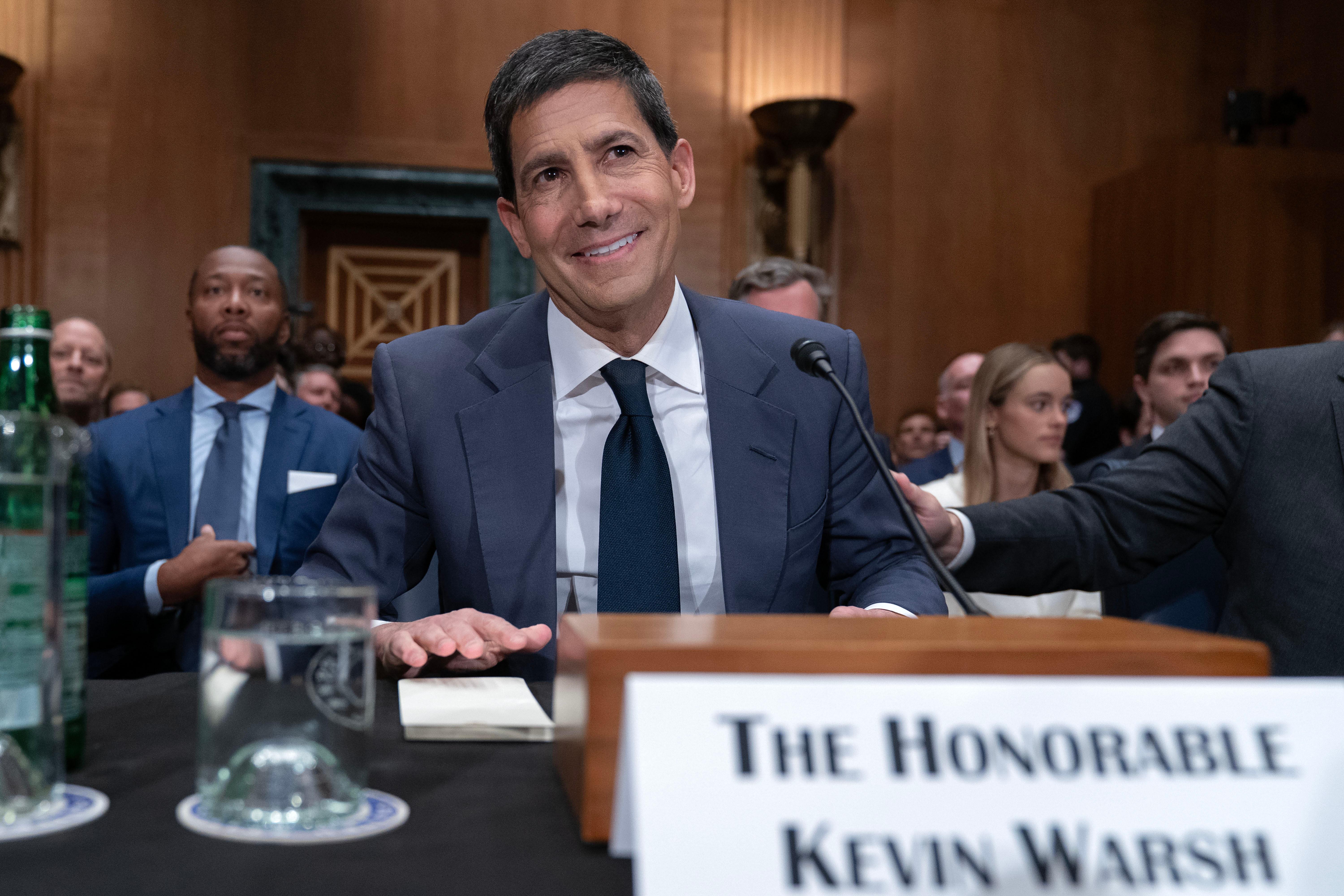
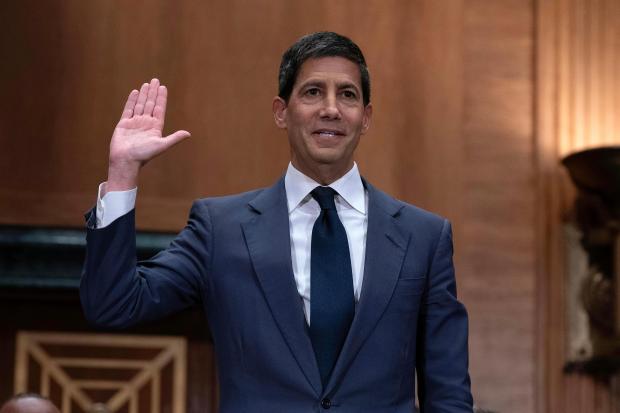
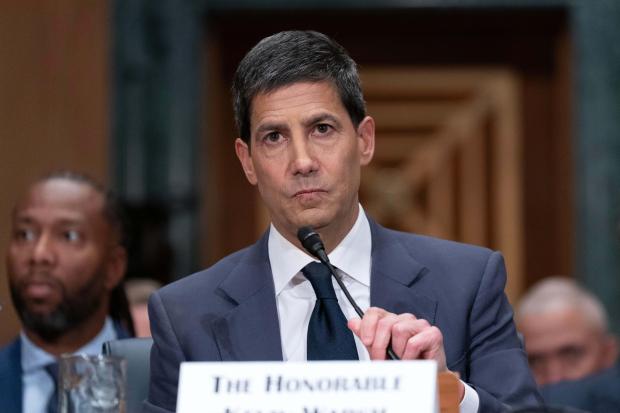
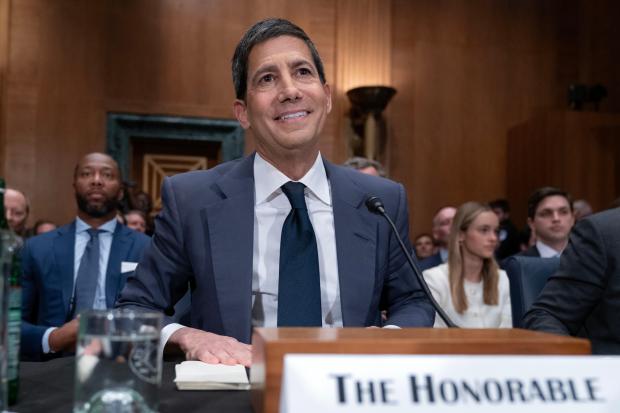
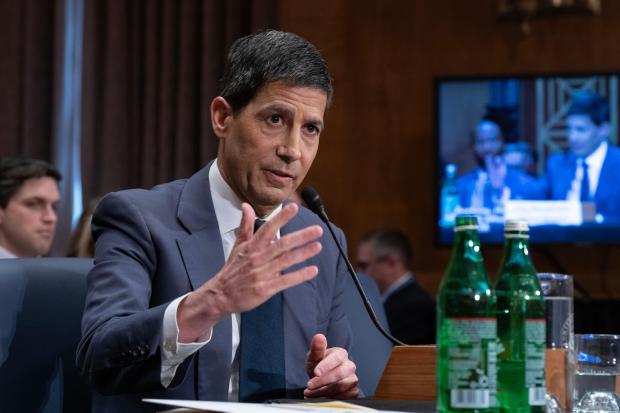

WASHINGTON — The Senate confirmed President Donald Trump’s nominee to lead the Federal Reserve, Kevin Warsh, bringing new leadership to the world’s most powerful central bank at a fraught moment for the global economy.
Warsh was confirmed Wednesday in a largely party-line vote. His nomination had been thrown into doubt in recent months after Republican Sen. Thom Tillis of North Carolina said he would block the nomination while the Justice Department investigated Fed Chair Jerome Powell. The Powell probe was dropped in April, clearing the way for the Senate to confirm Warsh.
Senate Majority Leader John Thune, R-S.D., urged colleagues to support Warsh during a floor speech Wednesday morning, saying it’s critical that a Fed chair “understand not only the macro” but also “appreciate the microeconomy: and that’s the hardworking Americans, their jobs and their livelihoods.”
“Kevin Warsh is just such a person,” Thune said.
Warsh, 56, a former top Fed official, will become chair at an unusually difficult time for the independent agency.
Inflation has topped the Fed’s 2% target for five years and is now rising faster because of spiking gas prices. The Fed’s interest rate-setting committee is divided and saw the most dissenting votes in more than three decades last month. And Powell, after years of personal attacks from the Republican president and an unprecedented legal investigation by the Justice Department, plans to stay on the Fed’s board even after his term as chair ends, potentially creating a competing power center.
Trump has demanded change at the Federal Reserve
The Fed has faced numerous threats to its independence from Trump, who has repeatedly attacked Powell for not cutting interest rates. Trump also sought to fire Fed governor Lisa Cook and launched an investigation into brief Senate testimony by Powell on a building renovation.
Kevin Hassett, director of the White House’s National Economic Council, said in a Fox News interview on Sunday that he believes the markets are relieved that Warsh “is going to help lower interest rates over time.”
“Obviously, data driven,” said Hassett. “I’m not putting any pressure on Kevin Warsh.”
In December, Trump said on his social media platform that he wanted a Fed chair who would cut interest rates when the stock market rose — the opposite of what traditional economics would prescribe — and added, “Anyone that disagrees with me will never be the Fed chairman!”
Trump’s comments have fueled concerns over whether Warsh will set rates based on economic conditions or seek to cut rates to appease Trump, even if doing so could worsen inflation. At Warsh’s confirmation hearing last month, Sen. Elizabeth Warren, a Democrat from Massachusetts, derided him as a “sock puppet” for Trump. Warsh declined to say that Democrat Joe Biden had won the 2020 election against Trump, who has falsely claimed that voter fraud cost him reelection.
Still, Warsh denied at the hearing that Trump had pressured him to reduce the Fed’s key rate.
“The president never once asked me to commit to any particular interest rate decision, period,” Warsh said then. “Nor would I ever agree to do so if he had. … I will be an independent actor if confirmed as chair of the Federal Reserve.”
A critic of the Fed’s leadership in the past
Warsh has been highly critical of the Fed’s recent track record, particularly the inflation spike in 2021-22, the worst in four decades, and has called for “regime change.” Yet he has provided only broad outlines of what that change would involve.
He has called for limiting the Fed’s communications, which would be a sharp shift after decades of increasing transparency. He has argued that some of its communications tools, such as quarterly forecasts of where its key rate may head, have made it harder for officials to switch gears.
Senate Democrats have also condemned Warsh for not fully divulging the details of his extensive wealth, which disclosures show amounts to at least $100 million. His investments include stakes in Polymarket and SpaceX, but he hasn’t revealed how large those holdings are. He promised to sell all such assets within 90 days of being sworn in.
“He will be the wealthiest Fed chair in history, but he refuses to provide transparency to the American people about who he is entangled with,” Warren said.
Warsh faces difficult economic conditions
The Fed is still grappling with how to respond to the 50% spike in gas prices from the Iran war. The increase has boosted inflation, which reached 3.8% in April.
The Fed is tasked by Congress with keeping prices stable, which it seeks to do by raising its short-term rate to make borrowing and spending more expensive, cooling growth and inflation.
The Fed typically looks past temporary price increases that stem from supply disruptions, such as the war’s cutoff of oil through the Strait of Hormuz, because those prices typically level off — or even fall back down — once the supply is restored.
But the Fed also followed that approach after the coronavirus pandemic snarled global supply chains for goods, lifting prices for things like cars, furniture and electronics. Inflation turned out to last longer than expected, and Powell and other Fed officials have acknowledged they waited too long to raise rates. Inflation surged to 9.1% by June 2022.
The Fed’s rate-setting committee has kept rates unchanged for three straight meetings as it evaluates the impact of the gas price spike. At its most recent meeting last month, three members of the committee objected to language that suggested its next move would be a rate cut. They preferred more neutral language that would allow for a hike. Many Fed watchers saw those dissents as a warning shot to Warsh that he won’t be able to easily engineer rate reductions.
A fourth member of the 12-member committee, Stephen Miran, dissented in favor of a rate cut, as he has at every meeting since Trump appointed him to the Fed’s board last September. Miran is serving until a replacement is named, and Warsh will take his spot.
Powell, meanwhile, said at a news conference April 29 that he would remain as a Fed governor until the Justice Department closes its investigation into the Fed’s building project, the first time a chair may stay on the board for an extended period since 1948. His term as a governor lasts until January 2028.
U.S. Attorney Jeanine Pirro has dropped the government’s probe, but she has said it could be reopened if the Fed’s inspector general, which has looked into the renovation project since last July, finds evidence of criminal activity. ___