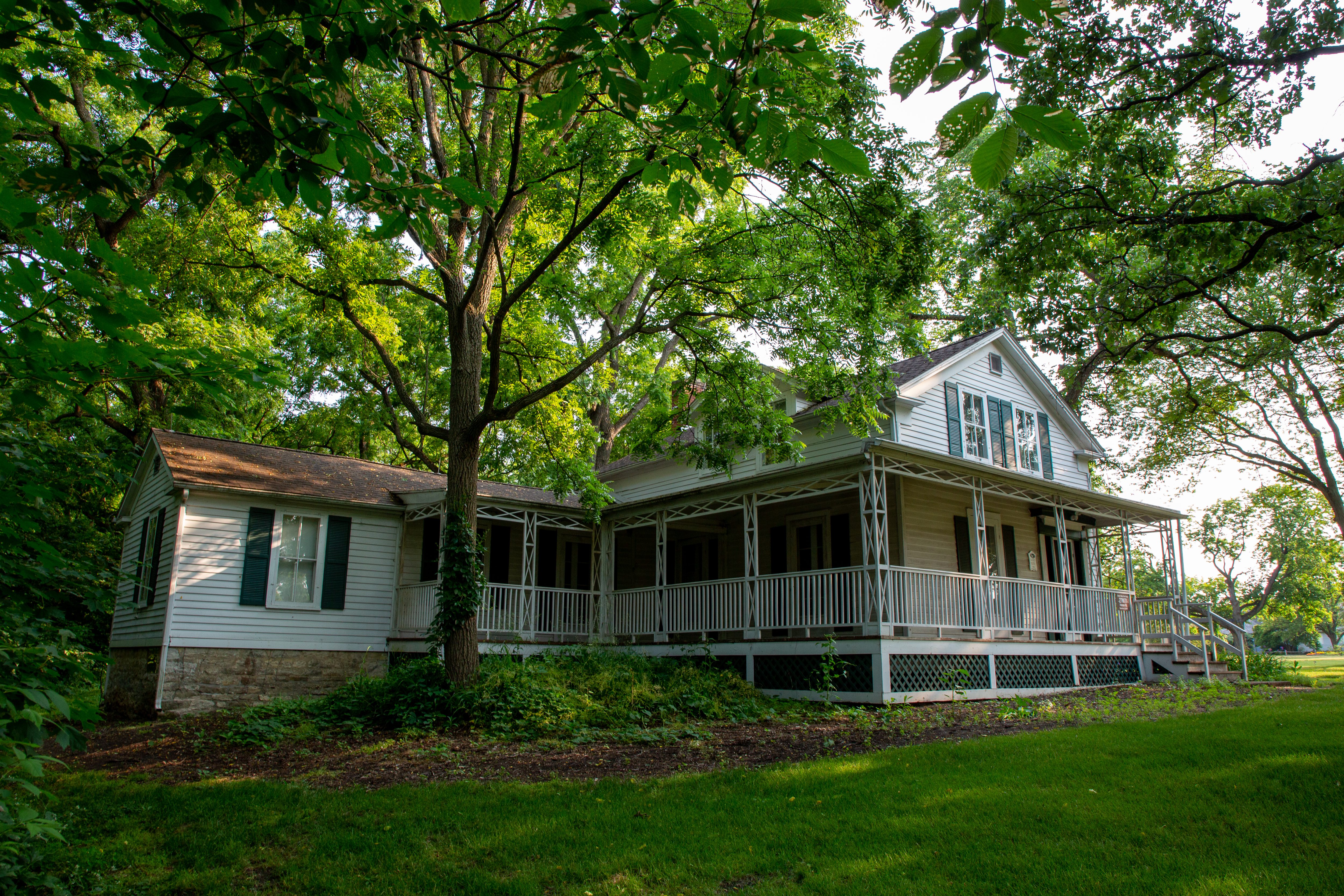

A proposal that would move the historic Oak Cottage from a Naperville forest preserve to an undisclosed site for use as a private home is moving forward.
On Tuesday, the Forest Preserve District of DuPage County Board directed district staff to set up the terms for the relocation and the home’s restoration with Naperville resident James Privitt, who proposed the move as a way of ensuring the mid-19th century Greek Revival-style farmhouse in the Greene Valley Forest Preserve is preserved.
The terms of the deal would require board approval before the plan is finalized.
Privitt is considering two possible locations, but both in DuPage County and about two miles away from Oak Cottage’s current home at Greene and Hobbs roads, Jessica Ortega, manager of strategic plans and initiatives for the district, said at a planning meeting last week.
Privitt would be given the house and has requested some financial help from the district to cover relocation costs.
“I think we need to give this a chance,” Commissioner Barbara O’Meara said at Tuesday’s meeting. “I think that it’s important. We’ve got a viable plan for maybe the first time in 40 years for usage of this building.”
But preservationists questioned the idea of moving the house away from its original location and adjoining barn, saying it removes it from its original “context.”
Oak Cottage was built in 1850 by William B. Greene, a DuPage County settler who helped lay the early groundwork for the region’s economic development. The Greene family donated the house and surrounding land to the forest preserve district in 1970 with an agreement that the family members living there be allowed to remain until their deaths.
Vacant since 1983, preservation organization Landmarks Illinois in 2023 called the cottage one of the most endangered historic places in the state.
Last year, the district put out a call seeking ideas for reuse and rehabilitation of the historic building. In October 2025, two proposals were received, including one from Privitt, who suggested that cottage be moved to another site and turned into a home in which he and his family would live. Privitt was asked to submit his idea as a formal proposal.
In an interview with the Naperville Sun this week, Privitt declined to say what sites he was considering for the home relocation but said both are in visibly public and historically relevant locations.
“The two lots are within areas that some of the Greene family would have owned (or lived in), so I think it would be very within their historical context to be there,” he said.
As part of his proposal, Privitt intends to “repair and restore the home using historically appropriate materials and methods, without altering its design,” he said.
That includes maintaining the exterior’s green-and-white color scheme, restorating the roof and windows, and reinstallating of original site features, like a hitching post and carriage steps.
In addition to the restoring the building, Privitt wants to plant at least 10 oak trees to reflect the Oak Cottage’s original setting.
Privitt said he also hopes to work with with the Illinois State Historic Preservation Office to have Oak Cottage added to the National Register of Historic Places and to obtain an Illinois Historic State Marker and to install a plaque recognizing the structure and its history.
He estimates he will be spending anywhere from $885,000 to more than $1 million on the work, and is asking the district to contribute between $290,000 to $370,000 to assist with relocation costs in addition to the donation of oak trees.
“Last week it was brought up that Mr. Privitt is looking for financial help on this, and (seeking) kind of a lot of money in my opinion,” Commissioner Linda Painter said. “I don’t want him and others to think that today we’re approving a monetary thing. This is just to explore more details.”
Not everyone is on board with Privitt’s proposal. Some preservationists argued that while the move might save Oak Cottage, it removes the building from its historical context and separates it from the Greene Farm Barn, another historic building preserving the region’s agricultural history.
“Oak Cottage and the Greene Barn were never meant to be separated. They were designed, built and lived in as a unified farmstead,” said Philip Buchanan, a member of Naperville Preservation Inc. “The barn tells the story of agricultural, but the cottage tells the story of the people who lived, worked and sustained agricultural life. Removing one from the other breaks the narrative.”
Privitt, who has experience with preservation work and helped relocate a landmarked house in Melissa, Texas, said he explored keeping Oak Cottage at its current location but determined it was not feasible due to a number of legal and financial concerns.
“This is really the only other thing we can do and I think that if we do it right, it can still be successful,” Privitt said.
Forest Preserve Board Commissioner Jeff Gahris, who previously expressed concern over Privitt’s idea, made a similar point at Tuesday’s meeting.
“It does hurt the context. I’m concerned about that,” Gahris said. “But if Mr. Privitt can pull this off and have it so it’s accessible to the public so we can try to restore some of the context, that helps me. So, I’m willing to say yes today just to explore it more deeply.”
cstein@chicagotribune.com