I just asked AI what the reading situation looks like this summer. I asked, knowing very well what it looks like, but I was curious what it would say. AI said that this summer, reading will resemble “flexible, engaging, often digital-forward activities designed to build skills.” Did it mistake my prompt for the ghosts of old school reading lists? It left out the part about naughty nannies and South Side popes and Comiskey Park and feuding Chicago neighbors and cults and Richard Pryor.
Also, po’ boys and gossip and volcanoes and, yes, a Frankenstein AI run amok.
Summer reading, every summer, this summer, is what you want it to be:
Chicago Fire
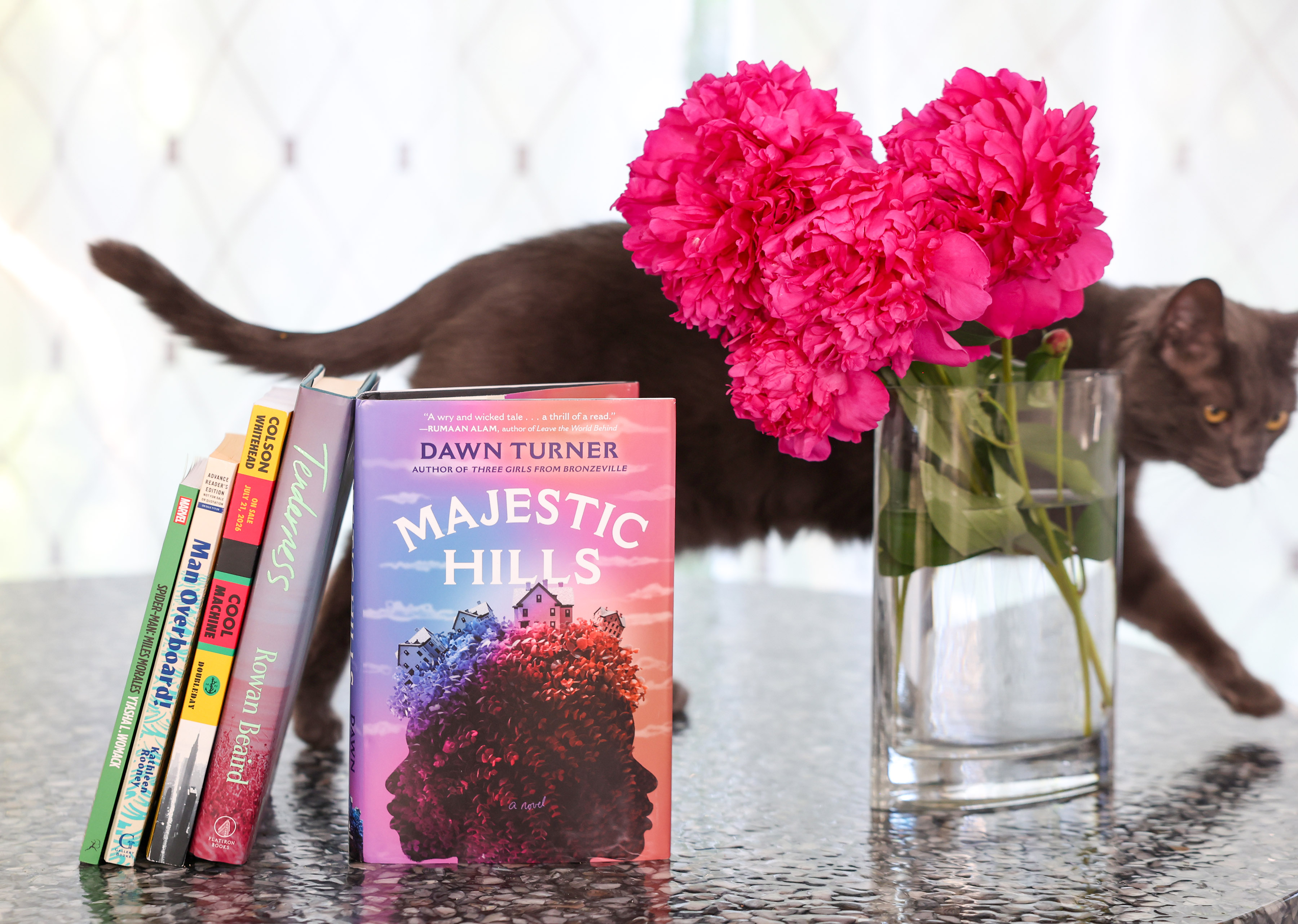
It’s bittersweet to love a perfect beach read in April (as I did), but at least you’ll find these as intended: “Majestic Hills” (Aug. 4), by former Tribune writer Dawn Turner, follows a Black bougie Chicago couple to a new home in a white south suburb, tracing how the brittle politeness between new neighbors quickly curdles into suspicion. Don’t judge “Tenderness” (July 21) by its corny cover (or squishy title). Chicago author Rowan Beaird’s excellent follow-up to her 2024 debut, “The Divorcées,” achieves a low, ominous hum throughout its tale of an island wedding off the Virginia coast, where members of the bride’s (former?) cult could be planning an intervention.

Elevated Thrills
Everything about Teddy Wayne’s “The Au Pair” (June 30) — a beautiful Norwegian nanny, a death in a hot tub, a romantic dupe — screams dime store, almost satiric, except that Wayne is not upending noir so much as paying a sneaky contemporary homage. You’ll toss it across the room in maddening disbelief, then quickly pick it up and keep reading. I’ve been somewhat on the fence about the Harlem Trilogy from Colson Whitehead, the two-time Pulitzer winner, but it gathers into a cohesive crime series about Black New York across generations with the finale, “Cool Machine” (July 21). This one runs up to the real-estate boom of the mid-’80s, starring visionary/thief/businessman Ray Carney.
A New You
Chicago’s Kathleen Rooney — maybe the city’s least appreciated great writer — has a hit here: “Man Overboard!” (July 7) begins in parody (drunk guy falls off cruise ship) only to land in self-realization (drunk guy floats for days, determined to live). Breezy and touching. As is Ann Patchett’s “Whistler,” the tender tale of a short, profound friendship rekindled between a woman and her long-lost stepfather. Recontextualizing personal history also drives “The Things We Never Say” by Elizabeth Strout: A man is so lonely that he decides to kill himself, until, at 57, he learns his family is a lie. As in her Pulitzer-winning “Olive Kitteridge,” the language is plain, and the effect is riveting.
Good Sports
“The First All-Star Game: Babe Ruth, FDR and America at the Crossroads,” by Rolling Stone’s Randall Sullivan, is only missing Chicago in that title, and this is a local story, how the attempted assassination of Franklin D. Roosevelt (and murder of Mayor Anton Cermak) led a Tribune reporter (Arch Ward) to propose a best-of baseball exhibition, the centerpiece of the 1933 World’s Fair (and, if it worked, a first step to Chicago shedding its gangland reputation). Just as fun to read: “How To Watch Soccer like a Genius: What Architects, Stuntwomen, Paleoanthropologists and Computer Scientists Reveal About the World’s Game.” Nick Greene pulls at every (seemingly unexpected) thread (podiatry, Orson Welles, lawn care). A “huh…” every page.
Local Cozy
One of the more cuddly, purely enjoyable concoctions from literary Chicago these days is crime-solving South Side chef Savvy Summers, who returns (July 21) in Chicago writer Sandra Jackson-Opoku’s “Savvy Summers and the Po’boy Perils.” Nothing heavy here — the plot pauses periodically to luxuriously describe rich, homey Southern recipes — but the set-up is sharp and funny: a woman notorious for stealing food from an employee refrigerator turns up dead. As for the actual South: “The Calamity Club,” the return of Kathryn Stockett, 17 years after her bestselling debut, “The Help.” Despite being 632 pages, it is as speedy as Savvy, all plot, no literary pretense, about a makeshift family in Depression-era Mississippi — plus snidely villains, orphans, adultery!
Chi-Town Celebs
Did you know that when the great gospel singer Mahalia Jackson died in 1972, 50,000 Chicagoans lined up for her funeral — in January? “Mahalia Jackson, Moving On Up a Little Higher: The Story of an American Civil Rights Pioneer” (Aug. 18) by Timothy Tyson and Mary Williams, is a brisk, somewhat stiff history of one of the most consequential Chicago arrivals during the Great Migration, giving thoughtful weight to the harrowing political world of a Black performer in Jim Crow America. It’s too early for the definitive account of Robert Prevost, but religion writer Elise Ann Allen’s “Pope Leo XIV,” drawing on conversations with family and colleagues, as well as her time with the Pope, is a handy sketch of the issues and places that shaped his rise.
Road-Tripping
Looking to mark the nation’s 250th anniversary thoughtfully and sincerely, without feeling lectured? “This Land is Your Land: A Road Trip Through U.S. History,” by Beverly Gage, Yale historian and Pulitzer-winner for her 2022 J. Edgar Hoover biography, takes its agreeable title to heart. Gage went to 300 sites across the country to revisit historic moments and places (including Haymarket and Pullman) and consider how we memorialize history in our museums, national parks, gift shops. It’s a compelling argument against the idea that Americans don’t share a common story. Isaac Fitzgerald, of the fine 2022 memoir “Dirtbag, Massachusetts,” is back with “American Rambler: Walking the Trail of Johnny Appleseed,” and it’s nominally what it promises, an amble into Ohio and Indiana and what remains of John Chapman’s legacy, which, Fitzgerald learns, is less compelling than the working-class Americans he meets.
Truer Than Fiction
Paul Tremblay, possibly our most unsung, purely enjoyable genre novelist (“The Cabin at the End of the World”), returns with “Dead But Dreaming of Electric Sheep” (June 30), an audacious mash of “Weekend at Bernie’s” and every tech fear you’re harboring: A young gamer is asked to chaperone a clinically dead man, implanted with an AI brain, across America, for mysterious reasons. Queasy fun. Well, this took too long: The perfectly-titled “Rasputin Swims the Potomac” (June 9) returns Ben Fountain, of the Bush II-era satire “Billy Lynn’s Long Halftime Walk,” to his sweet spot, for a satire of Trump, featuring a pandemic, wrestlers and a writer named Clarence Thomas, who remarks: “The Rodney King, seeing-is-believing days are long gone.”
Buzz Buzz Buzz
There’s a moment in Lena Dunham’s new memoir, “Famesick,” in which she sets herself on fire, accidentally, then worries over an upcoming Vogue portrait. She’s never made it easy to love her, yet, we’re reminded, she’s paradoxically relatable, sparing with Adam Driver, name-dropping Taylor Swift, then fending off opioids, OCD and more ailments. “Ghost Stories” is a more grounded memoir about pain, rooted in a touching remembrance of Siri Hustvedt for her husband, the novelist Paul Auster, who died in 2024. She tells the story of their relationship the way we hope to be remembered, in short, elegant memories, stray images, faint wisps of things said. Which, incidentally, is exactly what we get from “Too L.A.: Letters Never Sent (But Some Were)” (June 23), but also what we want from Eve Babitz, whose posthumous revival continues with this snapshot of the early 1970s and the art world and her fabulous social circles.
Wake-Up Calls
It’s hard to imagine a more urgent summer read than “The Rise and Fall of the Artificial State” (Aug. 25) by recent Pulitzer winner Jill Lepore, who reaches into history to show how a world upended by AI — ChatGPT is her Sputnik, she writes — is more of a construct than an inevitable “government without consent, government even without humans.” More breezily alarming: “Cloudthief” (July 14), a bit of clever tech and climate reporting by Nathaniel Rich — best known as a climate journalist — reshaped as a noir heist, about a plot to steal the world’s secrets from a giant data farm.

Sometimes a Fantasy
And sometimes the world as is. Melissa Albert, the popular young-adult author, flips over a speculative-fiction log to locate a squirming legacy of neglect. “The Children” (June 2), her first adult novel, follows the offspring of a famous fantasy writer as the secrets of their late mother shape their futures. Ray Nayler, my vote for most routinely intriguing sci-fi writer today, lands a personal best with “Palaces of the Crow,” set in a World War II no-man’s-land where two teenagers sidestep the carnage with the help of super-intelligent crows. If you’re less interested in surprise, “The Midnight Train,” Matt Haig’s follow-up to his bestselling “The Midnight Library,” is a sweet tale of an old man about to die given a chance to travel back through his lifetime.
America the New
During America 250 celebrations, if you expect to be wondering what the founding fathers would have thought… H. W. Brands’ “American Patriarch: The Life of George Washington” doesn’t reimagine the first president so much as build on acclaimed biographies (Ron Chernow, Joseph Ellis), swapping out Washington’s modesty for a quiet awareness he was creating precedent — indeed, electoral delegates, uncertain what powers to grant, decided to trust him. Of course there were mistakes. “Thomas Jefferson Survives: American Independence in His Time and Ours” (June 9), by Peter Onuf and Francis Cogliano, uses our shifting values, and citizenship, as the heart of this look at Jefferson’s vision for the country, its people and why he came to feel this way. Our never-ending ideological battles to claim or reject him, the authors argue, “miss the point”: Jefferson wanted the future to correct the past.
America the Old
It wouldn’t be an honest semiquincentennial if it were just a party. Certainly Eddie Glaude Jr. argues so, convincingly, in “America, U.S.A: How Race Shadows the Nation’s Anniversaries,” less a revisionist history than a stirring case for coming to terms with the supposed values of the nation, even as Americans shy from a common good or facing their darkest impulses: “What happens to a country that must believe a lie because of a deep-seat fear that the truth will rip it apart?” Good example: “They Stole a City: Wilmington’s White Supremacist Coup and the Families Who Live with Its Legacy” (July 14), a swing for the fences by Wilmington-native Lauren Collins of the New Yorker, who follows four families across 125 years, each touched by a 1898 massacre in the Reconstruction-era multiethnic community, predating the Tulsa Massacre by decades. The closer we get to realizing our promise of equality, she writes, “the fiercer the opposition” from those who prefer democracy “partial and exclusive.”
America the Violent
“The Housewives Underground: The Untold Story of the Women Who Made the JFK Assassination Our Most Enduring Mystery” (June 23), by Kaitlyn Tiffany of The Atlantic, works an absorbing, unexpected trick: It finds a fresh view of conspiracy theorists, tracing early speculation to a trio of women, acting independently, with surprising lives themselves, who begat the legions of Warren Commission critics. James Lasdun, whose terrific crime reporting is an occasional highlight of the New Yorker, takes similarly thoughtful eye to tabloid chum: “The Family Man: Blood and Betrayal in the House of Murdaugh” has an “In Cold Blood” austerity, patiently inquiring why Alex Murdaugh, a scion of old South Carolina wealth, was convicted of murdering his family in 2021 (only to have the conviction overturned in May, weeks before publication).

Windswept Prose
The one problem with “John of John,” from Douglas Stuart, the 2020 Booker winner for “Shuggie Bain,” is that this is really an autumn novel, made for threatening skies, not warm fields and bees and such. Otherwise, a jewel, his best, set off the Scottish coast, about an art student returning home to a sheep-shearing father, to face a combustible family. Sounds tedious, yes. But Stuart is so natural a storyteller, you don’t know where it’s headed, toward earnest inspiration or tragedy. Great book. Speaking of autumn: “Land,” by Maggie O’Farrell, is so damp, so evocative of coastal Ireland, you taste the salt air. Another novel of historic resilience from the author of “Hamnet,” it tells the story of a father and son charting Ireland after the potato famine.
Ink-Stained Wretches
“Trudeau & Doonesbury: A Biography,” by Joshua Kendall, is a long-needed cultural history, the story of how a comic strip influenced political life, and vice versa, reiterating the case that Garry Trudeau was a public servant of the highest order, creating serious journalism. (Plus, it’s a handsome book, full of illustrative strips.) Jump from this to “Are They Dead Yet: The Art of the Obit” (Aug. 11), a charmingly digressive history, part-time how-to and all-around appreciation of newspaper death notices, from a master of the form, the New York Times’s Sam Roberts. Both are reminders of the importance of the news often missing nowadays.
Brief, Powerful
Someday, Ali Smith will have a Nobel Prize; in the meantime, this Scottish writer, focused on how we use words to obscure, returns with “Glyph,” which, like many of her novels, reads like metaphor, but with funny, vivid characters. Here, a teenager tells of a horse blinded in WWI, which resonates with her fascist present. “Etna” (Aug. 4) by Paul Yoon is another poignant animal story, about a military dog making his way home after war, Odysseus-ish. Again, what sounds pretentious is replaced with a story on the importance of storytelling itself, as a way to resist cruelty and recognize hope.
Funny Pages
I approached “Something We Said: Richard Pryor, a Notorious Word and Me,” by Elizabeth Stordeur Pryor, with hesitation. He had seven kids — was this another memoir about proximity to greatness? Nope. Elizabeth, a Smith College history professor, spent years lecturing on race, never mentioning her father, and thoughtful restraint animates this touching mix of bittersweet memory and how her relationship with her dad’s use of language haunted the rest of her life. A similar delight with words fills the ominous, hilarious stories in Julie Schumacher’s “Patient, Female,” which take the shape of a class syllabus, Midwestern malaise and board game instructions. (“Three remaining players stand together by her open grave.”) Almost as surprising: “Thrilling Tales of Modern Men” (June 23), the first story collection by writer-actor Danny McBride, of “The Righteous Gemstones.” Turns out, his talent for blustery male morons translates smartly to literary fiction about magicians and manifestos and “lame-ass” dinner parties.
Toon Time
A mental health memoir might not sound like summer reading, but cartoonist Gemma Correll’s extremely funny “Anxietyland” softens (yes) the stress of staring at a huge book about panic attacks, perhaps because it’s a graphic novel full of charmingly adorable squiggles, perhaps because the free falls of an amusement park make an ideal metaphor — the Worry-Go-Round, the Control Freak Show, the Parade of Therapists… Shifting gears: “Spider-Man: Miles Morales, an Exploration” (June 25) is a thin, but ambitious and resonant, cultural consideration of Marvel’s best addition in years, the Black and Latinx remaking of Peter Parker. By Chicago’s Ytasha Womack.
Boo
Hermosa’s Cynthia Pelayo continues her march with “It Came from Neverland” (June 9), her first non-Chicago novel, which was an inspired decision: We find Wendy Darling in London, now a teacher by day, WWI nurse by night, who begins to suspect something we’ve all known — Peter Pan is a sociopath. Think Disney meets “It.” Speaking of Stephen King: Caroline Bicks, Stephen King Chair in Literature at the University of Maine, attempts the first major book-length study of the horror master. “Monsters in the Archives: My Year of Fear with Stephen King” focuses on only five books (and chats with the man himself), but it’ll send you racing to your old paperbacks.
Boogie Wonderland
I’m a sucker for a good music history, and here’s two: “Mighty Real: A History of LGBTQ Music, 1969-2000,” spanning Lou Reed to Ru Paul, is critic Barry Walters’ survey of not only gay artists but how gay audiences rallied around certain performers, giving room to fresh perspectives on Dolly Parton, R.E.M. and many others. I don’t know if you can call Bob Spitz’s “The Rolling Stones” fresh so much as vast (not unlike his recent Led Zeppelin bio), holding a bit of everything, a coherent portrait of chaos, and ridiculousness. Sample anecdote: After Charlie Watts yelled “Don’t ever call me your drummer!” and punched Mick Jagger, “Keith Richards watched the slow-motion reaction as Mick fell backward onto a platter of smoked salmon.”

Best of 2026 (So Far)
What a strange thing. A smart, fizzy novel about how right life can be. In Tuscany! With olive groves! “Villa Coco” (June 9), by Andrew Sean Greer, of the Pulitzer-winning “Less,” tells the story of a young archivist and a chaotic baroness. Sounds mundane, but its easygoing warmth gathers into a smile of a coming-of-age tale. Not nearly as sunny, but even better, AND set in Italy: “Beginning Middle End” (July 28), by Valeria Luiselli, whose “Lost Children Archive” was a highlight of 2019. A mother and daughter rework their lives against a volcanic backdrop, amid the Sicilians and their ancient history. After the last page, you sit there a while. Same with my favorite of the year: “Country People” (July 14), Daniel Mason’s follow-up to “North Woods,” his eons-spanning 2023 novel. This one, which never travels so far in space or time, sticking to rural Vermont, has the bright ease of visiting a good old friend. A family moves to a small town, meets snowflake photographers, hollow-Earth truthers and tree surgeons, and finds a home. It’s one of those books where nothing happens, and yet everything does.
cborrelli@chicagotribune.com