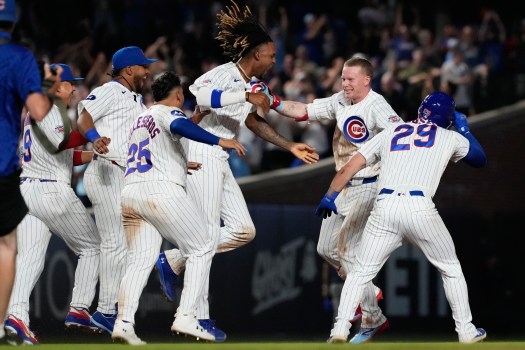

A sense of cautious optimism filled Wrigley Field on Friday after the Chicago Cubs’ ninth-inning rally the night before had snapped an eight-game losing streak at home.
They had won by collecting hit after hit — six total — with runners in scoring position, a remarkable feat, considering they hit .168 in those situations in their previous 22 games, the second-worst mark in the majors.
“Again, it’s one baseball game, but given how we’ve been playing, I think everyone hopes that it kind of relaxes guys a little bit and let’s just go play,” Cubs president of baseball operations Jed Hoyer said before Friday’s series opener against the San Francisco Giants.
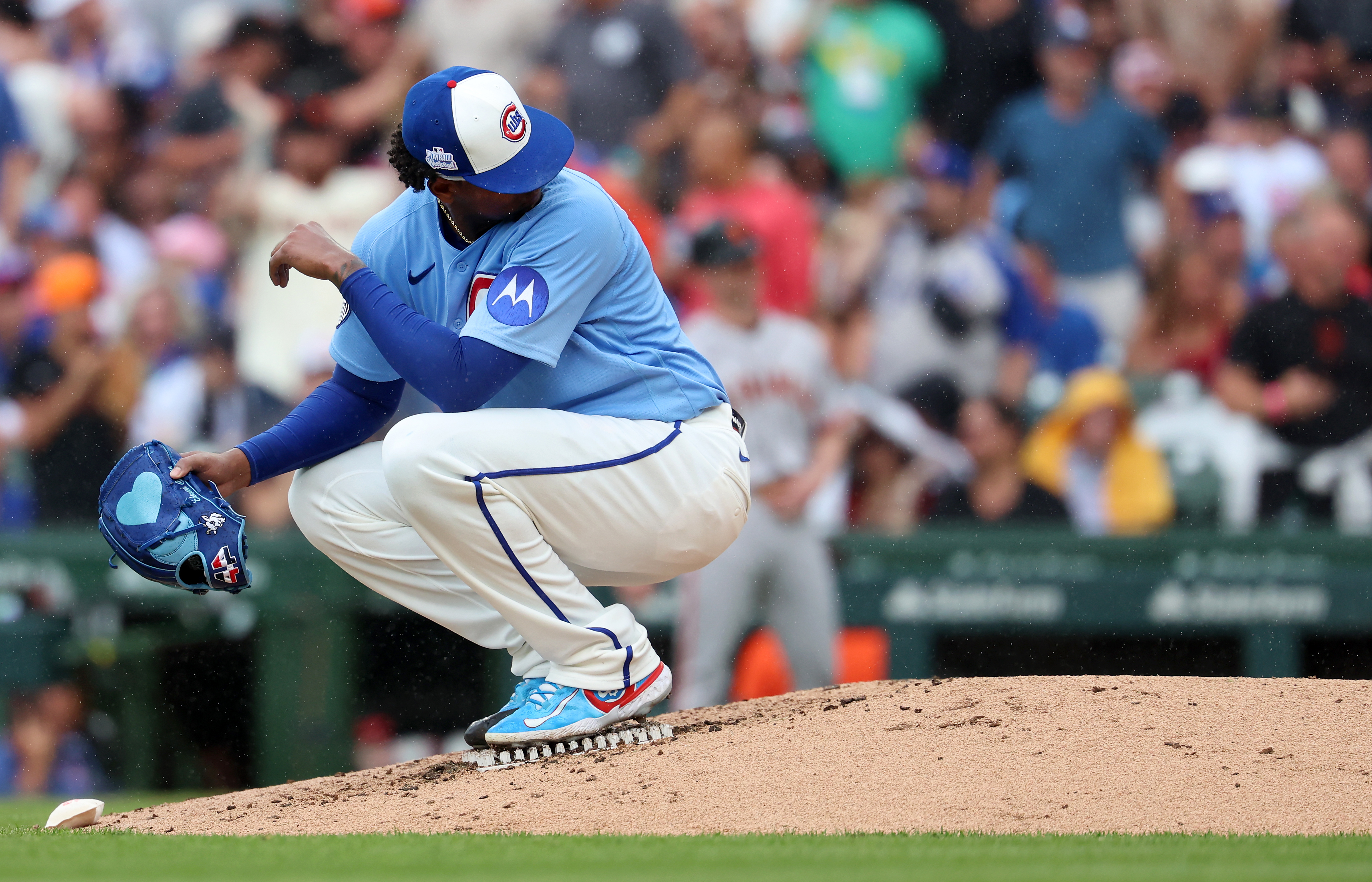
It took four batters for that momentum to begin deflating. Three-and-a-half innings in, and that positivity was completely wiped out. The Giants’ lineup smothered the Cubs’ pitchers, hitting seven home runs and scoring the first 16 runs of the game en route to an 18-3 walloping at Wrigley Field. Friday’s starter, Edward Cabrera, allowed three of the seven long balls and was met with boos from the 39,060 fans at Wrigley Field as he walked off the mound in the fourth inning.
“For me, personally, it bothers me,” Cabrera said. “I believe I’m a man who loves to compete. I don’t like to lose, but sometimes things happen in the game that are costly. I’m a person who doesn’t like to lose. It’s not in me to lose.”
The Cubs hoped Thursday’s win would be the start of a turnaround that is needed following an abysmal 5-17 stretch, which came after a 20-3 salvo that included a pair of 10-game winning streaks. Friday was the start of a 12-game stretch against the Giants and Colorado Rockies, the two bottom teams in the National League entering Friday, who were a combined 28 games under .500.

“You can’t struggle forever, and we need to get back to playing well,” Hoyer said. “Yes, I think that’s how you look at the schedule a little bit, but it’s really about us and how we’re playing, and I know if we’re playing well, any part of the schedule is doable. We haven’t been playing well and that has to change.”
Couple the favorable schedule with the return of Cabrera — he was activated on Friday as right-hander Tyler Ferguson was optioned to Triple-A Iowa — and a potential comeback for opening day starter Matthew Boyd (left meniscus) in the coming days, and things were primed for the Cubs to recapture their early-season form. Instead, they fell flat in a major way.
It still could be a spark for the Cubs, but Friday’s loss was emblematic of what has plagued them since their last 10-game winning streak was snapped on May 10.
Cubs’ starting pitchers have a 6.35 ERA since then, the second-worst mark in the majors in that time. Cabrera’s struggles, which pestered him before a blister landed him on the injured list, continued Friday and threw more question marks into the rotation.
Willy Adames hit a two-out, two-run home run in the top of the first inning on a 100 mph four-seam fastball to stake the Giants to a quick lead. The wheels completely fell off for Cabrera in the fourth inning. The 28-year-old allowed a grand slam to Matt Chapman, followed by a two-run blast to Casey Schmitt.
“The stuff, I thought, was probably ticked up from kind of where we left it before going on the injured list,” Cubs manager Craig Counsell said of Cabrera. “He just made some bad pitches, and they put ’em in the seats, essentially.
“There was the swing-and-miss, which was good, but too many pitches in bad spots at the wrong time, for sure, too.”
Chicago baseball report: Ian Happ’s ‘special’ milestone — and White Sox options for the No. 1 pick
Cabrera finished the outing by allowing eight runs on eight hits in 3 2/3 innings. Since pitching 11 2/3 scoreless innings in his first two starts, Cabrera has allowed a run in each of his last nine starts, posting a 6.26 ERA. His 11 home runs allowed this season are tied for the 13th-most among pitchers. His rotation mates Jameson Taillon (20) and Shota Imanaga (17) have given up the most in the majors.
“I think that we have one of the best, if not the best, defense in the league, but we can’t catch balls over the fence,” Hoyer said. “You have to have the ball in play to be able to have our defense make a difference. The home run ball — teams are scoring quickly against us in those situations, and that makes it really difficult, especially when we’re also not slugging in the same way as we just talked about.”
The offense scored only after the game was well in hand, and they finished 1-for-6 with runners in scoring position. The lineup on Friday was a shell of the ninth-inning offense that looked pesky and deep the night prior.
Hoyer knows that for the Cubs to create more nights like Thursday, improvements must come from the roster that’s in the Wrigley Field clubhouse. Trade chatter is percolating, but the deadline is two months away, and the roster, especially the offense, must perform better than it has.
“The trade deadline is kind of the furthest thing from my mind right now, given how we played,” Hoyer said. “I think we just have to play better. That’s the priority.
“The backbone of this team is our position players. They have to play well for us to be a good team. That’s not going to change at the deadline. I think obviously we’ll be looking at pitching at that point. But sitting here talking about the deadline, given how we’ve played, seems the wrong thing to talk about. We have to play better, we have to put ourselves in position to do that, and I think we will. I think we’ll play much better going forward, but certainly it’s been a tough stretch for us, and that’s obviously put us in a different position than we’d hope to be.”
Andy Martinez is a freelance reporter for the Chicago Tribune.