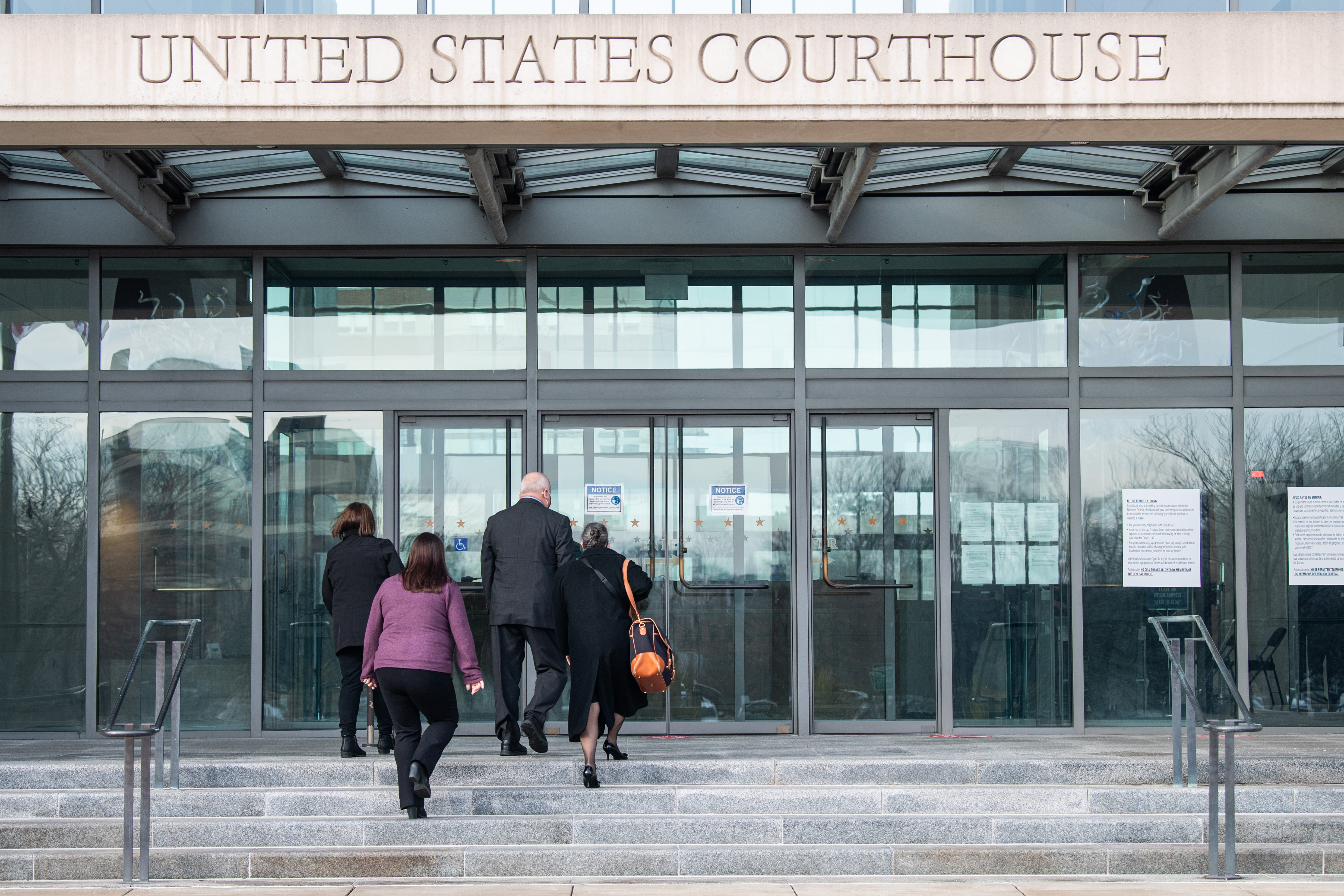

Car seats and candy, gold jewelry and handbags — Judith Pelaez, according to a dozen lawsuits filed in U.S. District Court in Hammond, had access to none of it because the websites selling the wares were not accessible to people with impaired vision.
So, according to court records, she started filing lawsuits, all at around 20 pages and with similar wording, on Feb. 10, claiming the websites violated the Americans with Disabilities Act. The first one was filed against HAS Beauty, LLC, the parent company of about-face, which sells vegan beauty products.
She also filed one that day against Spoonful of Comfort, LLC, which provides gift boxes with soup and other treats.
And the lawsuits have continued since then, until as recently as May 29. That one was filed against Ozium Holdings, LLC, which makes air sanitizers.
The multiple lawsuits, said Pelaez’s attorney, Jason Marshall, reflect a reality in the digital marketplace and can have an impact on change. Disability rights advocates counter that the lawsuits are a distraction and don’t do much to advance greater accessibility.
Marshall, with Equal Access Law Group, PLLC, said during a phone interview that his firm has multiple clients who are legally blind and, in federal cases filed by Peleaz and others, the clients have gone to the websites to purchase the actual products.
Marshall said he is not representing “tester plaintiffs,” who troll websites so they can file lawsuits over alleged ADA violations.
“There’s a negative perception that people are skimming businesses and saying, ‘Gotcha!’” But Marshall called that a misconception and said the goal is for everybody to have equal access to the economy, including the one online.
Plaintiffs, including Pelaez, aren’t filing the lawsuits because they’re interested in the money, Marshall said, adding that any settlement agreements with the companies would be confidential.
But Teresa Torres, executive director of Everybody Counts, a disability advocacy organization based in Merrillville, said she could spend several hours compiling a list of entities that aren’t complying with the ADA for potential lawsuits.
That’s not going to do anything but make money for some lawyers, she said, adding accessible websites are an issue but so is going to the grocery store.
“It’s a larger problem. When people do these annoying little things, it doesn’t help,” she said by phone, adding the lawsuits force the businesses to pay a settlement but nothing changes.
Chris Danielsen, spokesperson for the National Federation of the Blind, which is based in Baltimore, said lawsuits are a tool his organization uses as a last resort, only when they can effect systemic change.
In 2006, the federation sued retail giant Target over website accessibility. That, Danielsen said, resulted in a partnership and cooperation, with real changes. Legal settlements negotiated by the federation are not sealed and include steps for achieving compliance, which the federation monitors.
A lawsuit against a small business, which likely didn’t create its own website and doesn’t know how to make it ADA compliant, which concludes with a confidential settlement, “really doesn’t make the kind of change that we want,” Danielsen said in a phone interview.
“It’s making it harder for actual advocates to get anywhere,” he said.
Pelaez, who, according to the filings, is visually impaired and lives in Lake County, tried to make a purchase on the Spoonful of Comfort website on Dec. 11, when “she was searching for a thoughtful gift to send to a friend for a birthday.”
According to the lawsuit, “While exploring the Website, Pelaez found a birthday care package that caught her interest. However, during this process, Pelaez encountered multiple accessibility barriers that significantly interfered with her ability to complete a purchase.”
Those included a “skip to content” link that wasn’t implemented, “making the website time-consuming and difficult to use”; difficulty in determining whether products were selected when using assistive technologies; and the inability for Pelaez to access her online shopping cart using assistive technology.
“These accessibility barriers rendered the Spoonfulofcomfort.com Website inaccessible to, and not independently usable by, blind and visually impaired individuals,” stated Pelaez’s suit against Spoonful of Comfort.
And, per the Spoonful of Comfort lawsuit and the others, Pelaez will be back to shop once the barriers to access are removed.
“Pelaez wishes to have such products shipped directly to her home from the Defendant’s Website. If the Court does not intervene, Pelaez’s injury will continue. Pelaez still wants to make a purchase of a birthday care package on the Website,” the lawsuit states.
Some of the suits, according to online court records, are slated for settlement, though Marshall said any settlement agreements are confidential.
One of the suits, filed Feb. 25 against Artsana USA, Inc., parent company of Chicco Baby Products, has been closed. In that case, according to court documents, Pelaez filed a notice of voluntary dismissal with prejudice, “without costs, or disbursements, or attorneys’ fees to any party.”
Attorneys for defendants in two lawsuits, HAS Beauty, LLC and Round 2, LLC, a South Bend company that makes collectible toys, did not return emails requesting comment.
Danielsen, with the federation, said companies are more likely to settle to make a lawsuit go away, and filing a series of lawsuits against small businesses, putting aside the possibility of a financial settlement, is probably not going to make a meaningful difference.
A better approach is to contact the website owner and report what’s wrong, without mentioning legal compliance, he said, “because then people are willing to work with you.”
As far as the volume of cases Pelaez filed in federal court, Marshall, her attorney, said to think about how many websites someone uses in a day. The bigger issue is how prevalent online barriers are.
Since the COVID-19 pandemic, “the world has changed and become a digital marketplace,” he said, making any barriers more readily apparent.
Marshall declined to make Pelaez available to the Post-Tribune for an in-person or phone interview.
“Unfortunately, she has received a significant amount of negativity in connection with these matters, and I want to be mindful of protecting her from additional harassment or unwanted attention, especially while cases are actively pending,” he said via email.
The lawsuits, said Danielsen, risk triggering legislation that makes filing broader ADA suits more difficult.
The federation passed a resolution at its national convention in 2019 urging attorneys “to engage in responsible, ethical, and transparent behavior when pursuing ADA litigation, including contacting targeted entities to try to resolve accessibility issues without litigation where possible and appropriate and to draw up public settlement agreements that outline the specific steps to be taken by an entity to achieve accessibility and the anticipated timeline for those steps to be completed.”
Pelaez’s attorney said businesses want to do the right thing.
“They do say, ‘Yes, we found the issues and we’re going to fix it,’ and that’s what this litigation is about,” Marshall said.
Every case he has filed was for a person with a disability who tried to purchase something and was stymied by existing barriers, Marshall said, though he admitted there’s a “negativity” around filing multiple lawsuits.
Clients seek out his firm because they can’t fully participate in the online marketplace.
“I think it’s admirable. It’s bold,” he said.
alavalley@chicagotribune.com