
Five years after Illinois joined other states in allowing politicians to use campaign funds for childcare, a handful of state lawmakers from Chicago have become some of the nation’s biggest users of laws designed to encourage parents — particularly mothers of young children — to run for office, according to a nonprofit organization tracking the funds.
But which lawmakers have made the most use of the measure, and to what degree they’ve tapped into their campaign funds, has sparked concerns about whether the legislation is working as intended.
The three biggest spenders in Illinois leveraging the childcare initiative are fathers of young children. One state senator has spent more than $200,000 in campaign cash for his two children since 2021. Another state senator spent more than $75,000 on a Montessori program in less than two years.
In one small but notable instance, a candidate who narrowly lost a 2023 race for the Chicago Police District Council reported spending $325 on his dog. Illinois State Board of Elections campaign finance reports show the money was spent at a business called Cruisin’ Canines. The reason given in the reports? “Care of dependent family member (dog).”
While state election officials say candidates have significant leeway in how they spend campaign funds, the concentration of spending among a small group of incumbents with well-funded campaigns has raised questions about how the legislation is being used and whether clearer guardrails are needed.
“When a reform intended to lower barriers to public service is overwhelmingly benefiting a couple of incumbents with flush campaign accounts, it’s fair to ask if it has drifted from its original purpose,” said Alisa Kaplan, executive director at Reform for Illinois, who championed the law when it passed.
Illinois’ politicians are national leaders in using campaign cash for childcare, as state and local candidates here have reported spending far more than those in any other state, according to an analysis by Vote Mama, an advocacy group that helped launch the progressive policy and now tracks campaign spending on childcare nationwide.
Officials with Vote Mama, which, as its name suggests, sought to make elected office more accessible to mothers, said they weren’t concerned that only a handful of people accounted for much of the spending, because the 2021 state law was ultimately aimed at helping make elected office more accessible to all parents without family wealth or outside help.
“Everybody should use it if they are able to,” said Liuba Grechen Shirley, who founded Vote Mama after successfully pushing the Federal Election Commission to issue an advisory opinion allowing such expenses in her own 2018 congressional race, which she lost. “The more that we talk about it, and we don’t attack them, and we normalize using campaign funds for childcare, more people will feel comfortable being able to use it.”
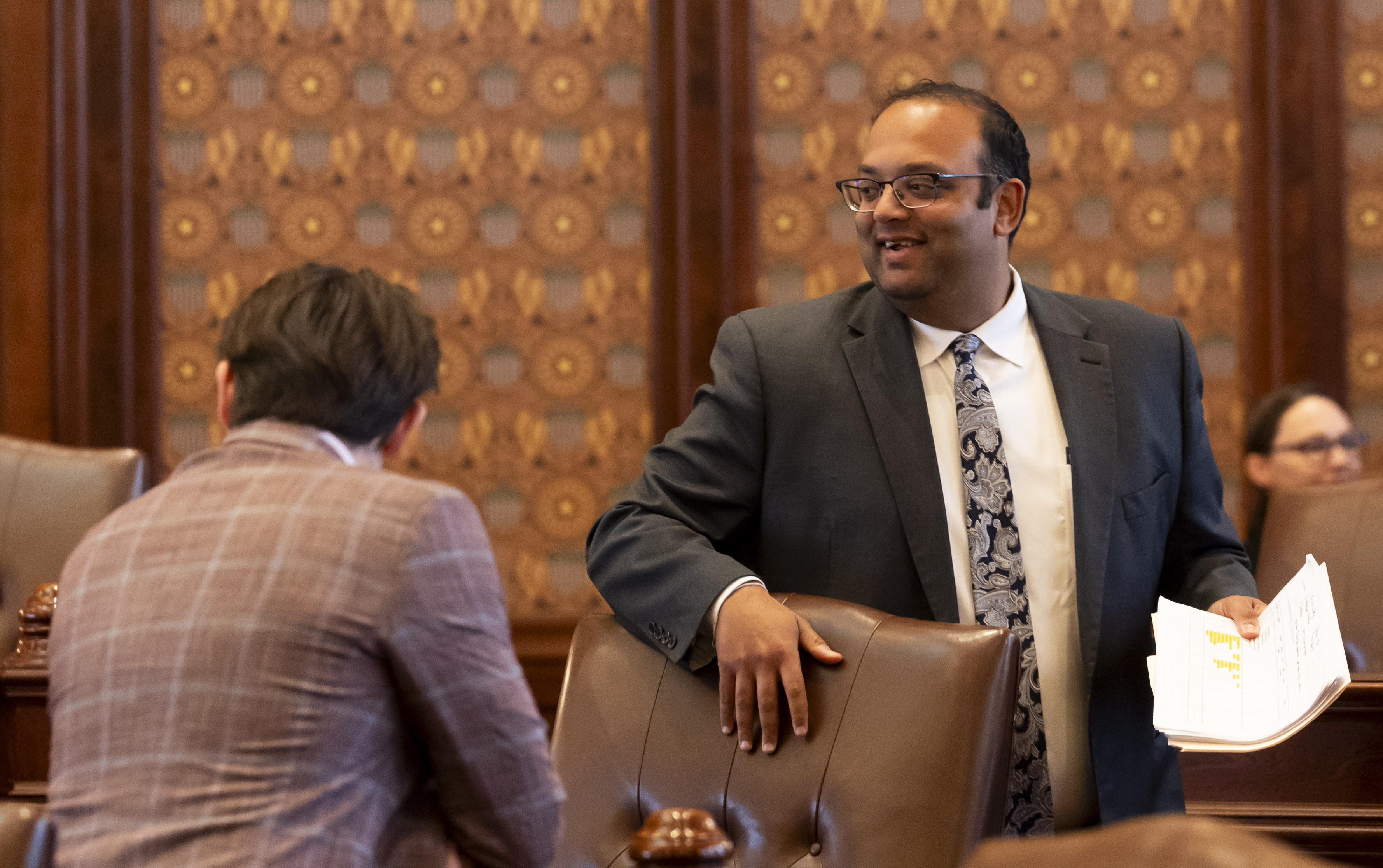
State Sen. Ram Villivalam, a Democrat from Chicago, reported more in childcare spending from his campaign account than the total amount Vote Mama said was spent by state and local candidates in any other state. Since 2021 through this spring, Villivalam — who has a 4-year-old son and a 7-year-old son — has reported roughly $200,000 in such spending, state campaign records show.
The majority of those funds went to a Montessori program in his Chicago neighborhood, according to state records. In 2022, his biggest spending year, he expensed more than $80,000 for the Montessori center, a daycare and an infant care business specializing in night care. The expenditures happened both during and outside of Springfield session days.
“Being able to utilize this policy has allowed me to stay in office,” said Villivalam, who helped spearhead Illinois’ massive public transit deal last year. “This was allowed for our government, our elected government, to be more representative of our communities and have working-class parents participate.”
State Sen. Omar Aquino, another Democrat from Chicago, who is the majority caucus chair, reported the second-highest total in the state: more than $150,000 in childcare spending from campaign funds, starting in 2022 and continuing through this spring, state campaign records show. About half went to a Montessori school in Chicago; nearly $50,000 went to the same infant care business that Villivalam used, which specializes in night care. Aquino, who has 4-year-old twins, said he typically expenses childcare during working hours Monday through Friday, regardless of whether the General Assembly is in session.
“In order for me as a legislator to do my work, I need childcare assistance, like many of our residents,” Aquino said.

Vote Mama looked at nationwide state campaign data and said childcare expenditures for Illinois politicians led the country. Data collection across states varies, and Vote Mama noted that some states lacked fully accessible records and that it could not guarantee the data it reviewed was exhaustive. Vote Mama’s data for California covers only 2018 to 2022, while in most other states, the group tracked the period from 2018 to 2025, the organization said.
For Illinois candidates, the Tribune independently verified all campaign spending on childcare using records from the Illinois State Board of Elections.
State and local candidates in Illinois accounted for $488,000 through 2025, well more than half of the roughly $700,000 that Vote Mama tabulated nationwide in state campaign spending on childcare, the organization said. For context, candidates in California — the next-highest-spending state — reported about $50,000 in such expenses from 2018 through 2022, according to Vote Mama. In Washington, another one of the highest-spending states, state and local candidates also spent about $50,000 from 2018 through 2025, according to Vote Mama.
Democratic state Rep. Kam Buckner of Chicago spent the third-most on childcare in Illinois, reporting more than $60,000 since 2023 through the spring, mostly to a Naperville-based provider, according to state campaign records. Buckner was the key House member this spring negotiating the Bears stadium megaprojects legislation that failed to get a vote in the Senate.
“You don’t want only people who are independently wealthy to be able to do the job,” Buckner said of being a lawmaker. “I choose to believe that folks who are young parents, folks who are not independently wealthy, actually make the legislature a better place.”

Buckner also pushed back on any suggestion that the spending was questionable.
“If it was being done behind the cloak of darkness … then that’s an entirely different can of worms. But that’s not what’s happening here,” he said.
Some lawmakers have expensed childcare to a lesser degree. State Rep. Lilian Jiménez, a Democrat from Chicago who was first elected in 2022, said she has spent campaign funds on the occasional hire of an in-office childcare provider, particularly when Jiménez works on weekends or after hours. She has spent about $4,600 on childcare from her campaign account since 2024, state campaign records show.
“I don’t know how people did it before,” Jiménez said. “This particular opportunity of being able to expense childcare is not just — it’s so symbolic of all that, but it’s not just symbolic. It’s very practical.”
State Rep. Margaret Croke of Chicago, a former advisory board member of Vote Mama, said she uses campaign funds for childcare only when needed for campaign or government events outside regular working hours. She has three children, all 6 years old or younger, and was eight months pregnant during her first campaign. She highlighted her role as a parent throughout her competitive primary race for Illinois comptroller this spring, which she won.

Croke, who has expensed about $15,700 in childcare since 2024, according to state campaign records, said there would be “nothing wrong” with using the provision more but that her spending decisions ultimately came down to personal preference and weighing the returns on different campaign investments.
Across Illinois, 15 state and local candidates and a ward organization have spent between $1,000 and $9,999 on childcare from campaign funds since 2021 through the spring, while a half-dozen have spent more, with two — Villivalam and Aquino — in the six-figure range, state records show.
Federal candidates across the nation spent about $717,000 on childcare between 2018 and 2022, according to Vote Mama’s data. According to federal records, the only candidate who spent more than $150,000 on childcare federally was Democratic U.S. Rep. Eric Swalwell, who resigned and dropped out of the race for California governor after allegations of sexual misconduct earlier this year. Only one candidate, Republican 11th Congressional District nominee Jerry Evans, has used such funds in a federal race in Illinois, according to federal campaign records.
There are many reasons more candidates have not taken advantage of the law, advocates say. Few state lawmakers have young children — one of the very problems such laws are meant to address. The law is also still relatively new, with few written guidelines on its limitations. And some candidates may worry about public backlash, Grechen Shirley said.
There are no rules in the state Campaign Disclosure Act beyond the statute itself guiding candidates on the childcare issue, said Matt Dietrich, spokesperson for the Illinois State Board of Elections.
The state law allows campaign funds to be spent on child or dependent care if that care is “reasonably necessary” for a public official or candidate to fulfill political or governing responsibilities.
That broad latitude appears to have led to an interpretation of the law that advocacy groups say might have gone too far in the case of Dan Richman, the candidate who reported spending $325 for his dog.
Richman said in an emailed response to the Tribune’s questions about the expenditure that he believed the expense was made lawfully and in good faith under the same statute governing child and dependent care.
Vote Mama spokesperson Marcus Coppola said the organization does not consider pet care a form of dependent care, noting the Illinois statute specifically references “childcare for a minor child or care for a dependent family member.” Dietrich said he was not aware of any prior pet care issue but noted that a wide range of services may be permissible if tied to campaign activities — citing Mayor Brandon Johnson, who has spent tens of thousands of dollars on hair and makeup.
Kaplan said the way the childcare law has been used in Illinois illustrates why the legislature may need to revisit the law to ensure it “strikes the right balance between making public service accessible to non-wealthy people and preventing campaign accounts from being used for purely personal purposes.”
Her broader concern, she said, is structural.
“Campaign funds are not supposed to function like personal checking accounts,” Kaplan said. “The ban on using campaign money for personal expenses like gym memberships exists to prevent political contributions from becoming private financial benefits and to reduce the risk of pay-to-play politics. Supporting parents in public service is important, but reforms like this also need reasonable guardrails to ensure they’re serving their real function and maintaining public trust.”
Aquino pushed back on the idea that the law has strayed from its intent. He said he comes from a working-class family, lives in a multigenerational household and relies on the provision to do his job alongside family support. His children are expected to start Chicago Public Schools’ prekindergarten program soon, at which point they will age out of needing daily paid childcare.
As candidates retain wide discretion in how they spend campaign funds, the childcare law follows a long history in Illinois of political hopefuls using campaign accounts for other purposes that could be perceived as personal benefits — pricey meals chief among them.
Childcare expenses are monitored and disclosed under the same framework as other campaign expenditures, noted Louisa Duggan, Vote Mama’s policy director.
Villivalam framed the spending as a practical necessity, not a perk. His wife, Elizabeth Granato, is the Democratic nominee for Cook County commissioner in the 12th District, running for office for the first time.
“It’s only workable if you make sure that your children are in safe learning environments and healthy learning environments,” Villivalam said of both him and Granato working in public service. “And that’s what this policy allows us to do.”