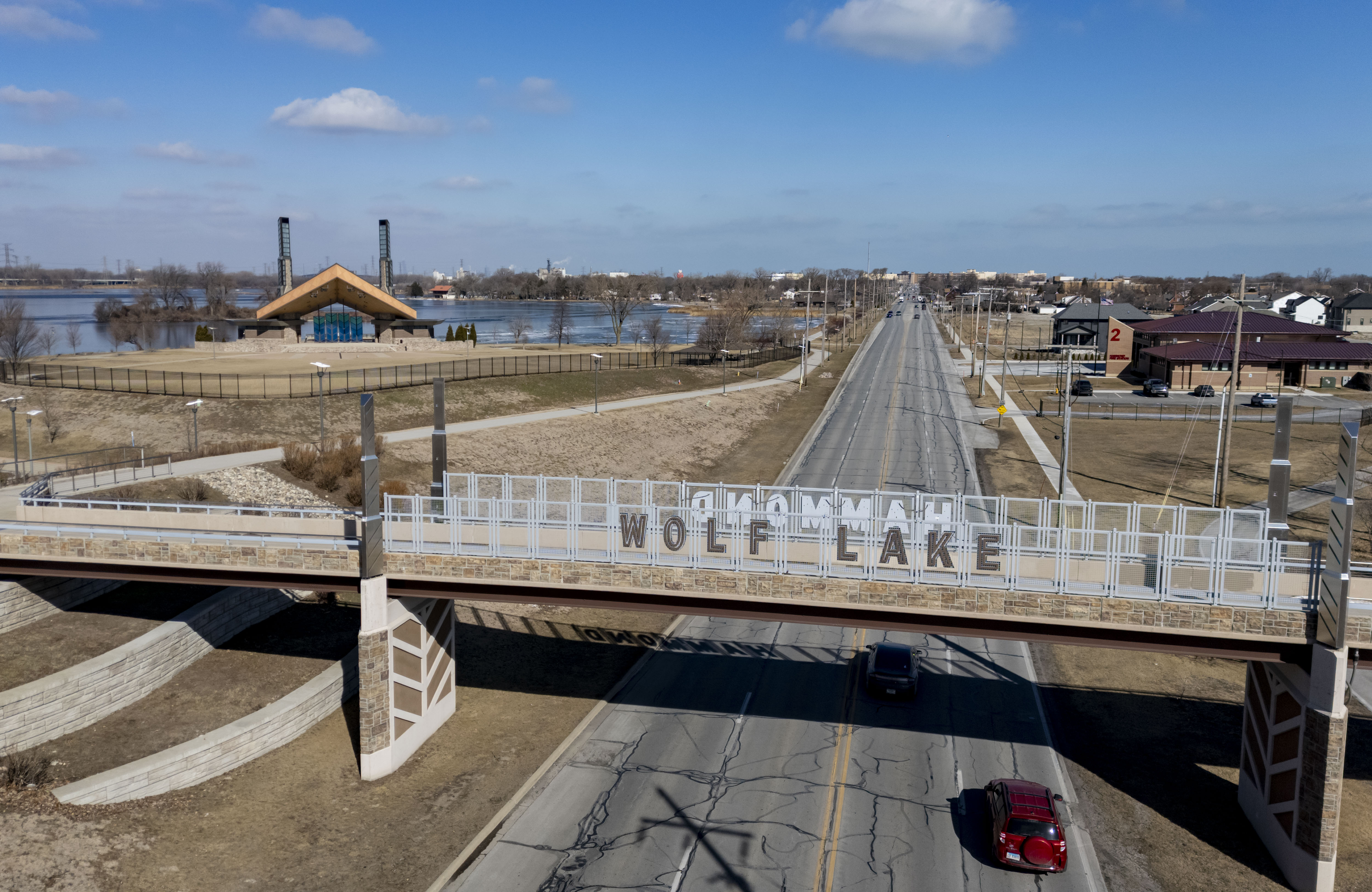

While the Lake County Council has shared its enthusiasm with the recent news that the Chicago Bears are moving ahead with a potential stadium in Hammond, it will still take time to pass the required taxes for the project, officials said.
The Chicago Bears Board of Directors voted Thursday “to advance our stadium development project in Hammond, Indiana, with the exact site to be selected,” according to a statement from the team.
“We believe a world-class stadium project in Hammond will transform the region, connecting Northwest Indiana to the South Side of Chicago through the Loop and across neighborhoods and suburbs stretching north of the city. It will bring Chicagoland together and deliver new opportunities to its residents and businesses,” said Chicago Bears Chairman George McCaskey and President Kevin Warren in the statement.
Under Senate Enrolled Act 27, a stadium authority bill that will create the financial structure for a stadium for the Chicago Bears, the team will be able to move forward with a proposed stadium near the Wolf Lake area in Hammond.
The Chicago Bears are willing to invest over $2 billion in the stadium. The state will invest around $1 billion in the stadium through various financing avenues, House Speaker Todd Huston, R-Fishers, previously said.
The state has asked Lake and Porter counties to adopt a 1% food and beverage tax and for Lake County to pass a 5% innkeepers tax. The counties have until June 30, 2027, to approve the taxes, according to the bill’s fiscal note.
If both counties approve a 1% food and beverage tax, they could generate between $12 million and $18 million annually. The innkeeper’s tax could generate $5.4 million annually, according to the fiscal note.
Council President Christine Cid, D-5th, said in a statement Friday afternoon that she has “been eagerly anticipating this exciting news” and welcomes the opportunity to welcome the Bears to Hammond.
For Northwest Indiana, a Bears stadium in Hammond “will create significant economic growth, investment and excitement throughout our region,” she said.
“As president of the Lake County Council, I am confident that the members of the council understand the importance of this project and are prepared to move forward in a thoughtful and responsible manner,” Cid said in a statement.

Northwest Indiana has many loyal Bears fans, Cid said, who are excited about rooting for the team in its new home in Hammond.
“We look forward to working together to help make this transformative opportunity a success for our communities and future generations,” Cid said.
When asked by the Post-Tribune when the council may approve the taxes, Cid said, “Once the state and the Bears complete documentation, then the county organizations will progress.”
Lake County Councilman Randy Niemeyer, R-7th, said he was excited to hear the news Friday that the Bears are moving forward with plans for a stadium in Hammond. Niemeyer called the move “a huge economic win” for Northwest Indiana, Lake County and Hammond.
When it comes to the taxes, Niemeyer said the county council will do a full financial analysis of how the tax would be generated.
“We don’t want to do things out of excitement. We want to do this with the right process,” Niemeyer said.
It will likely take the council “a bit of time” to approve the taxes, likely closer to the June 30, 2027, deadline listed in Senate Bill 27, Niemeyer said.
“We’re not going to implement a tax until the ink is dry,” Niemeyer said.
Lake County Councilman Ted Bilski, D-6th, said as a Bears fan, he was excited to hear about the team moving forward with its plan.
“It’s exciting for the city of Hammond and the region. I think it’s got a lot of possibilities,” Bilski said.
Bilski said he needs to learn more about the taxes the council has to pass before making a decision on how he’d vote. But Bilski said he would base his decision on how the taxes benefit the county.
“I know there’s a lot of emotions for this, but I don’t know what the fiscal impact will be,” Bilski said.
Porter County Council President Andy Vasquez previously said the Porter County Council hasn’t discussed the food and beverage ordinance yet, and it won’t before the end of this year because new board members will be elected in the November election.
Vasquez, who lost his reelection bid in the May primary, said he would support an ordinance for a food and beverage tax because it could help the county amid its projected financial losses as the state begins to implement a property tax cut.
But Vasquez previously said he wouldn’t bring up the ordinance before leaving office in January because he won’t be on the council to monitor the ordinance’s impact.
“I think I should be held accountable,” Vasquez has said. “I can’t vote for it because I won’t be here. Those who pass it must be held accountable.”

The state will issue a bond for the construction of the stadium, which will be repaid through Hammond’s 12% admissions tax once the city common council passes it, and a Professional Sports Development Area specialized tax district, or PSDA, Huston said.
The admissions tax will generate around $12 million when the facility begins holding events. But the revenue could be higher depending on the type of events held in the stadium, according to the fiscal note of the bill.
The bill allows the Hammond City Council to designate a stadium development district within the city, but that can’t include areas of the PSDA. Under the stadium development district, at least 12% of the allocated property taxes have to be transferred each year to the city of Hammond’s general fund, according to the fiscal note of the bill.
To further support infrastructure costs, Huston said the state will renegotiate its lease with the Indiana Toll Road.
The Indiana Finance Authority approved a resolution April 14 to allow the Indiana Toll Road to increase tolls by at least 1.5% or by inflation, whichever is greater, twice a year in exchange for $700 million in payments.
The resolution allows for the Indiana Toll Road’s private operator to increase tolls twice a year, beginning December 31 this year and then every June 30 and December 31 every year after that, according to the resolution passed by the Indiana Finance Authority.
The operator will pay the finance authority $700 million: $300 million within 30 days of the resolution going into effect, then another $200 million within a year of the first payment, and another $200 million within two years, according to the resolution.
The resolution also stipulates that the toll road operator has to pay at least $25 million in capital improvements to the Indiana Toll Road within five years.
The money will go into a special payment reserve fund and can be spent on transportation and infrastructure projects in Lake, Porter, LaPorte, Elkhart, LaGrange, Steuben and St. Joseph counties, according to the resolution.
akukulka@post-trib.com