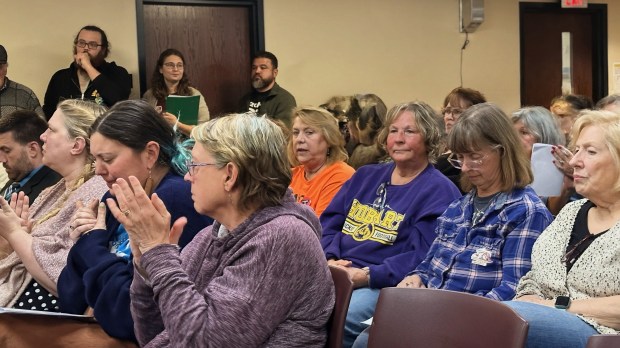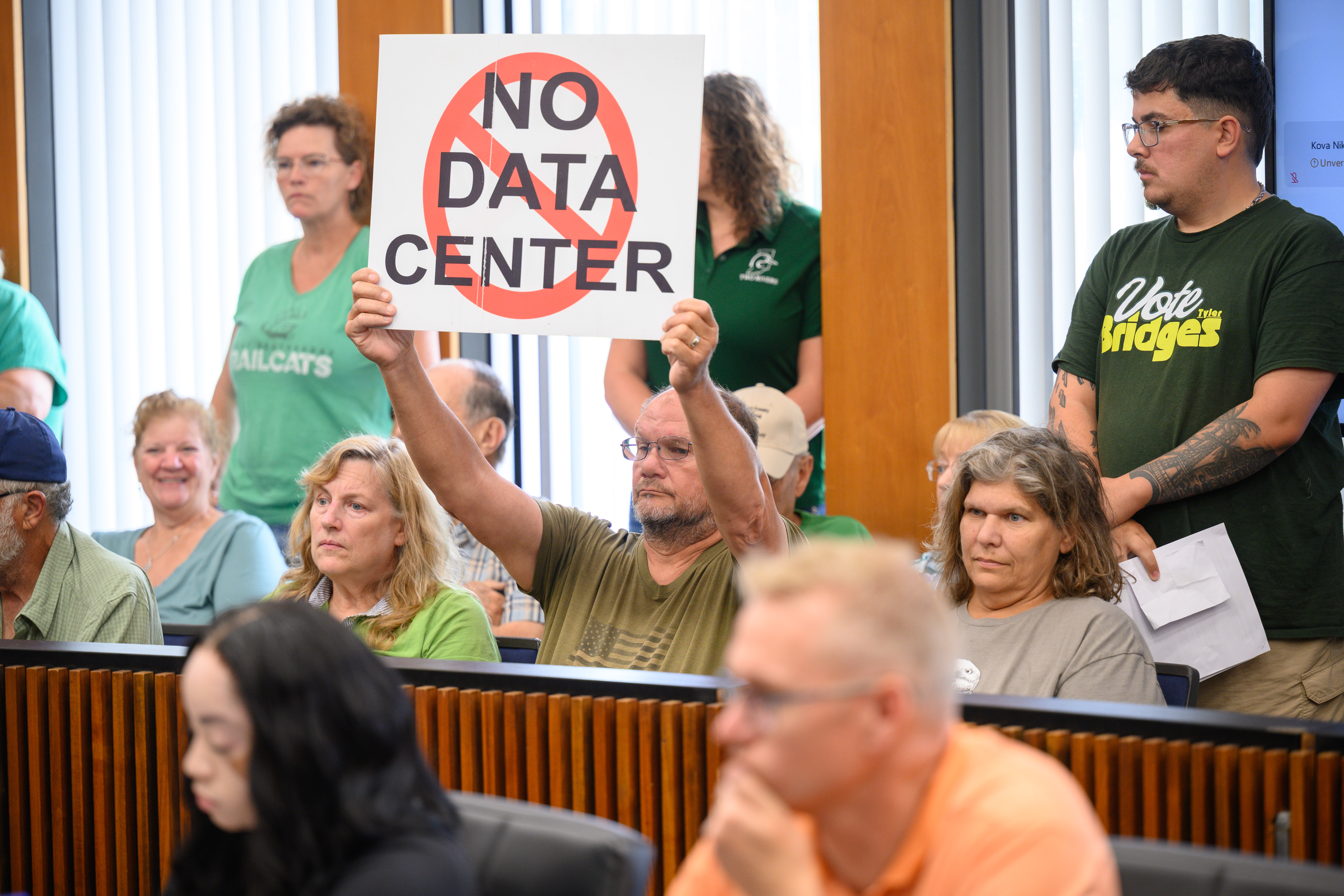

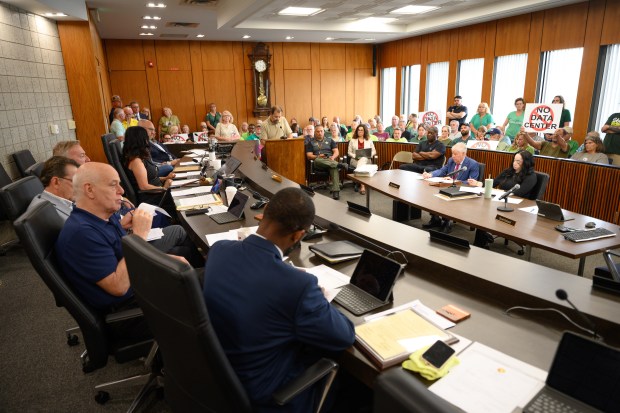
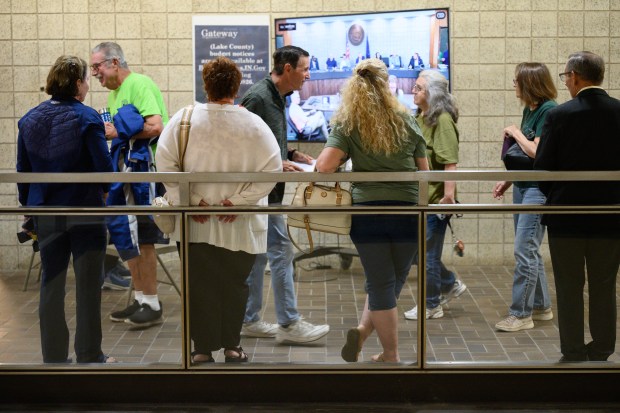
Dozens of people packed the meeting room as the Lake County Council approved two ordinances Tuesday to advance a data center project, which includes a battery storage facility, in Eagle Creek Township.
Lake County residents filled the meeting room and stood in the hallway wearing green to show support for the agricultural workers and oppose the zoning changes to accommodate the data center project.
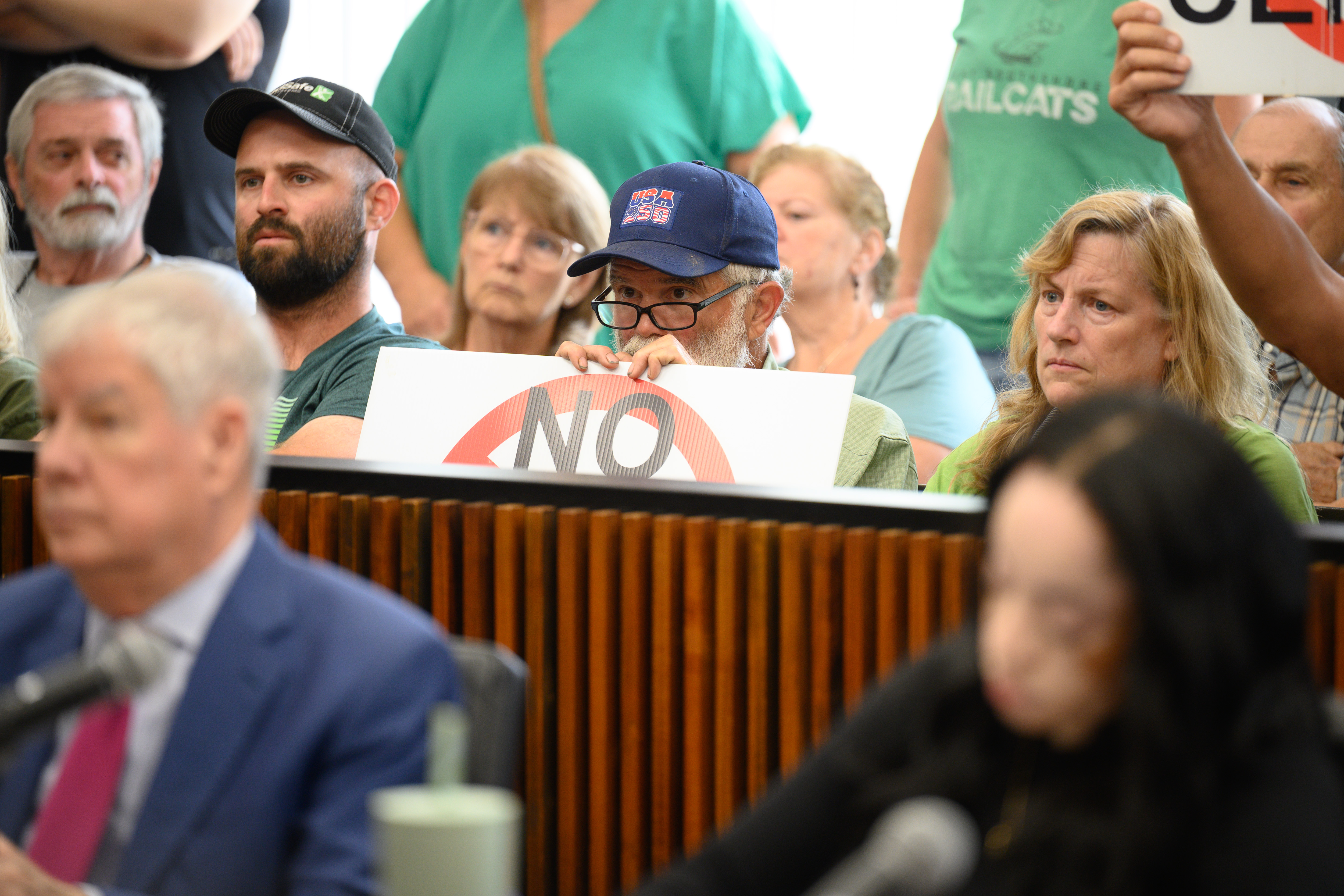
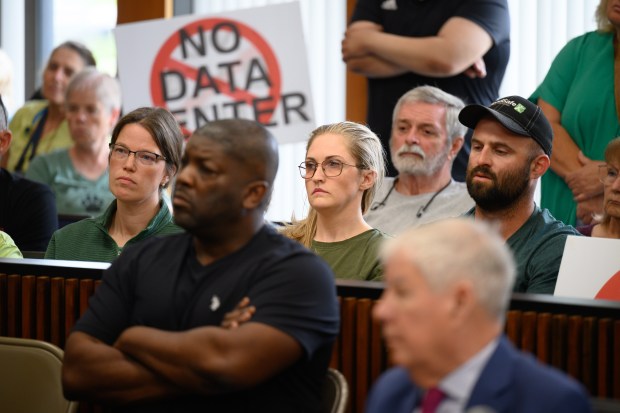
“Quit cramming this down the residents’ throats,” said Patricia Corey, a Merrillville resident. “Think about what you’re doing to your residents because the next election we’ll remember.”
The council approved a zoning change from agricultural to light industrial for a Johnson Sunnybrook Farm LLC data center east of Clay Street on the south side of E. 181st Avenue in Eagle Creek Township. The Lake County Plan Commission voted 5-3 in favor of the zoning change and offered no recommendation to the council.
The council also approved a zoning change from agricultural to conditional development zone for a Foundry Works Energy Storage LLC battery energy storage facility in the same area of the data center in Eagle Creek Township. The Lake County Plan Commission voted 7-0 in favor of the zoning change, but offered no recommendation to the council.
Tom O’Donnell, the council’s attorney, said the council’s meeting wasn’t a time for a public hearing. The plan commission held public hearings on the projects and zoning changes, he said.
The council had multiple options under state statute when voting on the ordinances: adopt the ordinances, reject the ordinances or take no action within 90 days, which would defeat the ordinances, O’Donnell said.
The council also had to consider the county’s comprehensive plan when considering the ordinances, specifically the current conditions of the areas where the projects are proposed; the most desirable use of the area; the conservation of property values; and responsible development and growth, he said.
The county’s comprehensive plan calls for the data center land to remain agricultural, but land next to the project has been rezoned from agricultural to conditional development zone for a concrete ready-mix plant, according to county documentation of the project.
“Changing the zoning from agricultural to light industrial on such large acreage, approximately 162 plus acres, seems excessive when the comprehensive plan calls for the area to remain agricultural,” according to plan commission comments in the documents. “Ultimately, it is the council that has jurisdiction over our land use policies and it is up to them to change any zoning district classification.”
The comprehensive plan calls for the land for the battery storage facility to be zoned agricultural. County officials recently amended the zoning ordinance to allow for a battery storage system in the area, according to county records.
After stating that the council considered the conditions under the comprehensive plan, the council voted 6-0, with Lake County Councilman Charlie Brown, D-3rd, absent, in separate votes to approve the ordinances.
After the council voted, many people left the meeting room. Nine people addressed the council after the meeting during public comment, all of them opposing the data center project.
Many of those who spoke shared their concerns about the health and environmental impacts of the data center, as well as the approval process for the project.
Tyler Bridges, a Lowell resident, said it was unacceptable that the council didn’t hear public comment before voting. Bridges said most south Lake County residents don’t support the data center project.
“Shame on you for voting yes on all of this because once this snowball goes down the mountain, it becomes an avalanche and there’s really no stopping this thing,’ Bridges said. “Maybe next time, actually talk to the community members.”
Mark Corey, a Merrillville resident, said he’s concerned about health issues for those who live near the data center.
“I’m just worried about people’s health and our wells out there … that could go dry,” Corey said. “They’re just no good in the area. I want you to consider that and maybe table it or stop it.”
With the affirmative votes, the projects will go before the plan commission to apply for special exceptions, said Ned Kovachevich, plan commission director. Each special exception consideration would have a public hearing before the Lake County Board of Zoning Appeals, he said.
akukulka@post-trib.com