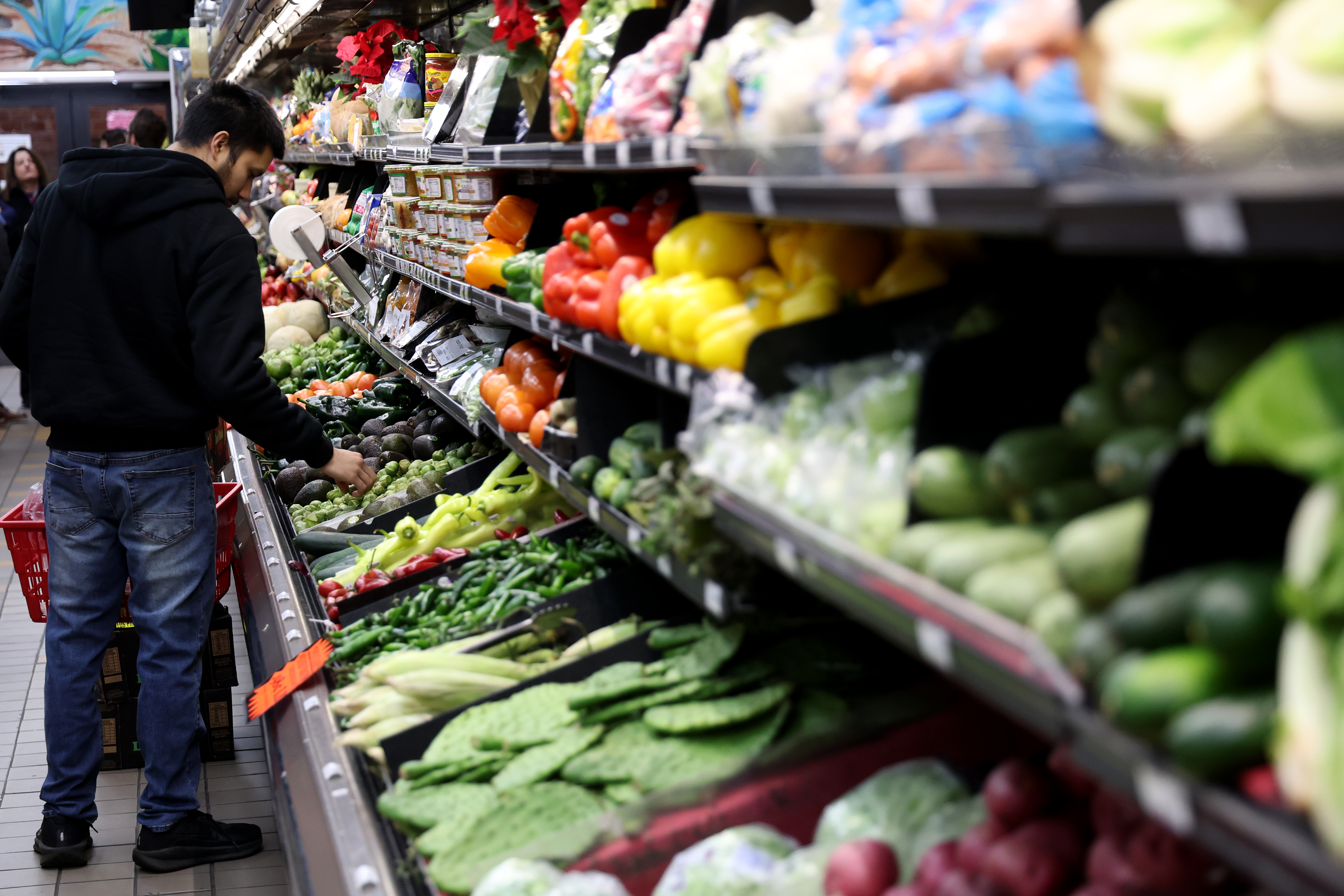

Inflation surged in May to levels not seen in three years, thanks in large part to soaring energy costs as a result of the Iran war, now entering its fourth month.
Consumer costs are 4.2% higher compared to a year ago, according to the Bureau of Labor Statistics’ latest consumer price report released Wednesday. That’s the single biggest 12-month increase since April 2023. Month-over-month, however, inflation cooled slightly, with prices rising 0.5% in May — down from the 0.6% reported in April.
Recent price shocks have been driven by ever-rising oil and gas costs. In fact, the energy index alone accounted for over 60% of the monthly increase across all items.
Stubbornly high energy costs are a product of the war with Iran. Amid fighting with the United States, Israel and surrounding Gulf States, the Islamic Republic has effectively closed the Strait of Hormuz, through which a fifth of the world’s oil and gas is shipped. In response, the U.S. has implemented a blockade of Iranian ports and fired on tankers attempting to navigate the strait. As a result, the flow of fuel out of the region has trickled to a halt.
The impact is being felt stateside. Oil, diesel and gas supplies have been squeezed and costs are trudging upward. The May inflation report reflected this, with gas prices surpassing $4.50 a gallon nationwide and electric costs back to record highs.
Meanwhile, marginally higher expenses for food and shelter also contributed to inflation rising across the board last month.
The Tribune is tracking 11 everyday costs for Americans — eggs, milk, bread, bananas, oranges, tomatoes, chicken, ground beef, gasoline, electricity and natural gas — and how they are changing, or not, under the second Trump administration. This tracker is updated monthly using consumer price index data from the U.S. Bureau of Labor Statistics.
To see the average U.S. price of a specific good, click on the dropdown arrow below and select the item you wish to view.
Eggs
Just over a year ago, eggs were at all-time highs. Now they’re one of the cheaper grocery items.

Costs have declined every month since March 2025, following a massive outbreak of bird flu that disrupted the egg supply and sent retail prices flying. Currently, costs are at their lowest going back to November 2023 and are down more than 50% year-over-year.
A dozen large Grade A eggs is now priced at $2.19, down another 6 cents from April.
Milk
Milk, however, is continuing to trend upward.
A gallon of fresh, fortified whole milk went up by 8 cents in May to $4.22. That price has increased by nearly 5% since last year and is just a fraction of a cent off its record.
Bread
Bread saw a subtle 4-cent drop from April. At $1.83 per pound of white bread, that national average is about 5% lower than it was when President Donald Trump started his second term.
Bananas
Banana prices, meanwhile, were unchanged, remaining at $0.65 per pound. Average costs for the potassium-rich fruit have been hovering between 65 and 67 cents for the last 12 months.
Oranges
Orange prices saw a bump in May, jumping 2.5% month-over-month.
A price increase was anticipated given the season. Oranges are cheapest in the winter, and prices normally bottom out in March or April each year. That means shoppers can expect costs to continue to climb in the coming months, with prices eventually peaking in the early fall.
A pound of navel oranges now costs $1.54 — 2 cents less than this time last year.
Tomatoes
Some good news for your next salad, BLT or spaghetti dinner: Tomatoes just got cheaper.
Prices plummeted 20 cents from April’s record high, settling at $2.49 per pound of field-grown tomatoes. This change is somewhat expected. Like oranges, the price of tomatoes is largely tied to the harvesting season. Typically, costs rise in the fall, peak in the winter and then decline through midsummer.
Still, prices are elevated for this time of year. And driving these abnormally high prices? Tariffs.
The Trump administration implemented a 17% import tax on all Mexican-grown tomatoes last July, and given that the vast majority of all tomatoes eaten and sold domestically come from our trade partners at the southern border, the U.S. market is bearing the financial brunt.
Since that duty went into effect, retail prices have leapt nearly 40%.
Chicken
In May, the average price of chicken was approximately $2.04 per pound. That cost is just 1 cent more than it was the previous month.
Unlike other meat products, chicken has seen little fluctuation as of late. As evidence of this, the biggest price “spike” recorded in the last 12 months was a change of just 2 cents from one month to the next.
Ground Beef
After shooting to new records in April, the cost of 100% ground beef chuck dropped last month, falling 20 cents to land at $6.72 per pound.
But even with a notable price dip, costs remain persistently high — the second highest on record dating back almost 50 years.
This year’s high prices are due to declining domestic beef production. The entire U.S. cattle inventory is the lowest it’s been in 75 years, and the number of both calves and beef cows has dropped another 1%-2% from last year’s lows, per the National Agricultural Statistics Service’s latest cattle report.
“We’re in a very unique situation in the cattle industry right now. We’re at multidecade lows,” said Derrell Peel, a livestock marketing specialist and professor of agricultural economics. “We find ourselves here as a result of conditions over the past five or six years, specifically drought being the largest factor.”
Fires and severe drought out West have damaged pasturelands needed for raising — and grazing — livestock. That means increased feed costs or, in some instances, forced herd liquidation, the selling or culling of cattle.
But other than environmental factors, experts say basic economics are at play. In two words? “Strong demand.”
“It’s popular to eat beef again. If you look at the numbers, people are not backing off, even at the higher prices,” said Teresa Steckler, a beef specialist with the University of Illinois’ College of Agriculture.
Prices have ballooned by 22% since the change of administrations — or an increase of more than $1.20 per pound for shoppers. And with grilling season upon us, even greater demand is likely to send grocery costs climbing again this summer.
Electricity
Electric costs are booming.
At 20 cents per kilowatt-hour, the current price of electricity is the highest on record. With the average American household using roughly 899 kWh every four weeks, that translates to a monthly bill of approximately $176 before delivery charges, taxes and other fees.
Since January 2025, the national average price of electricity has increased by 9.5%. For context, that equates to a $15 surcharge per month for the average homeowner or renter.
Gasoline
Prices at the pump aren’t easing either.
The average nationwide cost of gasoline increased by 40 cents in May, registering at $4.65 per gallon of regular unleaded.
In Chicago, the cost per fill-up is even higher. Prices vaulted 60 cents month-over-month to $5.06 a gallon, according to the U.S. Energy Information Administration. Since the start of the Iran war, a gallon of regular has gone up by more than $1.50 in the city.
Pump it up: T-Mobile offers $1.99-per-gallon gas promotion at one Chicago Shell station Tuesday
The disruption of oil production and distribution in the Middle East has sent gas prices skyward, and with the latest exchange of strikes this week, peace negotiations and an off-ramp to the war appear obstructed. Consequently, initial data shows elevated costs lingering into June.
Across the country, gas prices are 45% higher than they were when President Joe Biden left the White House. Still, the national average is 40 cents shy of the all-time highs observed in June 2022.
Natural Gas
Despite surging oil, diesel and gasoline costs, natural gas prices in the U.S. have been relatively unaffected.
The cost of piped utility gas, or natural gas, crept up ever so slightly last month, measuring an increase of less than 1 cent per therm. While Europe is dealing with soaring prices, low seasonal demand and historic domestic production has insulated the U.S. from similar spikes. According to EIA forecasts, U.S. natural gas production will reach record highs this year. That, coupled with increased storage levels, is expected to “help meet demand and reduce the risk of price volatility,” per the agency’s Short-Term Energy Outlook released Tuesday.
Yet, on average, Americans are paying 8% more to heat their homes, ovens and stovetops than when Trump assumed power. Currently, prices are at $1.68 per therm.