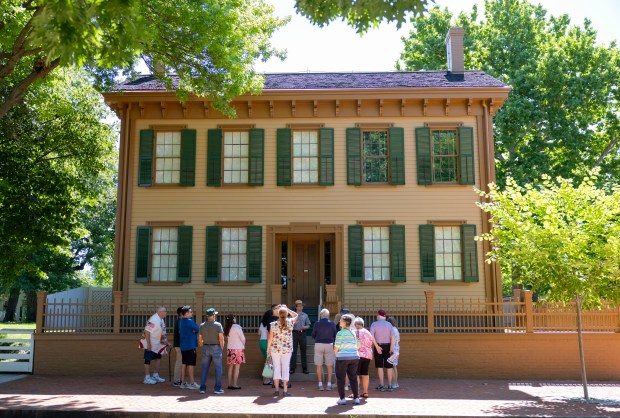


There was no indication that the American linden across the street from Abraham Lincoln’s home in Springfield was any different than any of the other 270 trees that populate the four-block National Historic Site along 8th Street.
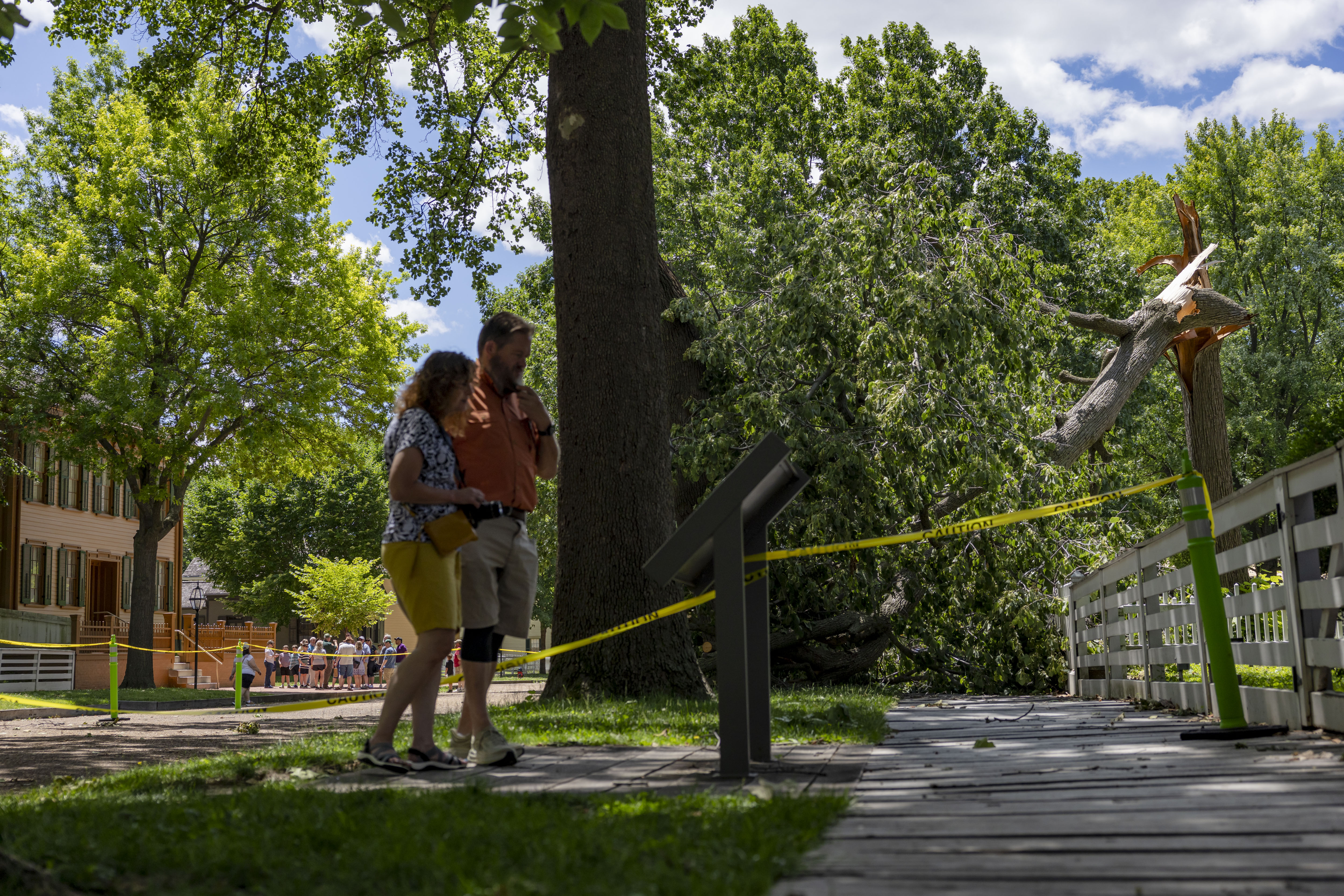
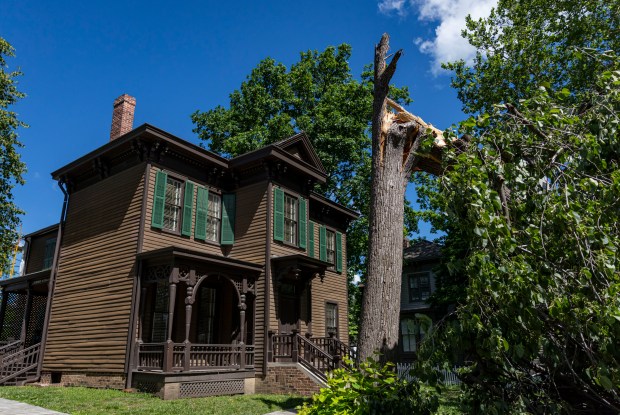
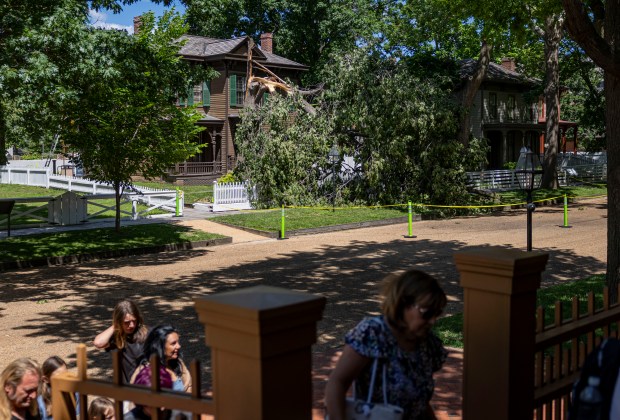
On Friday, a cloud of irritated bees swarmed the linden’s trunk about 20 feet up, where wind from strong storms the night before had snapped it. Yellow caution tape surrounded the former treetop, now resting in the street and front yard of the Dean House, named for the mother and son who planted the linden tree in the 1850s when they were Lincoln’s neighbors.
As visitors skirted the dying tree, few realized they were seeing the remains of history. The linden was what park officials termed a “witness tree” — one that was alive when Lincoln lived in the home across the street, one he could gaze out upon from the front windows and porch of his home.
“When Lincoln came out his front door, it would be one of the first things he saw,” said John Popolis, museum technician at the National Park Service site.
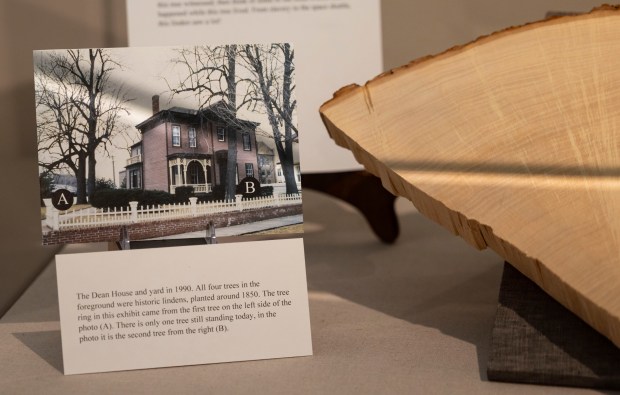
The tree was the last one in the park that officials had positively identified as being there at the same time as the future president. It was the last remaining of four lindens planted by the Deans in the 1850s. A ring count on a cross section of one of the four that was cut down in 1993 dated them to 1856 or ’57, according to Susan Haake, curator and acting chief of interpretation at the Lincoln Home site.
Nobody was on site about 7:30 or 8 p.m. Thursday night when the witness tree came down. The city had shut down as the city endured a second day of severe weather that brought nine confirmed tornadoes to central Illinois June 10 and 11, according to the National Weather Service.
Haake said the toppled tree was discovered early Friday morning by a maintenance worker.
“It’s a sad day for everyone here,” Haake said.
But its demise wasn’t wholly unexpected. She said an arborist inspecting the tree in 2014 was concerned because it was starting to lean toward 8th Street, where its canopy wound up last week. Plus lindens, also known as basswood trees, aren’t known as a particularly long-lived species.
“We noticed carpenter ants over the years, so in some ways it was kind of surprising it lasted this long,” Haake said.
A half block away, across Jackson Street from Lincoln’s home, the cross section of the witness tree’s sibling linden that was taken down in 1993 is pinned with dates, going back to its Lincoln era origins.
It’s not the only tree-related Lincoln artifact in the site’s collection.
An elm tree planted by Lincoln in his front yard, “probably around the same time as the Deans planted the Lindens across the street,” Haake said, became the source wood for a series of gavels after it died in 1906. The gavels were sent to chapters of the then-recently founded American Legion chapters across the country.
“We got one back from California,” Haake said. “That’s how we found out about it.”
The Lincoln Home site also owns a “gentleman’s walking cane” made from wood from an apple tree that once grew in Lincoln’s back yard and another cane crafted from a limb of Lincoln’s elm taken when it was still alive.
There was no signage at the Dean house indicating the linden’s status as the sole remaining witness tree. The Deans were prominent members of the Springfield Horticultural Society, which might have given them access to lindens, a species found more commonly in Wisconsin, Minnesota and New England. The two other Lindens planted by the Deans died less than a year apart, around 2012, Popolis said. Both had been hollowed by insects.
He said while the last of the Dean lindens was “a special tree for all of us,” there were no outward signs about its status to prevent souvenir hunters from peeling off bark or breaking off branches, “or try to do something foolish like carving their initials in there.”
Efforts underway to restore crumbling site where Abraham Lincoln began his political rise
Other witness trees tied to Lincoln were in Gettysburg, Pennsylvania, some purported to have been shot up during the tide-turning Civil War battle, others to have been near the site of Lincoln’s famous Gettysburg Address afterward. As those trees died, some were processed into souvenirs such as pens and trinket boxes.
The linden that was part of Lincoln’s landscape won’t share that fate.
“We’re not allowed to take federal property and turn it into something else without Congress saying we can,” Popolis said. “We can use it on site; staff could make something out of it, maybe a bench or something like that. But that depends on the condition of the wood.”
There are a couple of other trees that site officials believe could date back to Lincoln’s residency along 8th Street, but they’re a block or so away, and cannot be verified until they’re cut down and subject to a ring count.
But another, much younger linden next to the Dean house could claim the legacy of its wrecked sibling. Popolis said it was cloned from the first of the witness lindens to come down in 1993, with help from the Morton Arboretum.
“That one is still alive and well,” he said.
Other trees in the neighborhood are descended from parents that were concurrent with Lincoln’s stay in Springfield, including a pair of persimmons in the lot next door descended from a single tree documented to have been there in the 1950s.
Popolis said he’s seen several witness trees die over his years working at the Lincoln Home National Historic Site, but this one hurt a bit more.
“Because it was the last one,” he said. “When you have 30 of them and one dies, oh well, it was going to die sometime. But when it’s the last one…”
Even if other trees at the site turn out to be witness trees, this one’s proximity to Lincoln’s home made it extra special. He didn’t see them whenever he left home.
“It’s like having a doorknob that Lincoln handled every day,” Haake said, “versus one he may have touched once.”
peisenberg@tribpub.com