
Early summer, when plants are still green from spring rains, is the time to think ahead to the hot, dry days of July and August.
“Make sure you’re ready for whatever the summer brings,” said Sharon Yiesla, plant knowledge specialist in the Plant Clinic at The Morton Arboretum in Lisle. “Plants always need watering, but now our weather is so variable that hot spells and drought can happen any time.”
Water is critical to all of any plant’s life processes, including keeping themselves cool when it’s hot. Watering is the single most important thing gardeners do. All kinds of plants, from towering trees down to pots of petunias, need a steady supply of moisture in the soil around their roots.
Relying on rainfall is never a good idea. “Even if it feels like it’s rained a lot, you can’t assume that enough water has actually reached the soil to meet your plants’ needs,” Yiesla said. “Make it your business to keep track of how much moisture is in that soil, and supply more if it’s needed.”
Here are some watering tips from the Plant Clinic. For more detailed advice, see mortonarb.org/watering.
Get your equipment ready: Check hoses for leaks. Make sure your hose is long enough to reach all your plants. To avoid wasting water through leaks, tighten the connections or install new hose washers. Consider using quick connectors to easily switch between nozzles and sprinklers.
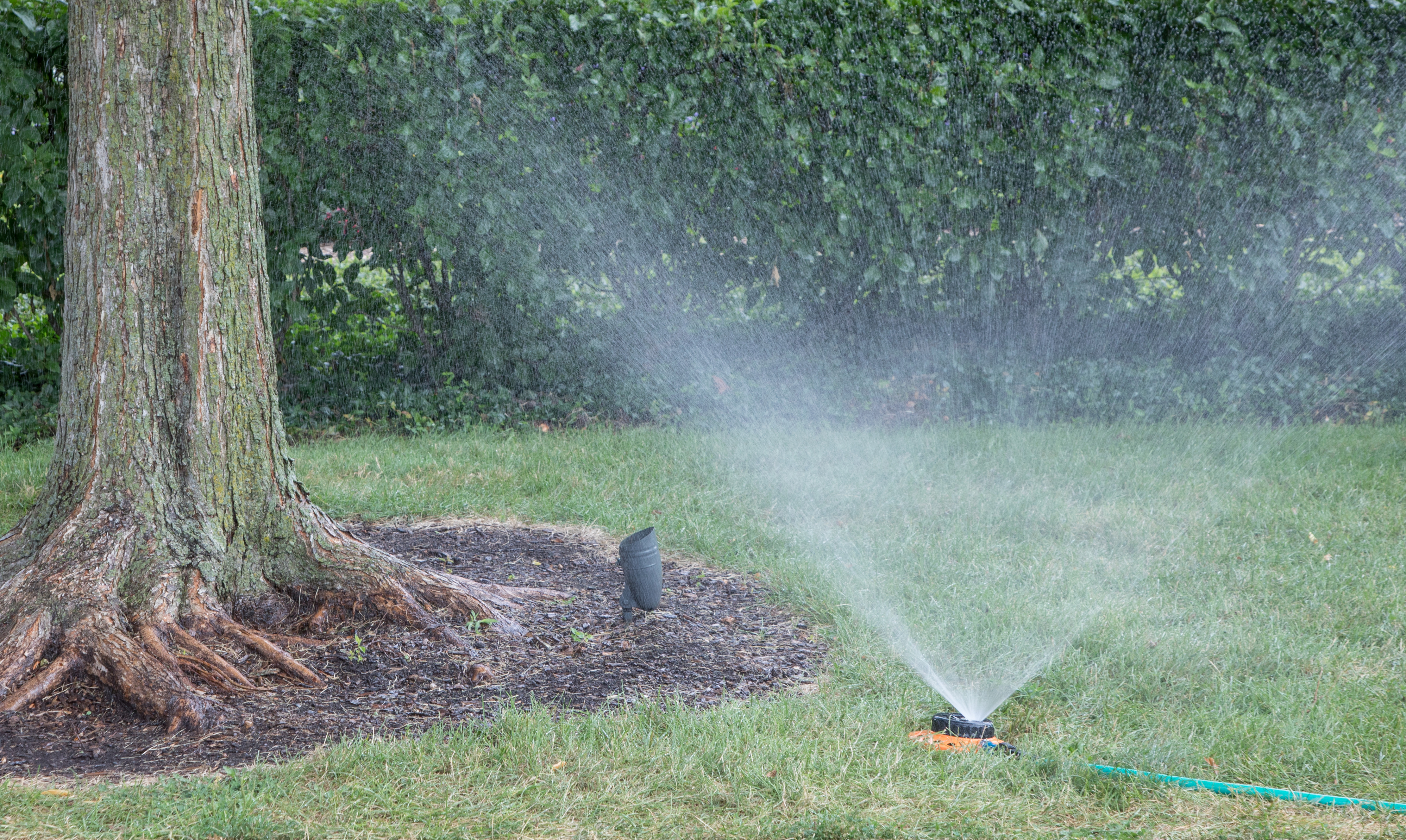
Check the soil: To decide when to water, make a habit of checking the soil every two or three days, and more often when it’s hot. The best way is to touch the soil to see whether it’s moist. “Better yet, use a trowel to dig down about 2 inches and feel to see if the soil is dry down there,” Yiesla said. Do the same thing to decide whether your sprinkler has been running long enough. “Proper watering should moisten the soil 5 to 6 inches deep,” she said. That’s about the same effect as 1 inch of rainfall.
Don’t set a schedule: Because the weather is so variable and plants’ needs change through the season, avoid relying on a watering routine. Turn off the timer on your sprinkler system. “Water in response to the state of the soil,” she said. “An unchanging routine is likely to waste water and it may not give plants the water they need.”
Go slow: “It’s best to water slowly for a long time,” Yiesla said. That allows water to seep gradually down through the top few inches of soil where plants’ roots live, lingering long enough so that roots can absorb it. To water a new tree slowly, lay a hose turned to just a slow trickle on the root ball near the trunk, and leave it for an hour or so, moving it a few times to new spots. Soaker hoses are also a good way to slowly water new vegetable gardens and perennial beds, as well as trees and shrubs.
Give new plants extra help: Anything you planted this year will need more frequent and careful watering than established plants. “New plants don’t have many roots to absorb water or store it, so they need a steady supply in the soil,” she said. Plan to water trees and shrubs often for at least two to three years after you plant them.
Tend to containers more often: Plants will quickly use up all the water in the small amount of soil a pot can hold. “You may need to water containers every day in hot weather,” Yiesla said.
Water more as plants grow: Later in the summer, when plants are larger, they will likely need even more frequent watering. “Every leaf is full of water, so when plants have more leaves or larger leaves, they use more water,” she said.
Avoid the midday sun: When the day is at its hottest, much of the water from a sprinkler will evaporate without ever reaching the soil. Instead, try to water in the morning. That will give leaves time to dry off before nightfall. Water that stands on leaves through the night can encourage fungal diseases.
Spread mulch: This protective layer of plant matter will help keep water from evaporating readily from the soil. Spread it in a wide, even layer and be careful not to pile it against the trunk of a tree. It should be 3 to 4 inches deep around trees and shrubs and 1 to 2 inches deep on flower and vegetable beds.
Keep paying attention: “Conditions in your garden will change from day to day and week to week,” Yiesla said. “Don’t make assumptions about how much watering your plants need. Regularly check the soil moisture so you know.”
For tree and plant advice, contact the Plant Clinic at The Morton Arboretum (630-719-2424, mortonarb.org/plant-clinic, or plantclinic@mortonarb.org). Beth Botts is a staff writer at the Arboretum.